Written By | Health News Agencies
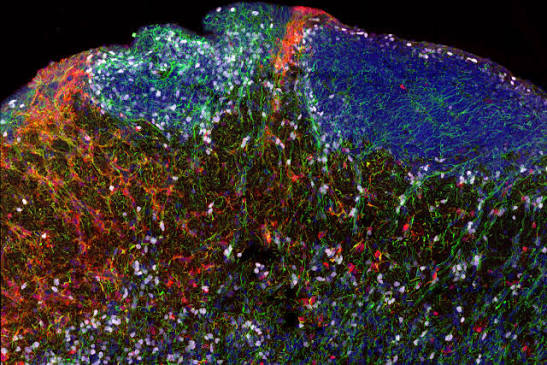
UCLA scientists have caught chronic stress physically shrinking a microscopic aerial on the brain's most ignored cells — and then grew it back with a pill already sitting on pharmacy shelves
HEALTH
It is roughly a thousandth of a millimetre long. It sticks out of a cell most people have never heard of, in a lump of brain tissue the size of an almond. And according to a study that has spent this week tearing through neuroscience departments on both sides of the Atlantic, when your life falls apart, it shrivels.
Then — and this is the part that has psychiatrists reaching for the phone — a drug that has been sitting in American pharmacies since 2021, licensed for something else entirely, grew it back. The mice that got it stopped behaving like animals who had given up.
The study was published in Nature. UCLA Health pushed it into wide circulation on Tuesday, and by midweek it had been picked up everywhere from Medscape to the trade press, largely because of one uncomfortable implication: for fifty years, the entire pharmaceutical assault on depression and anxiety may have been aimed at the wrong cells.
THE CELLS NOBODY WAS WATCHING
Ask almost anyone how the brain works and you will get an answer about neurons — the sparking, wiring, signal-firing cells that dominate every textbook diagram and every drug company's pipeline. Serotonin, dopamine, noradrenaline: the whole modern medicine cabinet for mood is built on the assumption that if something has gone wrong with your mood, something has gone wrong with the chemical conversation between neurons.
But neurons are not even close to being the only residents. Woven between them are astrocytes — bushy, star-shaped cells, a type of glia, the brain's so-called support staff. For most of the twentieth century they were treated as scaffolding: useful plumbing, structurally important, scientifically dull. Nobody was going to win a Nobel Prize for the packing material.
"We've mostly thought about stress and mood disorders in terms of neurons firing signals to each other," said Sara Gutierrez Pelaz and Katsukuni Mitsui, the study's co-first authors. "Our findings show that a different type of brain cell, and a structure on that cell most people have never heard of, also plays a role in how the brain responds to stress."
Gutierrez Pelaz is a postdoctoral researcher in the laboratory of Baljit Khakh, professor of physiology and neurobiology at the David Geffen School of Medicine at UCLA. Mitsui was a visiting scientist in the same lab, seconded from the Japanese drugmaker ONO Pharmaceutical — a detail declared in the paper's conflict-of-interest statement, and one worth holding on to.
The structure in question is the primary cilium. Almost every cell in the human body grows exactly one: a solitary, antenna-like protrusion that pokes out into the surrounding fluid and senses what is going on out there. It is not a hair, not a tail, and not decoration. It is a receiver. Chemical signals dock on it; the cell reads them; the cell responds. When primary cilia go badly wrong in humans, the result is a family of devastating inherited conditions — kidney failure, blindness, obesity, developmental delay — known collectively as the ciliopathies. Which is to say: nobody doubts these things matter. Almost nobody, until now, thought to ask what they were doing in the emotional brain.
A RULER, AN ALMOND, AND TWO KINDS OF MISERY
The Khakh team went hunting in the amygdala, the almond-shaped structure that governs fear, threat detection and emotional salience — the part of the brain that decides whether a shadow in the doorway is a coat or an intruder, and which is reliably abnormal in people with anxiety disorders and depression.
They used two separate mouse models of chronic stress, which matters: a result that appears in only one stress paradigm is a result that might be about the paradigm rather than about stress. In both, they pulled out the amygdala astrocytes and read them at two levels — which genes were switched on, and which proteins were actually present.
The pattern that came back was not subtle. Large numbers of the genes and proteins that had shifted were cilium-related. So the team got out a metaphorical ruler and measured the cilia themselves. In the stressed animals, astrocyte primary cilia were physically shorter.
Two control findings turn this from a curiosity into a hard result. First, the neuronal cilia in the same tissue were not shortened. Second, the astrocytes themselves had not changed shape — these were not sick, shrunken, dying cells with a stunted aerial as a side effect. The cells looked normal. The antenna did not.
Then the researchers went the other way. Using targeted genetic surgery, they selectively disrupted the primary cilia on amygdala astrocytes in otherwise unstressed mice — cutting the aerial rather than waiting for stress to shorten it. The animals' stress-related behaviours changed, and so did gene expression, not only in the astrocytes but in the surrounding brain cells too. In other words, the cilium was not a passive casualty of stress. Break it deliberately, and the behaviour follows.
THE PILL THAT WAS ALREADY ON THE SHELF
This is the point where most mechanism papers stop, having earned a respectable citation count and a decade of follow-up grants. Khakh's team kept going, and asked the only question a patient actually cares about: can you fix it?
They tried two routes. The first was chemogenetics — a laboratory technique in which engineered receptors are installed on a chosen cell type so they can be switched on and off with a designer drug that does nothing else in the body. Turning on the relevant G-protein-coupled receptors on amygdala astrocytes restored cilium length, corrected many of the molecular abnormalities, and improved stress-related behaviour. Elegant, but not something you can prescribe.
The second route is where the story becomes newsworthy. The team homed in on a native receptor called sphingosine-1-phosphate receptor 1 — S1PR1 — and targeted it directly. Same effect: cilia back to length, molecular signature corrected, behaviour improved. The mice showed fewer signs of anxiety and, crucially, recovered their interest in things they normally enjoy — the rodent readout for anhedonia, the flattening of pleasure that is one of depression's defining symptoms and one of its hardest to shift.
S1PR1 is not an obscure target. It is the business end of an entire class of approved drugs used to treat multiple sclerosis, which work by trapping immune cells inside lymph nodes so they cannot reach the nervous system and cause damage. One of them is ponesimod, sold as Ponvory, approved by the FDA in 2021 for adults with relapsing forms of MS — a 20mg tablet, once a day, with a two-week dose-escalation schedule at the start.
The researchers gave stressed mice ponesimod. It produced similar improvements.
"Because the receptor involved is already targeted by an approved drug, this gives us a realistic starting point for exploring new potential treatment approaches, rather than starting from scratch," said Khakh, the study's senior author.
That sentence is doing a lot of quiet work. Taking a novel molecule from a mouse experiment to a pharmacy counter costs upward of a billion dollars and routinely takes twelve years. Repurposing a compound whose safety profile, dosing and manufacturing are already established can compress that timeline dramatically — which is precisely why every serious neuroscience lab now scans its own findings for a drug that already exists.
THE HUMAN CHECK
Mice are not people, and mouse depression is a scientific construct rather than a lived experience. So the team went looking for the same fingerprint in human brains.
They examined gene activity in post-mortem amygdala tissue from people who had lived with major depressive disorder, bipolar disorder and psychosis-related conditions. Cilium-related genes in astrocytes were disrupted in those conditions too. And S1PR1 — the receptor the drug hits — turned out to be highly expressed in human amygdala astrocytes, meaning the target is not a mouse-only quirk.
That is not proof that shortened astrocyte cilia cause human depression. Post-mortem gene expression is a snapshot taken at the end of a long illness, often confounded by years of medication, substance use and the manner of death. But it is exactly the result you would expect to find if the mouse mechanism were real in humans, and its absence would have been close to fatal for the whole idea.
WHAT THE FIELD IS SAYING
The paper was accompanied in Nature Neuroscience by a commentary bluntly titled "Stressing out astrocyte cilia," which walks through the same chain of evidence with a colder eye — the cilium-related genes and proteins in two stress models, the shortening of astrocytic but not neuronal cilia, the reversal via Gi-coupled receptor activation. The tone is interested rather than triumphant, which is the right tone.
The wider context is that glial biology has been having a decade. Astrocytes have already been implicated in memory, in sleep, in the clearing of amyloid, and in the regional specialisation of the developing brain — a 2024 Nature Neuroscience paper showed astrocyte primary cilia shaping brain development itself. What has been missing is a clean line from a glial structure to a behaviour to a druggable receptor. This paper draws one.
It also lands in a field with an uncomfortable record. Depression research has produced a long parade of mechanisms that looked decisive in rodents and evaporated in humans. Inflammation. Neurogenesis. Glutamate. Each was, at its peak, going to replace the SSRIs. The honest summary is that none has, and that the drug which has come closest — ketamine — was discovered largely by accident and is still not fully understood.
There is also the ONO Pharmaceutical connection to keep in view. One of the two co-first authors is employed by a drug company; the paper says so, which is how it should work. It does not invalidate a result that was measured with rulers and sequencers rather than opinions. It does mean a commercial actor was in the room while a repurposing opportunity was being identified, and readers are entitled to know that.
THE CAVEATS THAT ACTUALLY MATTER
UCLA's own press release does something admirably rare and says the quiet part out loud: "The findings are early-stage and based on animal models. More research will be needed to determine whether targeting astrocyte primary cilia could become a viable treatment strategy in humans."
Take that seriously. Chronic stress in a mouse is not bereavement, poverty, a collapsing marriage or a war. The behavioural readouts — reluctance to explore, loss of interest in sweetened water — are proxies chosen because they are measurable, not because they are the same thing as human despair. And even in the mice, the paper reports that restoration improved "some" stress-related behaviours, not all of them.
Nor is ponesimod a benign vitamin. It is an immunosuppressant. The most common side effects in MS trials, each occurring in at least one in ten patients, were upper respiratory tract infections, raised liver enzymes and high blood pressure. Starting the drug can slow the heart rate, which is why patients with certain cardiac conditions need monitoring on the first dose. Nobody should take an S1PR1 modulator for low mood, and no doctor should prescribe one for it. There is not a single human trial of this drug for depression or anxiety. There is one mouse experiment.
The distance between "the receptor is druggable and the drug exists" and "the drug works in people" is where most of neuroscience's promising stories go to die.
WHAT THIS MEANS FOR YOU
In the immediate term: nothing you should do differently, and nothing you should stop doing. If you are taking an antidepressant that is working, this paper is not a reason to change it.
In the medium term, it matters because the current toolkit is not good enough and everybody in the field knows it. In 2022, roughly 21.4 per cent of American adults reported symptoms of depression and 18.2 per cent symptoms of anxiety within the previous two weeks. Around 21 million adults had a major depressive episode in 2024. Antidepressant monotherapy produces a response in roughly 60 per cent of patients and full remission in about 40 per cent — which is another way of saying that most people who take a first antidepressant do not get all the way better on it. Roughly a third of people with major depression meet the criteria for treatment-resistant illness.
Those numbers are why an entirely new cellular target is a bigger deal than another molecule aimed at the same synapses. If mood disorders involve the brain's support cells and their sensory antennae, then the last five decades have been fighting on one front of a two-front problem.
There is also a subtler consolation in the finding, and it is worth saying plainly. A shortened cilium is a physical change in a physical structure, caused by circumstance and reversible by intervention. Stress is not, on this evidence, a failure of character. It leaves marks you can see under a microscope — and, at least in a mouse, marks that can be undone.
THE BOTTOM LINE
A team at UCLA has shown that chronic stress shortens the primary cilia on astrocytes in the amygdala, that the shortening is specific to those cells, that cutting the cilia deliberately changes behaviour, that restoring them reverses both the molecular damage and some of the behaviour, that the same molecular fingerprint appears in the brains of people who had depression, bipolar disorder and psychosis, and that the receptor which does the restoring is already the target of a licensed medicine.
That is six findings in one paper, and every one of them is in a mouse or a slide, not a patient. What happens next is the hard part: someone has to run the trial.
But for the first time in a long while, the field has a new target, a plausible mechanism, and a drug that already exists. In depression research, that combination arrives about once a decade — and this one arrived on a structure so small that until this week, almost nobody in psychiatry had heard its name.



