Fashion
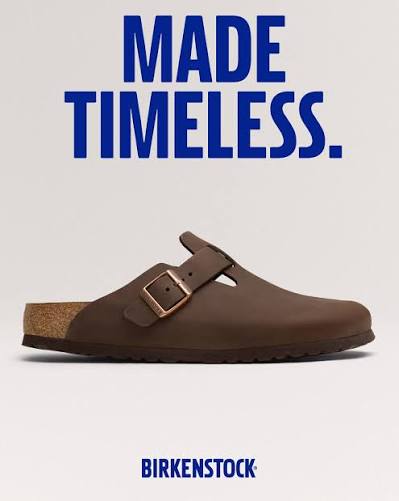
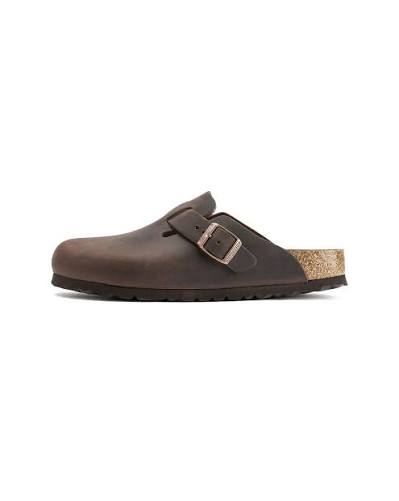
Half a century ago, a soft-soled clog with a closed toe quietly upended the idea of what a Birkenstock could be. In 1976, the company known for open-toed sandals introduced a shoe that could be worn indoors, in colder weather, with socks — a shift so fundamental that it took years for the design to even settle on a name, cycling through labels like "the soft clog" and the "Formal Birkenstock Quiet Clog" before the fashion world simply started calling it the Boston. Fifty years later, it is arguably the brand's most recognized silhouette after the classic Arizona sandal, and this year Birkenstock is marking the anniversary with a fresh collection that trades Alpine functionality for East Coast ease.
The Northeast Providence Collection
Under its elevated 1774 label, Birkenstock this week unveiled Northeast Providence, a capsule that draws its name and mood from Providence, Rhode Island, and the broader sensibility of the American Northeastern coast. The palette — Cinnamon, Midnight Navy and Ginger Brown — is deliberately understated, built to evoke worn-in New England ease rather than runway spectacle, while contrasting textures in canvas and raffia are engineered to develop character with wear rather than staying pristine.
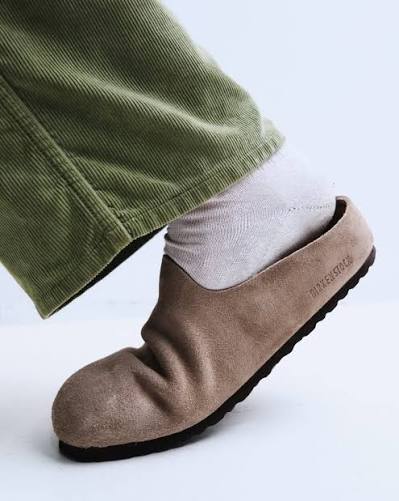
The collection centers on two silhouettes. The Sylt, an exclusive 1774 style, arrives in Cinnamon and Midnight Navy with an adjustable hook-and-loop padded canvas strap that softens the line of a classic single-strap slide. The Naples, Birkenstock's take on the moccasin reimagined as an easy slip-on, comes in three variations — Cinnamon with a light canvas upper, Midnight Navy in full leather, and Ginger Brown with a wrapped raffia upper — each finished with moccasin-style stitching detail. The line launches at 1774.com and select retailers worldwide.
Fifty Years of an Unlikely Icon
The anniversary has prompted more than a product drop — it's also produced something closer to an institutional reckoning with how the Boston became a cultural fixture. Birkenstock CEO Oliver Reichert and fashion historian Liz Tregenza recently collaborated on an oral history tracing the shoe's five-decade arc, from its origins as a purely orthopedic, comfort-first alternative to wooden clogs through its unlikely adoption by the fashion establishment.
That arc accelerated dramatically in the 21st century. Birkenstock's first true designer collaboration came in 2018 with Rick Owens, a pairing that signaled the brand's crossover into high fashion after decades as a comfort-shoe category unto itself. A two-part capsule with Manolo Blahnik followed in 2022, dressing the Boston in jewel-toned velvet and crystal-embellished buckles — about as far from the clog's utilitarian roots as a shoe can travel. This year alone has brought a collaboration with Etro that debuted at Milan Fashion Week, a made-to-order braided version exclusive to Kith's loyalty members, and now the Northeast Providence capsule, each treating the same 1976 silhouette as a blank canvas rather than a museum piece.
The Comfort-First Playbook, Vindicated
It's tempting to read the Boston's staying power as a lucky break, but the historian's-eye version of the story is more instructive: the shoe succeeded because it never abandoned its original premise. Every subsequent designer collaboration, every seasonal colorway, every archival re-release has layered fashion credibility onto a shoe engineered first and foremost around comfort. That sequencing — utility earning its way into desirability, rather than the other way around — is precisely the loop the broader footwear industry has spent the better part of a decade trying to replicate, from the sneaker-loafer hybrids crowding runways to the so-called "ugly shoe" boom the Boston arguably kicked off.
It's also a template other heritage brands have studied closely. Where competitors chased virality through limited drops and hype-driven scarcity, Birkenstock largely let the Boston's slow-build reputation do the work — one runway cameo, one archival rediscovery, one generation of comfort-obsessed shoppers at a time. That patience is part of why the shoe has weathered fashion cycles that buried flashier comfort-shoe rivals: it was never selling a moment, only a decades-long argument that ease and design credibility aren't mutually exclusive.
What This Means for Shoppers
For anyone who's owned a pair of Bostons and wondered why a shoe this plain commands the loyalty (and, in collaboration form, the resale prices) that it does, the anniversary campaign is a useful reminder: the silhouette's simplicity is the feature, not a limitation, which is exactly why it has survived five decades of shifting trends without a fundamental redesign. If you're shopping the new Northeast Providence pieces, expect the same broken-in comfort the Boston has always delivered, now filtered through a quieter, coastal color story rather than the boldest of the brand's designer crossovers — a more accessible entry point than, say, the Manolo Blahnik version, for anyone chasing the anniversary without the collector price tag.
Fifty years on, the Boston's biggest achievement may simply be this: a shoe designed to disappear into daily life instead became one of fashion's most enduring status symbols. It has outlasted the trend cycles that made and unmade dozens of comfort-shoe competitors, largely by refusing to chase them, and each new anniversary drop — Northeast Providence included — reads less like a reinvention than a reaffirmation of a design the brand got right the first time. If this year's run of collaborations is any indication, the Boston is nowhere near done writing its second act.
Published By | Features Editor