WASHINGTON, D.C.
Every year since 1997, the American Institute of Architects' Committee on the Environment has assembled a list meant to answer a single, deceptively hard question: what does genuinely sustainable architecture actually look like, once you move past the marketing language and measure a building against hard performance data? This year's COTE Top Ten Award, announced this week and now in its 29th edition, names ten projects that its jury says meet that bar — a mix of civic buildings, cultural institutions, schools, and public infrastructure spanning the country, evaluated against the AIA's Framework for Design Excellence, a ten-point standard covering social, economic, and ecological value.
What stands out in this year's list is not just the environmental performance data, impressive as it is, but the range of building types achieving it — proof, organizers argue, that net-zero and net-positive design principles have moved well past showcase museums and research labs into the ordinary civic buildings that shape daily life.

A Botanical Garden That Gives Back More Than It Takes
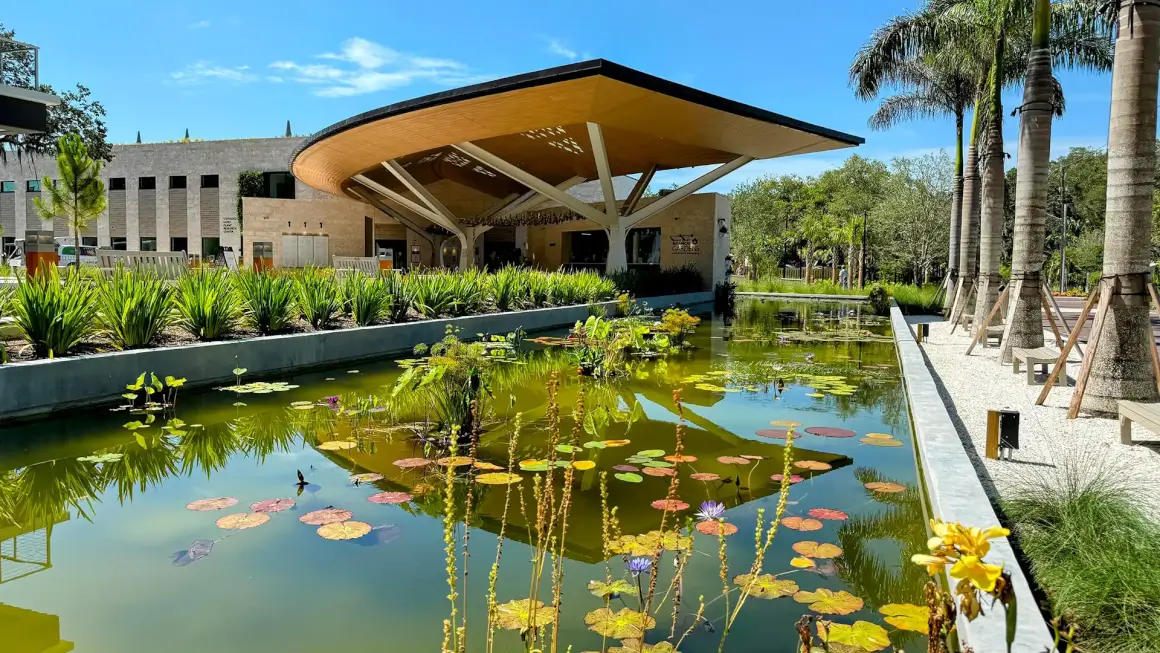
Perhaps the most striking entry on this year's list is Phase 1 of the Marie Selby Botanical Gardens Master Plan in Sarasota, Florida, described by organizers as the world's first net-positive-energy botanical garden. The project reimagines a historic coastal site as what its designers call a "regenerative campus," generating more energy than it consumes through a 1.2-megawatt photovoltaic array while pursuing Living Building Challenge performance targets — widely regarded as the most rigorous green building certification in the industry. Rainwater management systems built into the site are designed specifically to protect the adjacent Hudson Bayou, while the gardens' biophilic design immerses visitors directly in Florida's native plant biodiversity rather than treating landscaping as a decorative afterthought.
A Concert Hall That Disappears Into the Landscape
In Marlboro, Vermont, Reich Hall at Marlboro Music takes a different approach to the same underlying challenge: how to build a technically demanding building — in this case, an acoustically precise concert venue — without the enormous energy footprint such spaces typically carry. The net-zero, all-electric hall combines geothermal heating and cooling with off-site solar generation and timber construction, managing all stormwater on site while preserving the surrounding wetlands. The result, according to project reviewers, is a building that performs at the level demanded by professional musicians while operating with a fraction of the energy draw of a conventional performance hall.
A similar logic shaped the Marion Fire Station in Marion, Iowa, an all-electric facility that pairs geothermal systems with biophilic design principles specifically intended to protect firefighter health — reducing toxic exposure through material choices and spatial sequencing that separates contaminated gear from living quarters, while also strengthening the building's resilience as a piece of critical civic infrastructure.
Schools, Housing, and the Case for Everyday Sustainability
The 2026 list also includes Benjamin Banneker Academic High School, a net-zero energy school in Washington, D.C. designed by Perkins Eastman around a four-story shared commons intended to foster collaboration among students, achieving its zero-energy performance through a district-scale energy strategy rather than isolated on-site measures alone. Elsewhere, an interdisciplinary health sciences building at the University of Washington in Seattle uses mass timber construction and biophilic design to support both collaboration and occupant wellness, while affordable housing developments and civic buildings round out a list the AIA says spans nearly every major sustainable design strategy available to architects today — mass timber, all-electric systems, district-scale energy sharing, and rigorous water management chief among them.
Taken together, the ten winners represent a shift the AIA's Committee on the Environment has been tracking for several award cycles: sustainability metrics that were once the province of a handful of flagship, heavily funded projects are increasingly achievable across ordinary building types, including schools, fire stations, and affordable housing, that most communities actually need built.

The Bigger Picture
This year's winners range from net-zero schools and mass timber campuses to all-electric affordable housing and a climate-responsive embassy abroad — proof that design excellence and environmental performance aren't competing priorities anymore, they're the same conversation.
— From the AIA Committee on the Environment's 2026 award announcement
What This Means for You
For anyone who assumes sustainable architecture is still an expensive niche pursued only by wealthy institutions, this year's list argues otherwise. Fire stations, public schools, and affordable housing developments now regularly hit performance benchmarks — net-zero or net-positive energy, all-electric systems, on-site stormwater management — that were considered experimental a decade ago. That has direct implications for taxpayers and communities weighing the upfront cost of public buildings against their operating costs over decades.
It's also a signal for homeowners and renters: many of the individual strategies driving these projects — geothermal systems, all-electric appliances, rooftop solar sized to meet or exceed a building's energy needs — are increasingly available at residential scale, not just in showcase civic architecture.
As debates over building codes, energy costs, and climate resilience continue to shape how and where America builds, the COTE Top Ten list functions as an annual reality check: these ten projects didn't just clear a bar for sustainability. They reset where the bar sits for everyone building next.
Published By | Features Editor