Written By | Health News Agencies
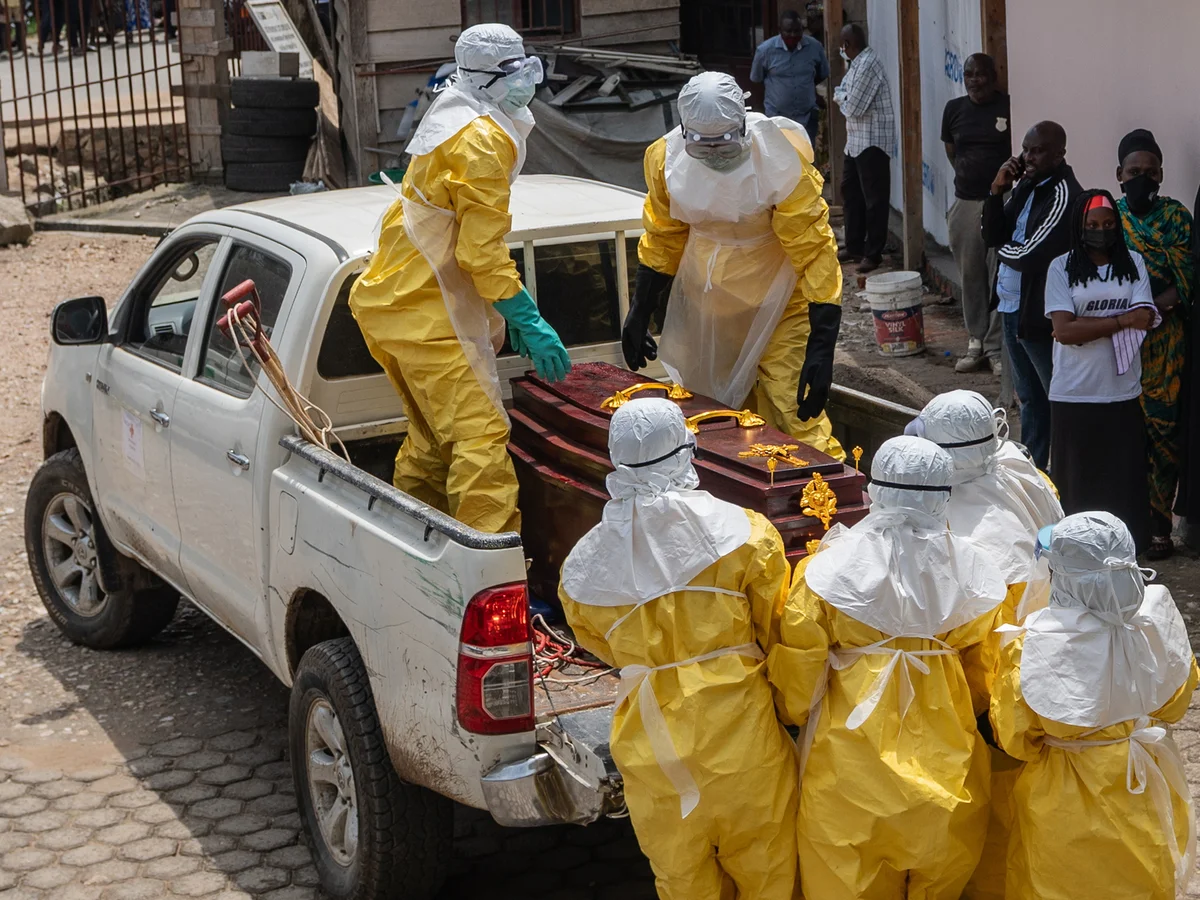
Deaths pass 2,000, cases top 4,300 — and the World Health Organization's own chief admits the virus is winning in parts of Congo
KINSHASA, Democratic Republic of Congo
Three months ago, it was a cluster of mysterious hemorrhagic fever cases in a remote corner of the Democratic Republic of Congo. Today, it is the second-largest Ebola outbreak ever recorded on Earth — and by the World Health Organization's own admission, it is spreading faster than anyone can contain it.
As of this week, Congolese health officials have confirmed 4,381 cases of Ebola virus disease and 2,011 deaths since the outbreak was first declared on May 15. That is a case fatality rate hovering near 46 percent — meaning nearly one in every two people who catch this strain of the virus does not survive. And the numbers are not slowing down. Half of those 2,000-plus deaths have occurred in just the last 20 days. At least 1,000 people have died in the last three weeks alone.
Only the catastrophic 2014-2016 West African Ebola epidemic, which killed more than 11,000 people across Guinea, Liberia and Sierra Leone, has ever been larger. But in terms of raw speed, this outbreak has no historical rival. Health officials now call it the fastest-growing Ebola epidemic on record — a grim distinction that has sent shockwaves through the global public health community.
"THE OUTBREAK IS OUTPACING OUR RESPONSE"
The bluntest assessment came directly from the top of the World Health Organization. After a high-level mission to Kampala, Bunia and Kinshasa on August 4 and 5, WHO Director-General Dr. Tedros Adhanom Ghebreyesus, joined by Africa CDC Director-General Dr. Jean Kaseya and WHO Africa Regional Director Dr. Mohamed Janabi, issued a joint statement that stunned observers with its candor.
"In some eastern areas of the DRC, the Ebola outbreak is outpacing our response," Tedros said.
It is a rare and sobering admission from an organization that typically emphasizes progress and containment. But the numbers back him up. New cases are doubling in some hot spots in eastern Congo, a region already strained by decades of armed conflict, mass displacement and crumbling health infrastructure. Treatment centers are overwhelmed. Contact tracers cannot keep pace with the virus's spread through communities that are often difficult to reach, distrustful of outside health workers, or actively caught in the crossfire of ongoing militia violence.
Adding to the crisis: aid workers on the ground have gone on strike over unpaid wages, further crippling a response that was already stretched to its limits. Tedros called for urgent action to reach every affected community, strengthen coordination under the DRC government's leadership, and protect health workers who are risking their lives on the front lines.
"Above all, communities must be at the center of and have ownership of the response," he said — a pointed reminder that past Ebola outbreaks have often been worsened by mistrust between international responders and local populations who feared quarantine centers more than the virus itself.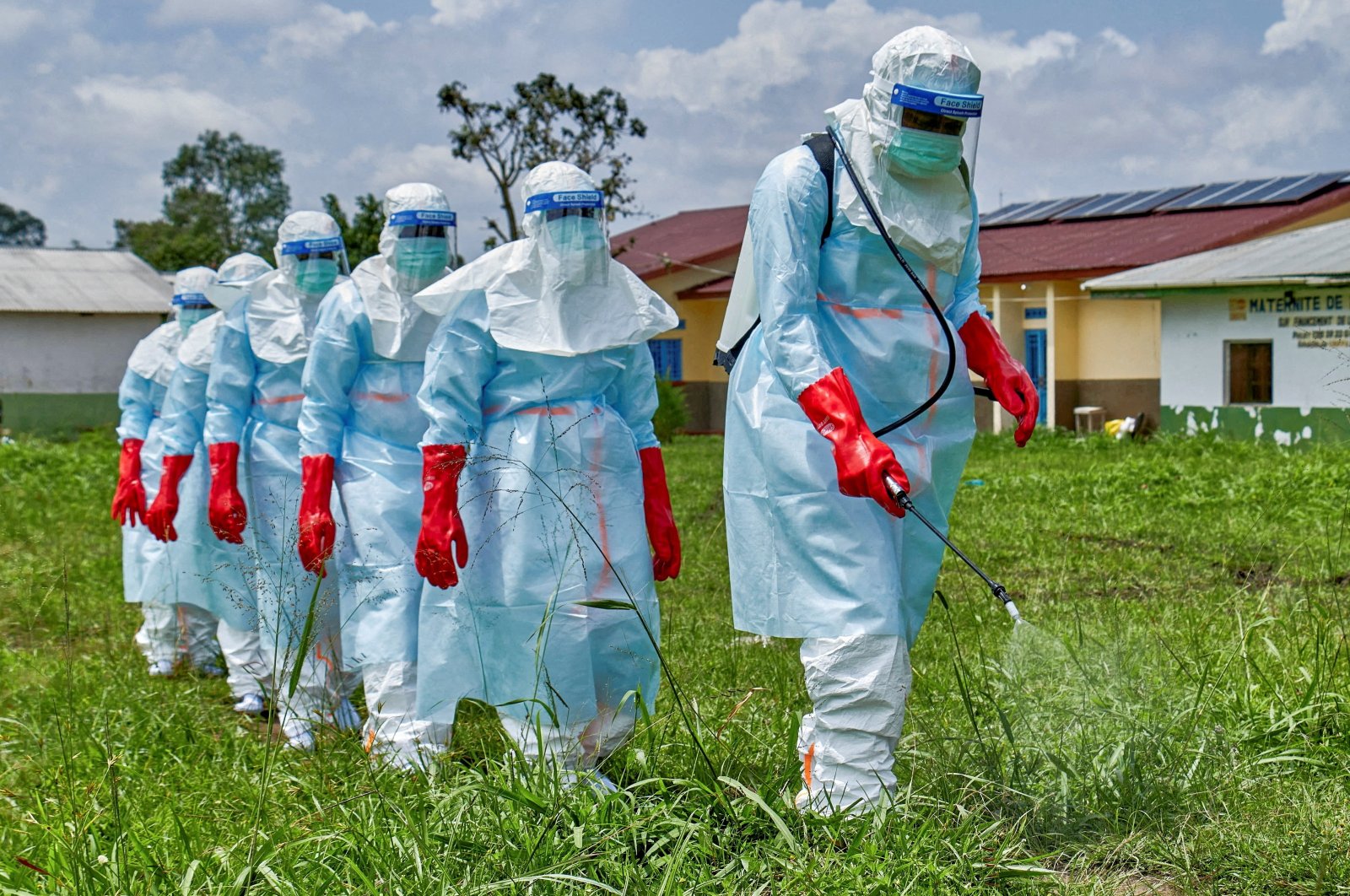
A DIFFERENT, DEADLIER STRAIN
What makes this outbreak especially dangerous is the specific strain of Ebola driving it: Bundibugyo ebolavirus, a rarer and less-studied cousin of the more familiar Zaire ebolavirus that has caused most historic outbreaks — including the one the world's only licensed Ebola vaccine, Merck's Ervebo, was actually built to fight.
That mismatch has left health authorities in an agonizing position. There is currently no vaccine specifically approved for the Bundibugyo strain. Ervebo works by training the immune system to recognize proteins from the Zaire strain, and scientists don't yet know how well — if at all — that protection carries over to Bundibugyo.
Faced with a fast-moving, high-fatality outbreak and no perfectly matched tool to fight it, WHO vaccine experts have taken the extraordinary step of recommending a full-scale ring vaccination trial using Ervebo anyway, in the hope that it offers meaningful cross-protection. The strategy, first pioneered during the 2014-2016 West African outbreak, works by vaccinating the contacts and contacts-of-contacts of every confirmed case, creating a protective "ring" around each new infection to choke off further transmission.
In this trial, half of the people in each ring will receive the real Ervebo vaccine, and the other half will receive a placebo, allowing scientists to measure — in real time, amid an active epidemic — whether the vaccine actually reduces the odds of a fatal outcome, even if it doesn't fully prevent infection or transmission. The global vaccine alliance Gavi maintains a stockpile of roughly 500,000 Ervebo doses, and some have already been shipped into the DRC to support the effort.
Scientists caution that expectations should be tempered. "Efficacy against symptomatic disease and transmission may not be high," according to experts involved in shaping the trial, "whereas protection against a fatal outcome may be achieved." In plain terms: the vaccine may not stop you from catching Bundibugyo Ebola, but it might just be the difference between surviving it and becoming one of the outbreak's more than 2,000 victims.
A GLIMMER OF HOPE NEXT DOOR
Amid the grim numbers out of the DRC, there was one genuine bright spot in the region this summer. On July 28, Uganda's Ministry of Health formally declared the end of its own linked Ebola outbreak, after 42 consecutive days without a new confirmed, locally transmitted case — the World Health Organization's standard benchmark (double the virus's 21-day incubation period) for declaring an outbreak over.
Uganda's success offers a proof of concept that this outbreak can be stopped with fast, well-resourced, community-engaged response — the very ingredients that health officials say are currently missing in the hardest-hit corners of eastern Congo.
WHY THIS MATTERS BEYOND CONGO'S BORDERS
For readers thousands of miles away, it's tempting to see this as a distant crisis. But global health officials warn that treating it that way is exactly the mistake that let past outbreaks metastasize. Ebola does not respect borders, and eastern DRC sits at a crossroads of cross-border trade, displacement and travel with Uganda, Rwanda, Burundi and beyond. The 2014-2016 West African epidemic began with a single toddler in a Guinean village and eventually reached the United States, Spain and the United Kingdom before it was brought under control, sickening more than 28,000 people worldwide.
International health security experts also point to a harder truth: outbreaks that "outpace the response" in their early, containable phase tend to demand exponentially more money, personnel and time the longer they are allowed to run. Every week this outbreak continues to double in eastern hot spots increases the odds it eventually requires the kind of massive, multi-continent mobilization the world hasn't seen since COVID-19.
EXPERT PERSPECTIVE
Public health specialists tracking the outbreak describe a familiar and frustrating pattern: a virus spreading fastest precisely in the places where healthcare workers, vaccines and trust are hardest to deliver. Conflict zones complicate everything from contact tracing to safe burials — a critical containment measure, since Ebola is most contagious in the bodies of the recently deceased, and unsafe traditional burial practices have fueled past super-spreader events. Health workers themselves remain at heightened risk of infection, and the reported pay strikes among responders on the ground signal a response system under severe operational and financial strain, not just an epidemiological one.
WHAT THIS MEANS FOR YOU
If you're not planning travel to the Democratic Republic of Congo or neighboring countries in the near future, your personal risk from this outbreak remains extremely low. Ebola spreads through direct contact with the bodily fluids of a symptomatic or deceased infected person — not through the air, water or casual contact — which is why, even in the world's worst outbreaks, transmission outside the immediate outbreak zone has historically been rare and controllable with basic precautions.
That said, health officials urge anyone with travel plans to the DRC, Uganda, Rwanda or Burundi to check current CDC and WHO travel advisories before departing, avoid contact with wildlife (bats and non-human primates are believed to be the natural reservoir for Ebola viruses), and seek immediate medical attention if they develop fever, fatigue, muscle pain, headache, or unexplained bleeding or bruising within 21 days of potential exposure.
For everyone else, the more important takeaway may be a philosophical one: outbreaks like this are a reminder of how thin the margin is between "contained" and "catastrophic," and how quickly that margin can be tested — or, in the WHO's own blunt words this week, outpaced.
THE BOTTOM LINE
With more than 4,300 confirmed cases, over 2,000 deaths, and the world's leading health authority publicly conceding the response is losing ground in key areas, this outbreak has become the most serious Ebola crisis since the epidemic that reshaped global pandemic preparedness a decade ago. A high-stakes vaccine trial is now underway using a tool that wasn't built for this exact strain, aid workers are striking over pay in the middle of an emergency, and the death toll is accelerating rather than slowing. Uganda proved containment is possible. Whether the DRC — and the rest of the world backing its response — can catch up before the numbers grow far worse may be the defining global health question of the second half of 2026.
This is a developing public health situation. If you are experiencing a mental or emotional toll from distressing global health news, it's okay to step back from the headlines and reach out to a trusted friend, family member, or mental health professional for support.



