Nairobi
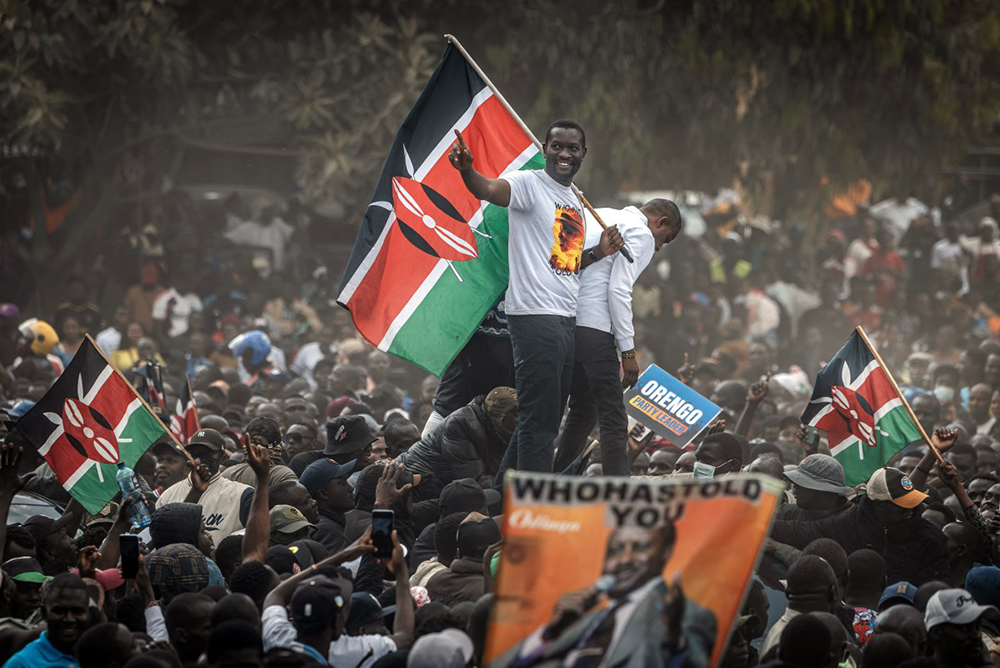
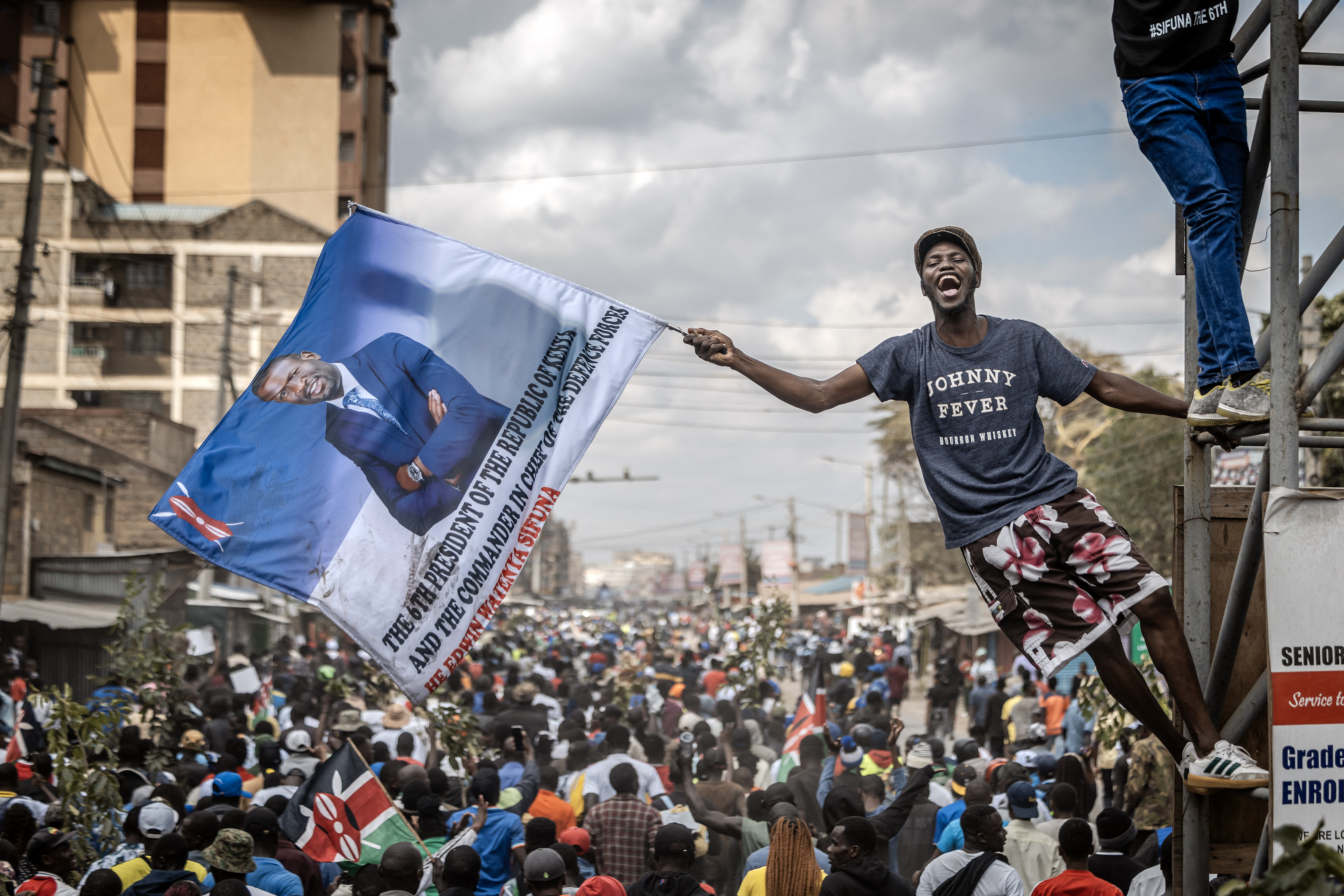
Kenya's fractured opposition delivered its clearest show of street strength in months on Sunday, when thousands of supporters turned out in Nairobi for a rally led by Senator Edwin Sifuna, testing President William Ruto's grip on the capital nearly a full year before the country returns to the polls. The rally passed without violence — a notable exception in a pre-election season that, according to Human Rights Watch, has already left six people dead and dozens injured in a string of organized attacks on opposition and civil society gatherings, and that produced fresh chaos just one day earlier at a government rally more than 100 miles away in Embu.
Taken together, the events of the past week have crystallized a worry shared across Kenya's political spectrum: that the campaign for the Aug. 10, 2027, presidential election is already being fought as much in the streets, through intimidation and organized disruption, as it will be at the ballot box.
A test of strength in the capital
Sunday's rally, organized by the Linda Mwananchi ("Protect Citizens") coalition and led by 44-year-old Nairobi Senator Edwin Sifuna, began with a church service in central Nairobi under heavy police presence, then wound through the capital's streets in a convoy before concluding with speeches at Jacaranda Grounds in Embakasi East. Thousands attended. "Kenya is saying, Honorable Ruto, your time is up," Sifuna told the crowd. "They're saying he should serve for one term."

Among the supporters was Joshua Kebwago, 32, who told reporters he backed Sifuna's movement because "he's here to uplift the poor, reduce taxes and the cost of living. He can do that" — a reminder that beneath the security crisis, the substantive issues driving Kenyan politics remain economic: the cost of living, taxation and joblessness that fueled the youth-led "Gen Z" protest movement that first rattled Ruto's government in 2024 and has periodically resurfaced since.
The rally's significance lies partly in its context. Previous Linda Mwananchi gatherings have been violently disrupted: Human Rights Watch documented an attack on a Kisumu church service attended by Linda Mwananchi members on July 12, in which armed men wielding machetes and arrows killed one person and injured several others, and a tear-gas attack on a Linda Mwananchi event in Meru on Aug. 31. That Sunday's rally in Nairobi went off peacefully was treated by organizers as itself a form of victory.
Behind the rally lies weeks of quiet coalition-building. Sifuna has held a series of strategy meetings — on Aug. 24, Sept. 1 and Sept. 11 — with Siaya Governor James Orengo and Jubilee deputy party leader Fred Matiang'i, an effort to stitch together Kenya's historically fragmented opposition into a single challenge to Ruto. Whether that effort produces a unified candidate remains one of the central open questions of the coming campaign.
A pattern of violence Human Rights Watch says threatens a return to Kenya's worst election-era abuses
The rally came four days after Human Rights Watch published a detailed accounting, on Sept. 11, of what it called organized gang attacks on opposition and civil society events in the run-up to the 2027 election. The group documented six separate incidents since June: on June 12, roughly 100 men disrupted a civil society budget meeting at All Saints' Cathedral in Nairobi, beating attendees and stealing belongings, though five suspects were arrested; on June 16, armed, masked men in unmarked vehicles attacked crowds gathered for a by-election in Ol Kalou, Nyandarua county, tear-gassing and robbing bystanders, including journalists, and killing two residents; on July 12, the Kisumu church attack described above killed one person; on Aug. 16, hundreds of armed attackers assaulted a political convoy in Homa Bay, killing at least three people and beating and robbing journalists, though police subsequently arrested 27 people across Kisumu and Homa Bay; on Aug. 30, unidentified assailants burned a vehicle belonging to Siaya Governor James Orengo in neighboring Migori county and threw tear gas at onlookers; and on Aug. 31, tear gas was again used against a Linda Mwananchi gathering in Meru.
"The spate of violence, as the pre-election period begins, threatens a return to human rights abuses that have marred Kenya's previous elections," said Carine Kaneza Nantulya, HRW's deputy Africa director. The organization noted that despite initial government statements promising accountability within days of the Homa Bay attack, police have provided no public update on arrests or the status of investigations. Interior Cabinet Secretary Kipchumba Murkomen has pushed back on the narrative that the violence is one-sided, accusing opposition politicians of recruiting some of the individuals arrested in connection with the unrest — an allegation Sifuna's camp rejects.
HRW's report explicitly invoked the memory of Kenya's 2013 election cycle, when similar gang violence went largely unprosecuted, as a cautionary precedent the country risks repeating.
Violence has not spared the government's own events
What complicates any simple narrative of the government targeting its opponents is that pro-government gatherings have suffered serious disruptions of their own. On Sept. 12 — the day before Sifuna's Nairobi rally — a United Democratic Alliance (UDA) mobilization meeting at Nembure Stadium in Embu County, organized by Deputy President Kithure Kindiki and Embu Governor Cecily Mbarire to build grassroots structures ahead of 2027, descended into chaos when crowds denied entry to the venue clashed with organizers. Police used tear gas, and some accounts described the use of live ammunition, to secure Kindiki's evacuation. At least one person was killed and several vehicles — including cars belonging to journalists from Royal Media Services, Wimwaro FM and Getu FM — were set ablaze; the full death toll remained unconfirmed as of Saturday evening. "Don't worry. We are okay. The government of Kenya is here, so there is no problem," Kindiki told the crowd before his evacuation, later accusing unnamed individuals of mobilizing youths to disrupt the event. Kenya's Inspector General of Police pledged that "there will be no exceptions" in prosecuting those responsible.
That same day, in Garissa, youths threw stones at an opposition rally attended by former Attorney General Justin Muturi, Wiper Party leader Kalonzo Musyoka, DAP-Kenya leader Eugene Wamalwa, Kathiani MP Robert Mbui, Embakasi South MP Julius Mawathe and Nyali MP Mohamed Ali, disrupting the gathering before security personnel restored order. No casualties were reported, but the political rhetoric afterward was sharp: Muturi called the incident an "attempted assassination," while Kalonzo Musyoka — without offering evidence — accused Health Cabinet Secretary Aden Duale of organizing the attackers, telling supporters, "Let the regime send its stones, batons, tear gas and bullets. None of it is an argument." Duale did not respond publicly to the allegation, according to available reporting.
Political implications and what to watch next
The Embu violence is particularly significant because Kindiki himself is a politically fraught figure: he was elevated to the deputy presidency after Parliament impeached and removed his predecessor, Rigathi Gachagua, in October 2024, and Gachagua-aligned figures in central Kenya's Mount Kenya region have periodically clashed with pro-Kindiki crowds since. A church service Gachagua attended in Othaya, Nyeri county, was disrupted by tear gas in January 2026, and eight months later the public still has no clarity on whether anyone was investigated or charged — a track record critics say undercuts the Inspector General's promise of impartial enforcement in Embu.
That unresolved accountability gap is, in many ways, the crux of Kenya's pre-election crisis. Analysts note that unless investigations into the Homa Bay, Ol Kalou, Kisumu, Garissa and now Embu incidents produce visible arrests and prosecutions — applied evenly regardless of whether the victims are government or opposition supporters — Kenyans on all sides will increasingly view state security as a partisan instrument rather than a neutral guarantor of the right to assemble. With eleven months remaining before Kenyans vote, the coming period will test whether Ruto's government can demonstrate that impartiality, whether Sifuna, Orengo and Matiang'i can convert street momentum into a durable and unified opposition coalition, and whether Kenya's security services can break a cycle of organized political violence before it hardens into the kind of entrenched, election-season norm that Human Rights Watch warns has scarred the country's democratic history before.
Published By | News Editor