Agriculture
Soroti District, Uganda — On Monday this week, dignitaries gathered under tents at the Soroti Industrial Park to break ground on what officials are calling one of eastern Uganda's most significant agro-industrial investments in years: a more than $21 million expansion of the long-troubled Soroti Fruit Factory. Excavators are expected on site within days. But for thousands of orange and mango farmers across the Teso sub-region, the groundbreaking ceremony carried a bitter footnote — for the next ten months, and possibly longer, there will be no factory to sell their fruit to at all.
The expansion, announced by Soroti Fruit Factory Quality Assurance Manager Felix Angeki, splits roughly into two halves: about $10 million for civil construction works and a further $11 million for modern processing machinery currently being manufactured in Italy. Officials say the project will transform a facility that has struggled for most of its existence into one of Uganda's largest multi-fruit processing plants, with completion targeted for June 2027.
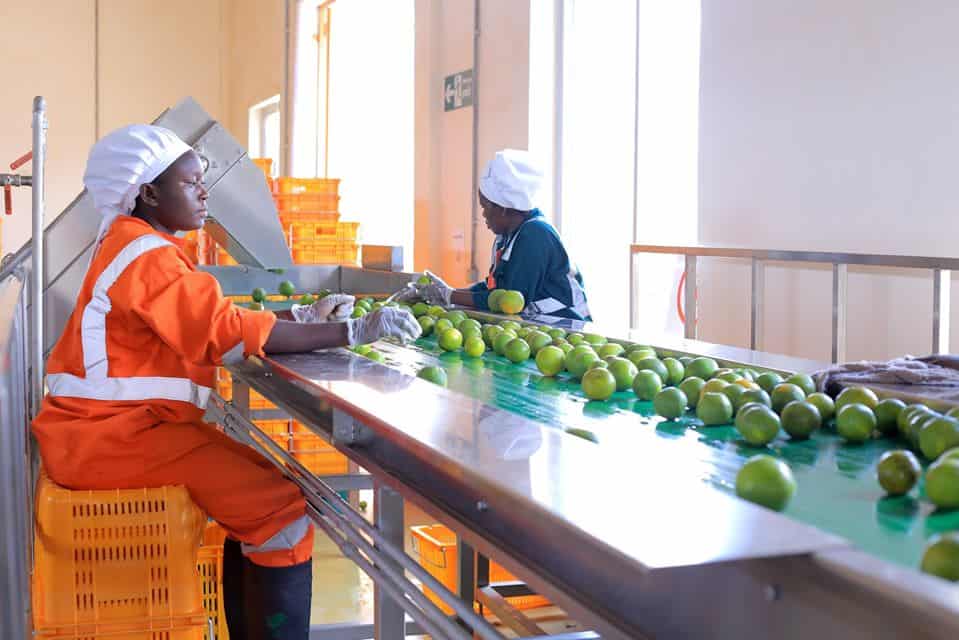
The scale of the planned upgrade is substantial. The factory's current bottling operation is semi-automated and produces about 200 cartons an hour; the new line will be fully automated and capable of 800 cartons an hour — a fourfold increase. Where the plant has processed almost exclusively oranges and mangoes since it opened, the expansion introduces a multi-fruit processing line able to handle pineapples, passion fruits, ginger, tamarind and other produce, diversifying both what farmers can grow for the factory and what consumers will find on shelves. The investment also adds a tissue-culture laboratory to produce disease-free, high-quality seedlings for farmers, a bottled drinking water production line, and a system to convert fruit-processing waste into animal feed and organic fertiliser rather than letting it go to landfill.
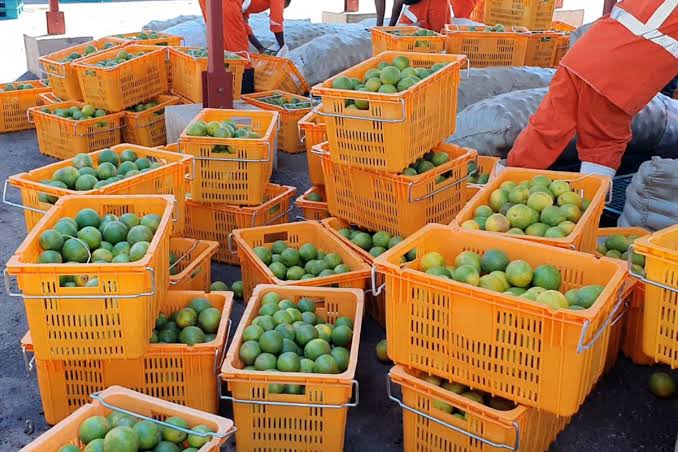
For a region whose economy has long been anchored in agriculture, that is a genuine vote of confidence. But it comes at an immediate cost: because food safety regulations do not permit processing to continue on a live construction site, Angeki confirmed the factory will suspend all fruit purchases for the duration of the works. Farmers who have depended on the plant as their most reliable buyer have effectively been told to wait until June 2027 — the better part of a full growing cycle for citrus and mango trees whose fruit does not keep and cannot simply be stored until a market reopens.
That announcement landed hard in a sub-region where the factory's history has already tested farmers' patience. Soroti Fruit Factory was built with roughly $7.4 million in equipment and training support from the Korea International Cooperation Agency (KOICA), in partnership with the Teso Tropical Fruit Growers Cooperative Union, explicitly to solve a problem familiar across Uganda's fruit belts: abundant citrus and mango harvests rotting for lack of a processor, while farmers absorbed the losses. Construction began in 2015; commercial operations did not start until October 2019, years behind schedule. What followed was a decade of underperformance — the factory ran below capacity, accumulated losses, and became the subject of a parliamentary inquiry into alleged mismanagement. In September 2023, government moved to privatise the loss-making plant, and Chimaki Agro Limited took over operations in May 2024, inheriting a factory that farmers and MPs alike had come to see as a broken promise. The current $21 million expansion — reportedly part of a wider roughly Shs108 billion (about $30 million) government commitment announced in late 2025 — is being framed by officials as the investment that finally fixes it.
Farmer representatives at the groundbreaking said they welcome that long-term vision but cannot ignore the immediate hole it leaves in their household economies. According to reporting from the ceremony, growers appealed to factory management to continue buying at least a portion of the harvest during construction, rather than shutting the market entirely for a year, and asked for support in the form of quality seedlings and demonstration gardens to prepare for the higher volumes the factory will eventually demand.
Soroti District Chairperson Bob Owiny commended President Yoweri Museveni and the government for establishing the industrial park and backing the fruit factory, but pressed authorities to find "immediate solutions" for farmers who stand to lose their biggest buyer for a full year. Owiny also used the moment to press for more investment in the industrial park itself, calling on government and private investors to establish additional processing industries there for coffee, cocoa and bananas — arguing that a single fruit factory cannot carry the industrialisation ambitions of an entire sub-region.
Teso Regional LC5 Chairperson Geoffrey Omolo struck a similar note of conditional optimism, saying residents expect the expansion to finally resolve long-standing complaints about limited fruit varieties and inadequate processing capacity — problems that have dogged the factory since it opened. But he was explicit that the project's ultimate success will be judged less by the machinery installed than by outcomes: whether it actually absorbs farmers' produce at fair prices, creates jobs, and lifts household incomes across the Teso sub-region once it reopens.
The tension on display in Soroti — between a genuinely transformative capital investment and a painful transition period for the smallholders it is meant to serve — is a familiar one in Uganda's agro-industrialisation drive. Government has made value addition a centrepiece of its economic strategy, arguing that Uganda loses enormous value by exporting raw or lightly processed agricultural commodities rather than finished goods. A modernised Soroti Fruit Factory, capable of producing juice, animal feed, organic fertiliser, bottled water and certified seedlings from a single site, fits that ambition neatly on paper. The automation upgrade alone — quadrupling bottling throughput — could meaningfully expand the market the factory is able to absorb once it reopens, potentially benefiting far more farmers than the current plant ever could.
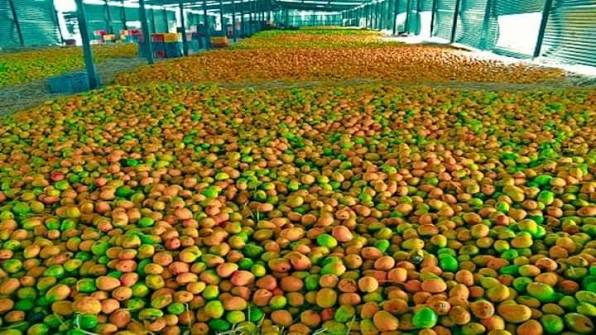
Yet the year-long purchasing freeze is a real and immediate cost, not a hypothetical one. Fruit trees do not pause production to accommodate a construction timeline, and farmers without an alternative buyer face either dumping produce, selling at a discount to middlemen with far less capacity to absorb volume, or watching fruit rot on the tree — the exact outcome the factory was originally built to prevent. Whether local leaders' calls for a phased purchasing arrangement, expanded extension support, or alternative interim markets are heeded in the coming months will determine whether Soroti's farmers experience this expansion as a bridge to a better market, or as a repeat of the broken promises that have defined the factory's first decade.
For now, construction crews are moving in, the Italian-made machinery is being built to order, and Teso's fruit farmers are being asked, once again, to be patient with an institution that has rarely rewarded that patience quickly. If the June 2027 target holds and the expanded plant performs as promised, this could mark the moment Soroti Fruit Factory finally becomes the anchor investment the region was promised in 2015. If it slips — as previous timelines at this factory have — the cost will be borne first, and most heavily, by the farmers standing outside its gates with nowhere else to sell.
Published By | Features Editor