Written By | Torch Media Africa
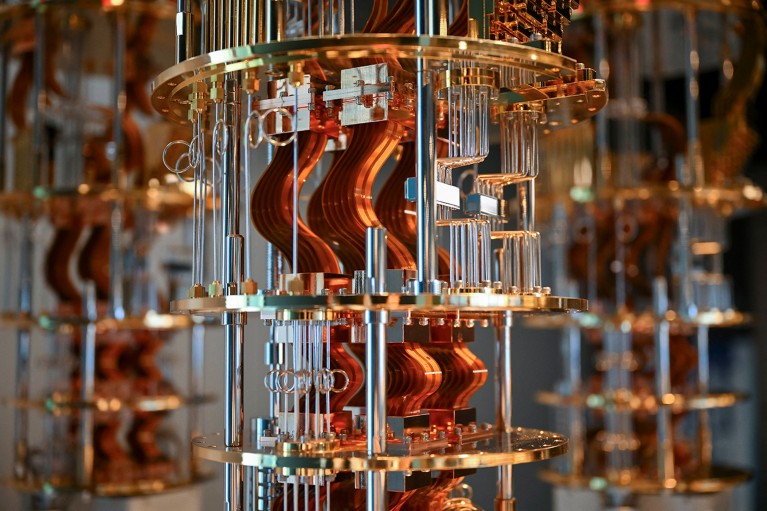
Scientists say they've finally built a quantum computer that can outrun every supercomputer on Earth — and prove it isn't lying to you
SCIENCE & TECH
For thirty years, quantum computing has lived on a promise: someday, a machine built from the spooky rules of subatomic physics would blow past the fastest classical supercomputers on the planet. Someday it would solve problems that would take today's best machines longer than the age of the universe. Someday, someday, someday. That someday just landed — and it came with a receipt.
Researchers at IBM and the University of Chicago announced they've pulled off something no quantum computer has done before: a calculation that is both faster than any classical computer could manage, and independently verifiable — meaning scientists can actually trust the answer it spat out. The team's error-corrected quantum processor chewed through the task in about fifteen minutes. Simulating the same problem well enough to check it the old-fashioned way would take the world's most powerful classical supercomputers a staggering amount of time — likely years, and by some estimates, essentially forever, using leading approximation methods.
"We are now firmly in the quantum advantage era," said Jay Gambetta, Director of IBM Research and an IBM Fellow, announcing the milestone. "We have demonstrated a quantum computation beyond the practical reach of classical computers that establishes, with statistical confidence, a lower bound on how faithfully it was executed. This milestone gives scientists, developers, and businesses a new foundation for trusting quantum computers as they scale to problems far beyond what we can achieve classically."
It's a sentence physicists have been waiting a generation to hear, spoken with the kind of confidence that used to get quantum researchers laughed out of conferences.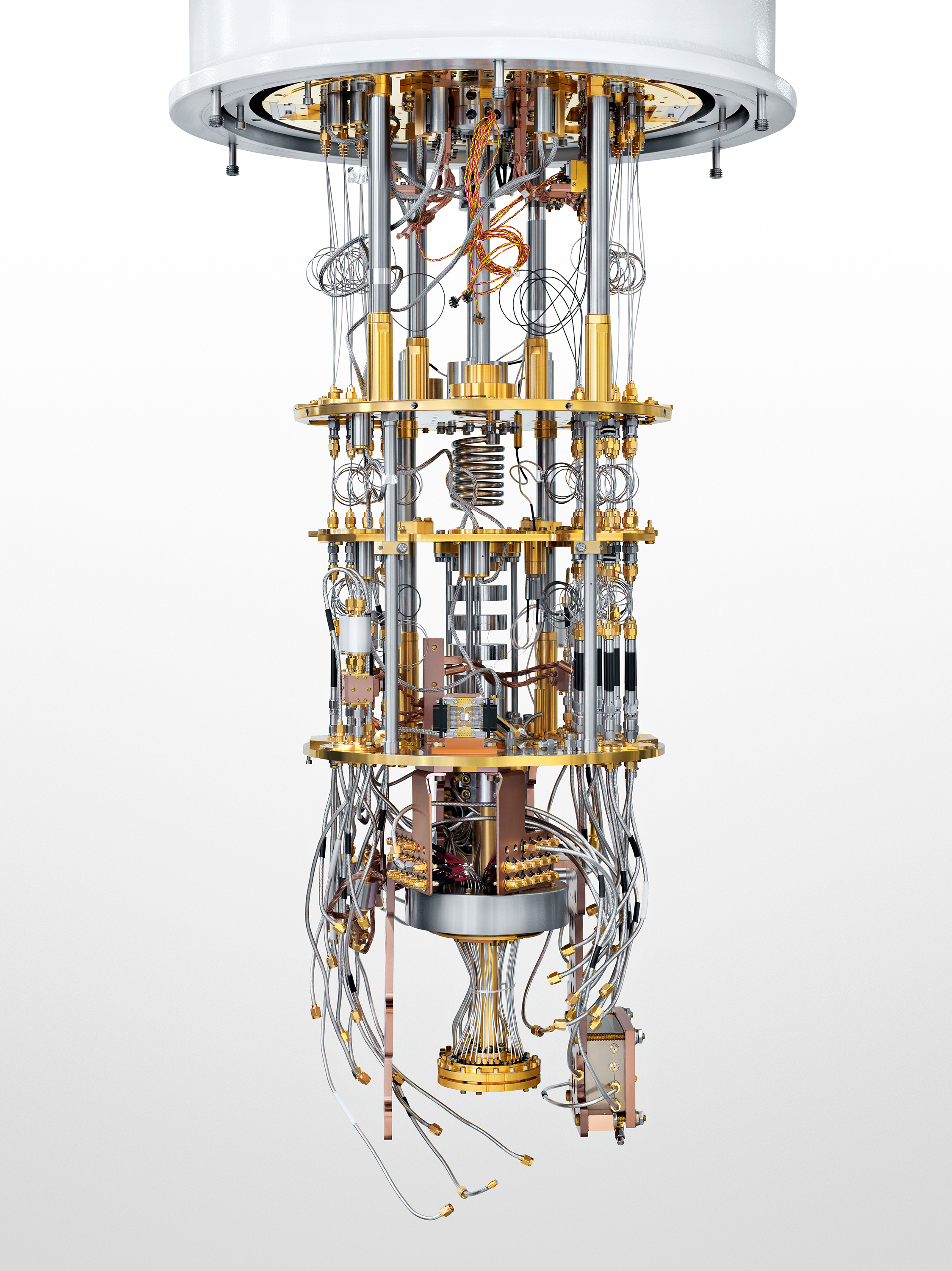
THE PROBLEM WITH "QUANTUM ADVANTAGE" CLAIMS
Here's the dirty secret of quantum computing hype: claims of "quantum supremacy" or "quantum advantage" have been made before — Google's headline-grabbing 2019 announcement being the most famous — and every single one has run into the same brutal counterpunch. Classical computer scientists come along months or years later with cleverer algorithms and manage to simulate the "impossible" quantum result on ordinary hardware after all, sometimes within days.
The reason is a nasty little verification problem. Random quantum circuits — the kind used in most advantage demonstrations — are, by design, almost impossible to check. You run the quantum computer, you get an output, but you have no independent way to know whether that output is actually correct, or just noise dressed up as a result. Classical researchers have exploited exactly that ambiguity, building smarter and smarter simulation shortcuts that quietly erode the "advantage" after the fact.
IBM and the University of Chicago say they've closed that loophole for good. Instead of random circuit sampling — the approach used in most prior advantage claims — the team designed what they call a structured alternative: encoded quantum circuits built so that the answer can be checked with statistical confidence, even though no classical computer could generate that answer in a reasonable amount of time on its own. Their paper, "Sampling hard circuits with verifiably high fidelity," was posted to the arXiv by lead author Simon Martiel and collaborators, describing a method that achieves both goals — hardness and trust — simultaneously for what researchers believe is the first time.
WHAT ACTUALLY HAPPENED INSIDE THE MACHINE
The numbers, for anyone who wants to picture it: the team used 70 error-corrected "logical" qubits — a bundling of many noisy physical qubits into one and each cleaner, sturdier unit that behaves the way theorists always wanted qubits to behave. That's one of the largest demonstrations of logical quantum computing ever attempted. Across the run, the machine executed 2,415 logical two-qubit operations and 468 logical "T gates" — the trickiest, most error-prone building blocks of quantum algorithms — while keeping logical error rates roughly ten times lower than the error rates of the raw physical hardware underneath.
Translation for the rest of us: IBM didn't just run a bigger quantum computer. It ran a quantum computer that got more reliable as it got bigger, which is the exact opposite of what happens with earlier-generation quantum hardware, where errors tend to compound and swamp any useful signal as circuits grow. Error correction — long considered the single biggest obstacle between today's noisy quantum machines and tomorrow's fault-tolerant ones — appears to be working roughly the way theorists hoped, at a scale nobody had verified before.
University of Chicago researchers, who collaborated closely with IBM's quantum team, framed the result as a turning point not just for raw computational muscle but for the credibility of the entire field. A computation nobody can check is a computation nobody can use for anything that matters — a drug simulation, a materials discovery, a cryptographic proof. A computation that comes with a built-in trust guarantee is something scientists, and eventually businesses, can actually build on.
THIRTY YEARS OF "ALMOST THERE"
To understand why this is such a big deal, it helps to remember how young — and how oversold — quantum computing has been. The theoretical case for quantum computers dates back to physicist Richard Feynman's musings in the early 1980s, when he pointed out that nature runs on quantum mechanics, so simulating nature might require a computer that thinks in quantum mechanics too. Peter Shor's 1994 algorithm, which showed a sufficiently powerful quantum computer could crack the encryption underpinning most of modern banking and internet security, turned an academic curiosity into a strategic technology that governments and corporations have poured tens of billions of dollars into chasing.
But building the actual hardware has been brutal. Qubits are almost comically fragile — a stray vibration, a slightly warm wire, a cosmic ray passing through the lab can scramble a calculation before it finishes. For years, the joke inside the field was that quantum computing was "the technology of the future, and always will be." Google's 2019 supremacy claim, IBM's own subsequent milestones, and a parade of academic papers all promised the corner had been turned, only for the goalposts to keep moving, or for classical computer scientists to catch up and spoil the party.
This time, IBM says the "catch-up" problem is precisely what's been engineered away. Because the result is independently verifiable rather than merely difficult to fake, there's no obvious way for a classical simulation to sneak in later and quietly claim the crown, the way it has in the past. That's the detail quantum researchers outside IBM have been buzzing about since the paper dropped in late July, with the news still rippling through the science press this week as outlets described watching a machine "solve a classically intractable problem in fifteen minutes."
EXPERT PERSPECTIVE
Outside commentary on the result has been notably less breathless than typical Silicon Valley hype, and more clinically excited — the tone scientists reserve for something they think might actually hold up. Coverage in the physics and quantum-computing trade press has repeatedly emphasized the same two words: "verified" and "trusted." Those aren't marketing words; they're the exact technical property the field has been missing. As one write-up in the quantum research press put it, the achievement combines, for what researchers describe as the first time, a computation beyond classical reach with statistically grounded confidence that the computer actually got it right — rather than asking the world to take IBM's word for it.
IBM CEO Arvind Krishna, speaking about the company's broader quantum roadmap around the same time as the announcement, said he expects quantum computing to have a "measurable impact" on IBM's own earnings by 2028 or 2029, with the company targeting a full-scale, fault-tolerant quantum computer — one that can run indefinitely long calculations without errors piling up — by 2029. Krishna has floated a jaw-dropping figure for where this could all be headed: a trillion dollars of economic value created by quantum computing by the end of the 2030s, once the technology matures from "advantage on a narrow lab problem" into "everyday tool for chemistry, materials science, logistics and finance."
WHAT THIS MEANS FOR YOU
If you're picturing your laptop being replaced by a quantum machine any time soon, relax — or maybe don't, depending on how you feel about your job security in a decade. This is not a consumer technology, and it isn't going to speed up your Netflix buffering or your spreadsheet. What it is, is a proof of concept that the very hard engineering problem — building a quantum computer whose answers you can actually trust — has a real, working solution.
The practical fallout will show up first in narrow, expensive corners of the economy: drug companies simulating how molecules fold and bind, materials scientists hunting for better batteries and superconductors, logistics and finance firms wrestling with optimization problems too tangled for classical computers to solve efficiently. Longer term, and more unsettling, is the cryptography angle: today's encryption standards, the ones protecting your bank account and your government's secrets, rely on math problems that are hard for classical computers but that a sufficiently powerful, fault-tolerant quantum computer could, in theory, crack. That's still years away by every credible estimate, and governments and tech companies are already racing to roll out "quantum-resistant" encryption standards in anticipation. But milestones like this one are exactly the kind of data point security researchers watch closely to judge how fast that clock is ticking.
There's also a geopolitical and financial subplot worth knowing about. Quantum computing has become a genuine arms race between the U.S., China, and the EU, with IBM, Google, and a swarm of well-funded startups racing for bragging rights and government contracts. A verified, checkable advantage — as opposed to a disputed one — is the kind of result that shifts investor confidence, government funding priorities, and competitive posturing. Expect rivals to respond, and expect skeptics to pick over the paper's methodology in the coming months, because in this field, "verified" claims have a way of attracting exactly the kind of scrutiny that either cements a legacy or unravels one.
THE BOTTOM LINE
For three decades, quantum computing's biggest problem wasn't building a machine that could do something impressive — it was proving that what it did was real. IBM and the University of Chicago say they've cracked that problem, wrapping a genuinely hard computation in a mathematical guarantee that skeptics can check rather than just admire from a distance. Whether this becomes the moment historians point to as the true dawn of the "quantum advantage era," as Gambetta boldly declared, or another impressive-but-contested waypoint on a very long road, will depend on how the result holds up under the world's scrutiny in the months ahead.
One thing is certain: the machines are no longer just fast. For the first time, they're fast — and they can prove it.



