HEALTH
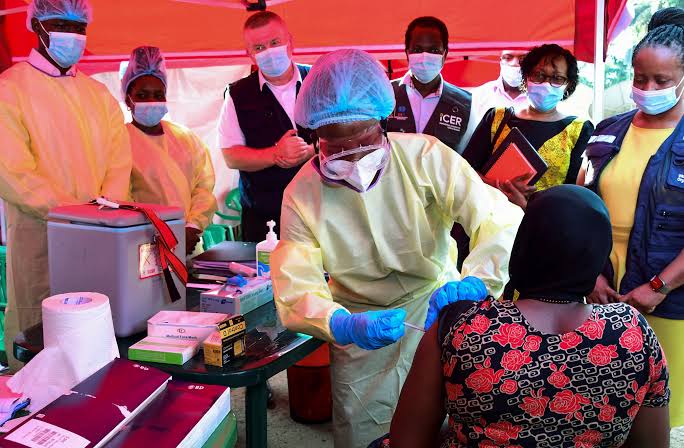
On August 25, the World Health Organization declared Uganda's Ebola outbreak over. The country had gone 42 days — two full incubation periods — without a confirmed case since its last patient, who had contracted the virus in the Democratic Republic of the Congo, was discharged from care on July 16.
The final tally was 20 confirmed cases and two deaths. Fifteen of the 20 were either imported from the DRC or directly linked to transmission chains originating there; the remaining five were locally acquired among contacts and healthcare workers connected to those imported cases. More than 800 contacts were monitored from May 15 onward. Uganda also closed its border with the DRC on May 27 as cases across the frontier escalated.
"Uganda has demonstrated that with decisive action, Ebola outbreaks can be brought under control quickly," said WHO Director-General Dr Tedros Adhanom Ghebreyesus. Africa CDC Director-General Dr Jean Kaseya framed it as a continental lesson: "Uganda has shown that Ebola can be stopped when leadership acts decisively, communities are trusted and public health systems reach people quickly." He added the necessary caveat — "We will only be secure when transmission is stopped everywhere."
The outbreak that has not ended
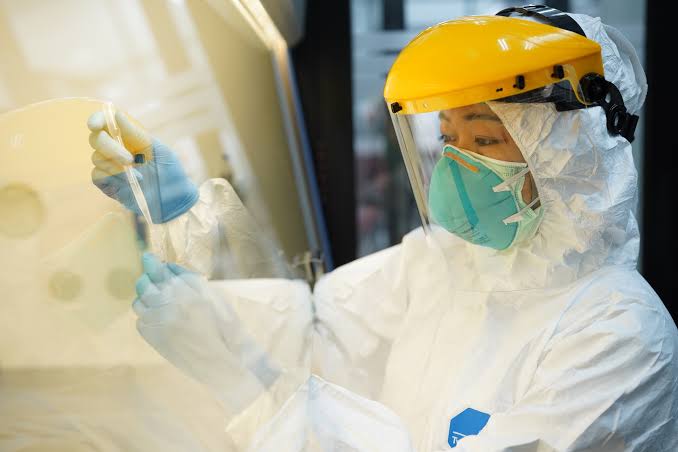
Across the border, the picture is very different. The Bundibugyo ebolavirus epidemic in the DRC, confirmed in May 2026, has become one of the worst filovirus outbreaks on record. As of September 3, the DRC had reported 6,342 confirmed cases and 3,072 related deaths from data up to September 2. The US Centers for Disease Control and Prevention has described the outbreak as spreading substantially faster than previous Ebola epidemics — it passed 1,000 confirmed cases within 40 days of response activation, compared with roughly 235 days in the 2018 DRC outbreak.
The WHO has declared it a Public Health Emergency of International Concern; Africa CDC has declared a Public Health Emergency of Continental Security. Case fatality has run close to half of those infected.
What makes this outbreak scientifically distinct — and so dangerous — is the species involved. There are licensed vaccines against Zaire ebolavirus. There are candidate vaccines with efficacy data against Sudan virus. Against Bundibugyo virus there is no licensed vaccine and no specific treatment, and until this year there was nothing in clinical development either. Uganda's own scientists helped identify the strain in the first place, during the 2007 outbreak in western Uganda that gave the virus its name.
Five candidates, built in months
The response has been to build a pipeline from almost nothing at emergency speed. On June 1, the Coalition for Epidemic Preparedness Innovations (CEPI) announced funding for three Bundibugyo-specific vaccine candidates, each using a different validated platform to spread the technical risk.
IAVI received initial funding of up to $3.2 million to generate a Master Virus Seed stock — the starting material for manufacturing — using material originally developed at the University of Texas Medical Branch. The candidate uses the rVSV platform that underpins the approved, WHO-prequalified Zaire ebolavirus vaccine, whose rapid single-dose onset of protection is particularly valuable in outbreak settings.
Moderna received up to $50 million, the largest of the three commitments, covering preclinical work and Phase 1 trials — with CEPI simultaneously funding manufacturing so that large-scale Phase 2/3 trials can begin immediately if Phase 1 data supports progression. The candidate uses the same mRNA technology validated during COVID-19.
The University of Oxford received up to $8.6 million for a candidate on its ChAdOx1 platform, the technology behind the Oxford/AstraZeneca COVID-19 vaccine, with clinical-grade doses to be manufactured at the Serum Institute of India. That candidate has moved fastest into humans: the BD-Ebov Phase I trial, run by the Oxford Vaccine Group, dosed its first volunteer in July 2026 and is assessing safety and immune response of ChAdOx1 BDBV in 50 healthy adults — the first human study designed specifically against Bundibugyo virus.
In August, CEPI added a fifth candidate, partnering with Egypt's Minapharm Group on an investigational vaccine using the modified vaccinia Ankara platform MVA-CR19. "In just three months, cases of Bundibugyo have spread rapidly across the DRC, making this the largest and deadliest outbreak the country has ever faced," said CEPI chief executive Dr Richard Hatchett, adding that Minapharm's proprietary MVA platform "if successful can serve as the basis for future African-manufactured filovirus vaccines." Gavi has committed $50 million from its First Response Fund towards Bundibugyo vaccines and outbreak response.
Uganda's role in the science
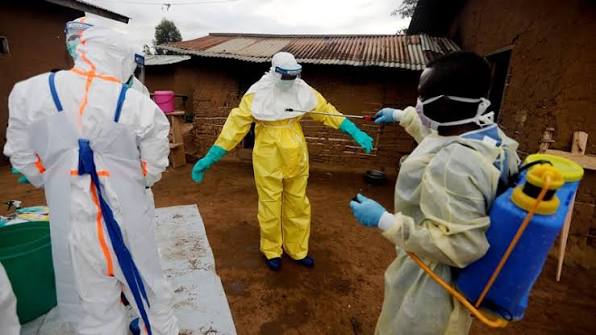
Uganda is not a bystander in this. The Uganda Virus Research Institute (UVRI), which marked its 90th anniversary this year, has said it is in discussions to run Phase 1 and Phase 2 trials of two Bundibugyo candidates. "There are two vaccines for Bundibugyo that we are discussing for testing in phase one and phase two trials," institute director Prof Pontiano Kaleebu said in May. One uses a construct similar to the Zaire vaccine; the second is the Oxford ChAdOx candidate.
UVRI is also pursuing a separate and potentially faster line of inquiry: whether existing Ebola vaccines can generate cross-protective immune responses against Bundibugyo. "We are discussing the approach of using a prime boost with the existing Ebola Zaire vaccine and the Ebola Sudan vaccine to see how broad they can act," Kaleebu said, describing it as primarily a laboratory study. If existing licensed stock offered even partial protection, it could be deployed far sooner than any new candidate.
Kaleebu was careful to note that UVRI is not itself developing a Bundibugyo vaccine — its own development work is focused on COVID-19 and Crimean-Congo haemorrhagic fever. But the institute's track record gives it standing: it has identified at least 40 viruses and virus strains since 1936, including West Nile virus, Semliki Forest virus and Zika, characterised at Entebbe in 1947 and largely ignored until Latin America's outbreaks decades later. "Some of these viruses may not appear dangerous now, but you never know," Kaleebu said.
Uganda has also shown it can move quickly. In February 2025, principal investigators from Makerere University and UVRI stood up a randomised clinical efficacy trial for a Sudan virus vaccine within four days of outbreak confirmation — an unprecedented speed for an emergency trial, and part of why the country's containment record now carries weight with international funders.
Why it matters, and what to watch
The gap between Uganda's outcome and the DRC's is the story here. Two neighbouring countries faced the same virus in the same months. One ended with 20 cases; the other is past 6,000. The difference was not a vaccine — nobody had one — but surveillance, contact tracing, points-of-entry management and speed. That is a useful and uncomfortable finding: for Bundibugyo, conventional public health has so far done all the work that has been done.
It is also why the vaccine race matters. Containment through surveillance is expensive, fragile and dependent on functioning institutions. It held in Uganda; it has not held next door. A licensed Bundibugyo vaccine would change the arithmetic of every future outbreak in the region — and Uganda, which sits on the border, named the strain, and has the trial infrastructure, has an unusually direct stake in the result.
Three markers are worth watching. First, Phase 1 readouts from the Oxford ChAdOx1 BDBV trial and the candidates behind it, which will determine whether Phase 2/3 efficacy trials can begin in affected populations. Second, whether UVRI's trial discussions convert into an actual protocol on Ugandan soil. Third, the cross-protection laboratory work — the fastest available route, if it produces anything. And underneath all of it, the DRC epidemic curve, which will decide whether these vaccines arrive as an outbreak tool or as preparedness for the next one.
Published By | Health News Editor