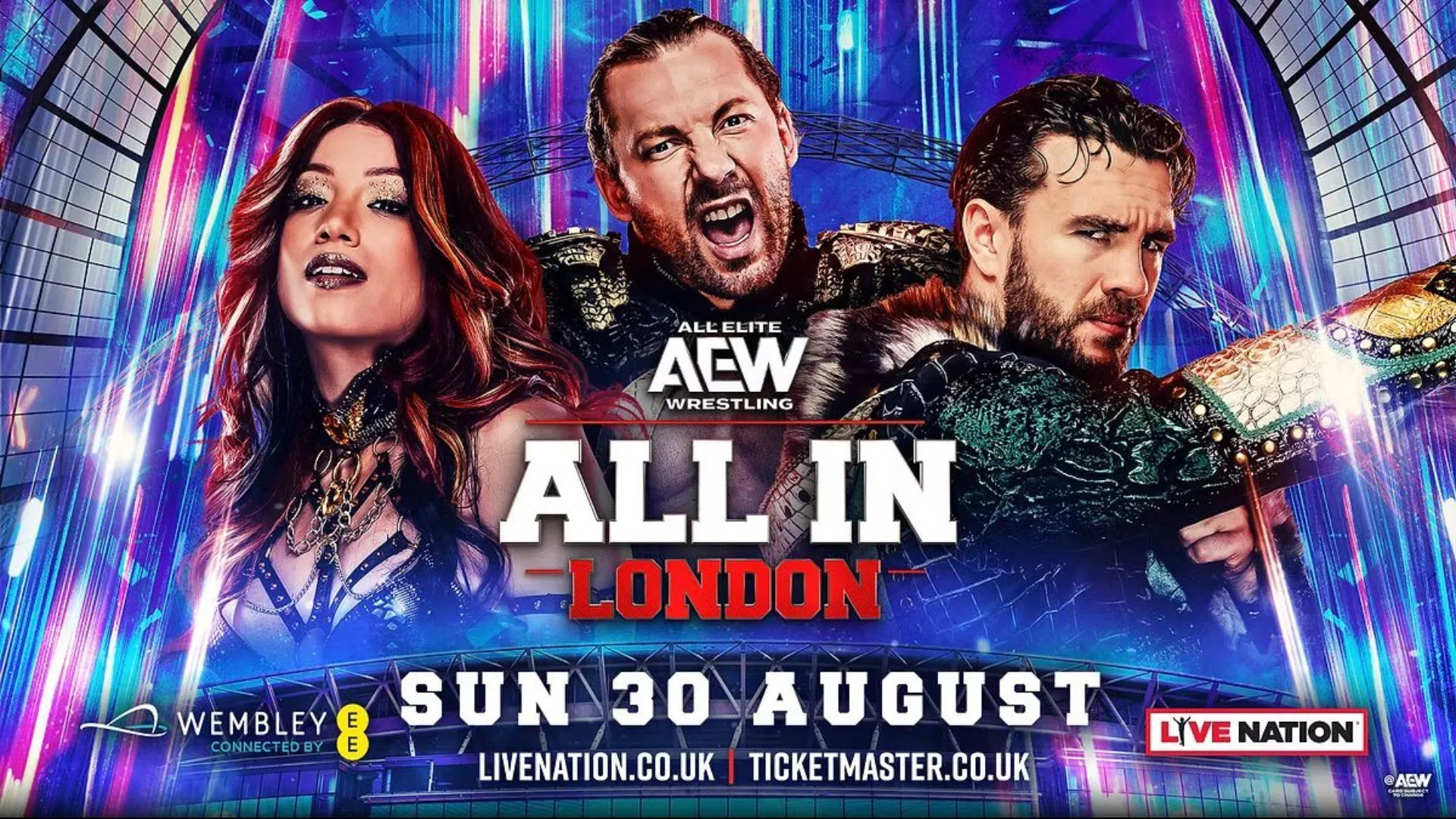
LONDON
By the time the sun dipped behind Wembley Stadium's arch on Sunday evening, roughly 45,000 fans had packed into the stands, many draped in flags and replica title belts, chanting in the rolling, full-throated roar that only a British wrestling crowd can produce. This was AEW All In: London, the third time All Elite Wrestling has brought its flagship show to Wembley, and by ticket count, production scale, and sheer emotional stakes, it was the young company's biggest night yet.
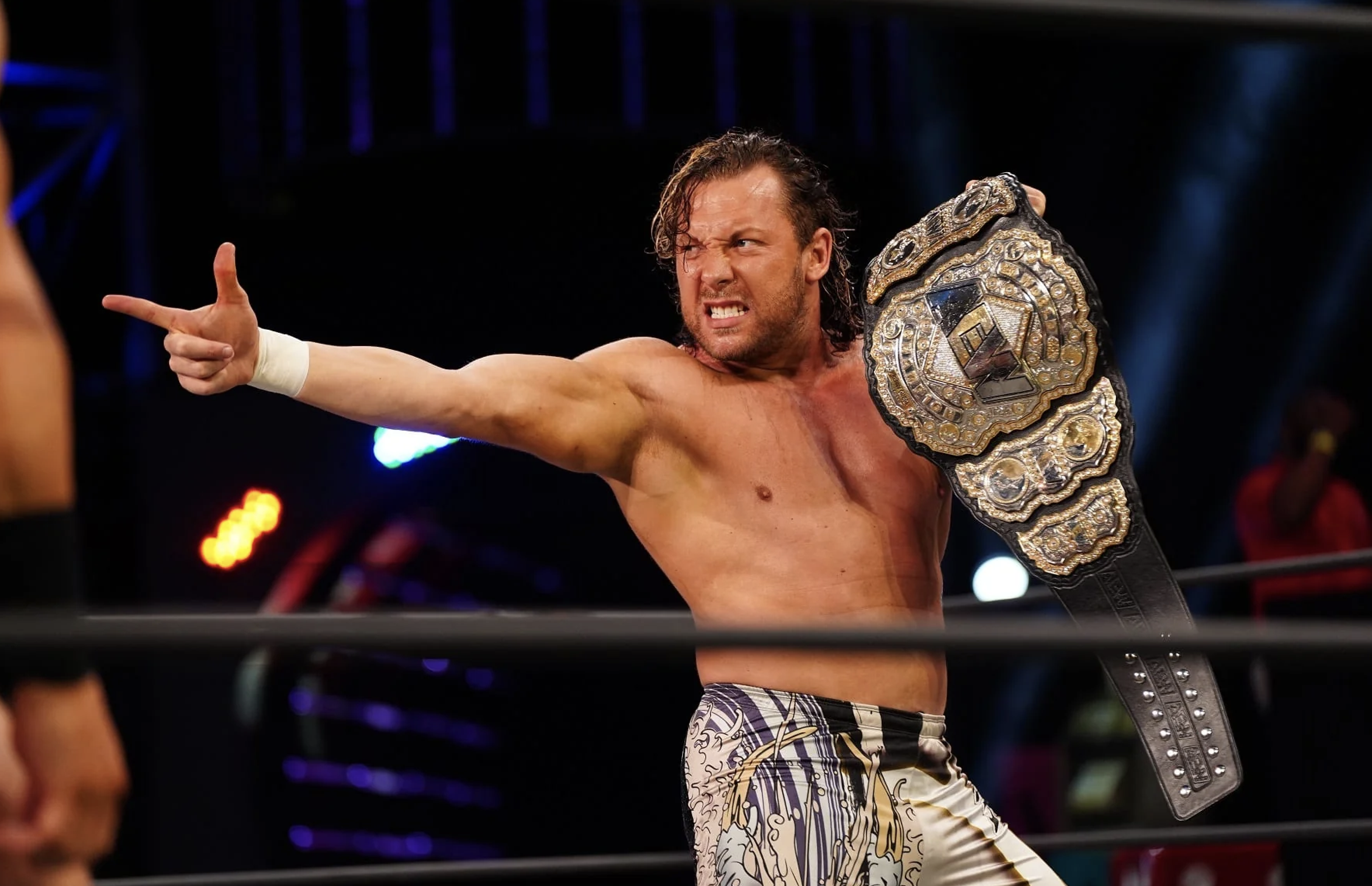
At the center of it all stood Kenny Omega, defending the AEW World Championship against Will Ospreay — the Londoner turned international wrestling icon, fighting for the first time in a world title main event in front of the fans who watched him come up on the British independent scene a decade earlier. It was a rivalry five years and three continents in the making, one that has come to define the so-called "Forbidden Door" era of professional wrestling, when the walls between Japanese, American, and independent promotions came down and a handful of generational talents became the sport's biggest free agents.
A Hometown Dream, Long Deferred
Ospreay's route to Wembley has been unusually public. He spent years wrestling in front of a few hundred people in English leisure centers before New Japan Pro-Wrestling turned him into one of the most acclaimed in-ring performers of his generation, a run that eventually carried him to All Elite Wrestling in 2024 as one of the promotion's most significant signings. Every step of that journey, Ospreay has talked openly about a single ambition: headlining a wrestling show in his home country on the sport's biggest stage. Sunday was that night, and the crowd noise when his music hit reportedly registered as the loudest moment AEW's production team has ever recorded at a UK show.
Omega, for his part, arrived at Wembley as the championship's defending gatekeeper, a role that has defined much of his AEW tenure since co-founding the promotion alongside Chris Jericho, the Young Bucks, Cody Rhodes, and CEO Tony Khan back in 2019. Their in-ring chemistry, built over matches stretching back to Ospreay's time in Japan, has repeatedly been cited by critics as some of the finest professional wrestling produced this decade.
A Card Built Like a Mountain
AEW did not simply hang its night on one match. The All In card featured nine bouts, eight of them for championship gold — a density of stakes rarely attempted even by wrestling's biggest annual spectacles. Willow Nightingale defended the AEW Women's World Championship against Mercedes Moné in a rematch of one of the most decorated women's rivalries in the promotion's history. Kyle Fletcher put the International Championship on the line in a three-way against Konosuke Takeshita and Kazuchika Okada, one of the most respected wrestlers of the last twenty years. Adam Copeland and Christian Cage defended the World Tag Team Championship against the Young Bucks, two of AEW's own founders, in a match freighted with more than a decade of shared history.
Elsewhere on the card, Kevin Knight put the TNT Championship on the line against Darby Allin in a Falls Count Anywhere brawl expected to spill into the Wembley crowd, while a Casino Gauntlet match — a chaotic multi-entrant format unique to AEW — determined the next challenger for Omega's title. In the night's most personal grudge match, Jon Moxley defended the Continental Championship against British wrestler Nigel McGuinness, a bout that carried extra weight given McGuinness's own history headlining UK independent shows before this era of AEW existed.
"The 'Artful Dodger' is leaving with the gold! Jon, it's coming home," McGuinness told reporters ahead of the bout, framing the match as a homecoming story running parallel to Ospreay's.
Why Wembley, Why Now
AEW's relationship with Wembley Stadium is itself a kind of origin story. The promotion takes its name and its founding show, All In, from a 2018 independent wrestling event staged by Omega and the Young Bucks that sold out a 10,000-seat arena in Illinois in a matter of minutes, proving there was appetite for wrestling outside the industry's dominant promotion. That show's success helped convince Tony Khan to bankroll a full-time company a year later. Returning to the All In name at Wembley Stadium — first in 2023, again in 2024, and now for a third time in 2026 — has become AEW's way of marking how far that experiment has traveled: from a rented arena in the American Midwest to one of the largest and most storied stadiums in world sport.
The scale also matters competitively. AEW has spent seven years positioning itself as the primary alternative to WWE, and a sold-out, tens-of-thousands-strong stadium show in a market outside the United States is one of the clearest signals the company can send that it operates on a genuinely global scale. Broadcast deals carrying AEW programming across North America, the UK, and international streaming partners have expanded steadily since the promotion's launch, and nights like Sunday's are designed as much for the cameras and the numbers they generate as for the fans inside the building.

The Scene Inside Wembley
Wrestling in this country used to mean church halls and leisure centres. Tonight it means Wembley, and it means the world title. I don't think I'll ever get used to saying that.
— Will Ospreay, in comments to British press ahead of All In: London
What This Means for Wrestling Fans
For casual viewers, Sunday's show is a useful marker of just how far professional wrestling's second-biggest promotion has come in a relatively short span. AEW's audience has always skewed toward fans who value in-ring storytelling and athleticism, and a show of this size validates the notion that there is a substantial, paying audience for wrestling that exists outside WWE's orbit. It also raises the stakes for whatever comes next: title changes at All In tend to reshape AEW's storylines for months, and a result of this magnitude, in front of a crowd this large, will be talked about across the wrestling world well into the fall.
For UK fans specifically, the night carries a different kind of significance. Ospreay's rise from independent shows to a Wembley main event mirrors a broader boom in British professional wrestling over the past decade, and promoters across the country will be watching to see whether AEW's success translates into more sustained investment in homegrown talent and venues.
As pyrotechnics lit the Wembley arch and the arena sang along to Ospreay's entrance theme one final time, it was hard not to see the show as a hinge point — not just for two wrestlers who have spent a decade building toward this match, but for a company that has spent seven years trying to prove that pro wrestling's biggest nights don't have to belong to just one promotion.
Published By | Sports Editor