East Africa
Kenya entered the second half of 2026 with two numbers moving in opposite directions. The economy is slowing, its 2026 growth forecast cut three times in twelve months by three different institutions. And the government's flagship universal health coverage vehicle, the Social Health Insurance Fund (SHIF), is running loss ratios north of 2,600 percent on the very population segment it was built to serve. Together the two trends describe a state trying to expand its social contract at the exact moment its fiscal room to do so is narrowing.
A Growth Forecast Cut Three Times
The International Monetary Fund downgraded its 2026 growth projection for Kenya to 4.5%, down from an earlier 4.9% estimate, citing inflationary pressure, higher fuel costs, weakening tourism performance and rising fertiliser and input costs. IMF Managing Director Kristalina Georgieva's fund attributed part of the shock to the Iran-Israel-U.S. conflict disrupting oil flows through the Strait of Hormuz, a corridor that handles roughly 20% of global oil and gas volumes. Kenya's National Treasury, under Cabinet Secretary John Mbadi, responded with an 8% cut in fuel value-added tax and a Sh6 billion fuel subsidy to cushion pump prices, which the Central Bank of Kenya, led by Governor Kamau Thugge, warned could still push inflation to 6.2% before easing back toward roughly 5.7% by March 2027.
The World Bank's July 9, 2026 assessment was gloomier still, trimming its own 2026 forecast to 4.3% — a 0.6 percentage point downward revision from its late-2025 estimate — and projecting 4.4% growth in 2027. The Bank's starkest finding was social rather than macroeconomic: it warned that the slowdown could push between 1 million and 2.4 million additional Kenyans below the poverty line, as a 2-to-4.5 percentage point rise in the poverty rate. The African Development Bank's separate outlook sits at the more optimistic end of the range — 2025 growth of 5.0%, up from 4.7% in 2024, easing to 4.6% in 2026 and 4.7% in 2027 — with the AfDB attributing 2025's resilience to a rebound in industry and services that offset weaker agricultural output. Even that relatively upbeat reading flags rising strain: a fiscal deficit widening from 5.6% to 5.9% of GDP in 2025 and a projected 6.1% in 2026, inflation climbing from 4.1% to a projected 5.4%, and a current account deficit widening from 1.3% to 2.8% of GDP by 2026.
The Debt Arithmetic
Kenya's public debt reached KSh 12.84 trillion in February 2026, described by analysts as the highest level on record and equivalent to roughly 69.5% of GDP — approaching the 73.4% peak recorded in 2023. Domestic debt accounts for KSh 7.07 trillion (55% of the total) against KSh 5.78 trillion in external debt (45%), with total debt up KSh 1.71 trillion, or 15.4%, from February 2025. A US$2.25 billion Eurobond issued in mid-February alone added KSh 290.21 billion to the external sovereign bond stock. Debt service consumed roughly KSh 1.72 trillion in FY2024/25 — about 69% of ordinary revenue collected, more than double the 30% threshold the IMF typically considers sustainable.
Treasury CS Mbadi's FY2026/27 budget, presented June 11, 2026, projects total expenditure of Sh4.8 trillion (23.2% of GDP), of which Sh3.5 trillion (17.1% of GDP) is recurrent spending. Against total revenue and grants of Sh3.64 trillion — Sh2.95 trillion in ordinary revenue (14.94% of GDP), Sh644.8 billion in aid and Sh43.6 billion in grants — the budget leaves a fiscal deficit of Sh1.15 trillion, or 5.5% of GDP, to be financed through Sh1.03 trillion in domestic borrowing and Sh116.2 billion externally. Kenya's foreign reserves stood at roughly $12 billion, equivalent to 5.4 months of import cover, a cushion the Central Bank has been drawing on even as it cut its policy rate by 225 basis points to 9.0% by December 2025 to support credit growth, which rebounded to 6.4% alongside declining lending rates and improved asset quality.
SHIF's Actuarial Crisis
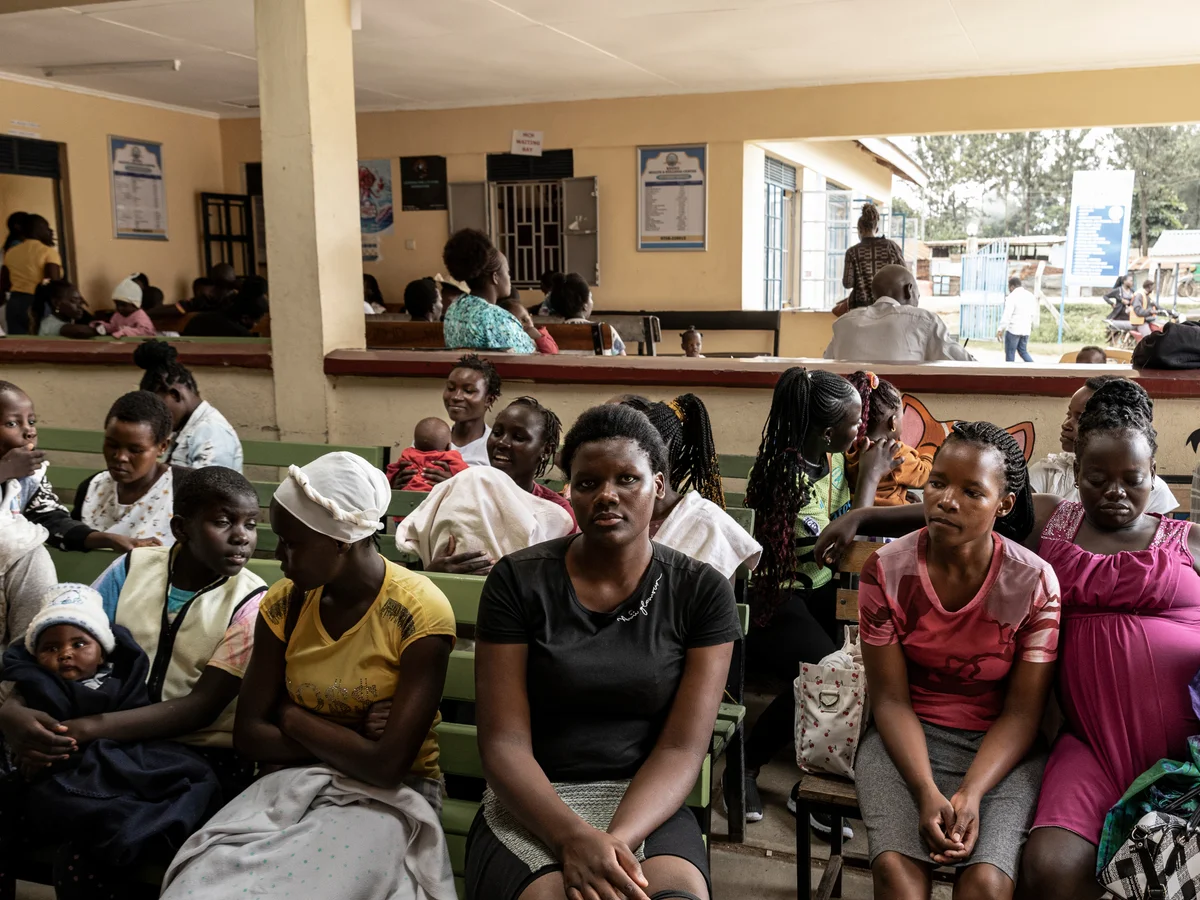
It is against this tightening fiscal backdrop that Kenya's Social Health Insurance Fund — the successor to the National Hospital Insurance Fund and the financing backbone of the country's universal health coverage push — is running numbers that would alarm any actuary. As of mid-2026, 29 million Kenyans were registered with SHA (the Social Health Authority that administers SHIF), but only about 5 million, roughly 17% of those registered, were actively paying contributions. The remaining 24 million are registered but non-contributing — a gap that goes to the heart of financing a scheme built on a minimum annual contribution of Sh6,000 per household, against an estimated Sh14,090 average premium actuaries say the fund would need per household to be self-sustaining.
The loss ratios tell the sharper story. For the informal sector — 19.9 million workers, or 83% of Kenya's workforce, and the segment SHIF was explicitly designed to bring into formal health financing for the first time — the loss ratio (claims paid out against premiums collected) rose from 1,922% in January 2025 to 2,655% by June 2025, meaning the fund was paying out more than Sh26 for every Sh1 it collected from informal-sector contributors. The formal sector, where contributions are payroll-deducted and more reliably collected, saw its own loss ratio more than double, from 35% to 72% over the same period — evidence of a large and growing cross-subsidy from formal employees to the uninsured informal majority. In aggregate, SHA collected Sh159.34 billion in contributions and disbursed Sh122.34 billion to providers, leaving a nominal net operating surplus of Sh36.99 billion — a figure that masks the underlying structural mismatch between the two segments, since the surplus depends on a low incumbent payout rate on claims: the current claims settlement rate is 74%, against an official target of 85%. If settlement rates rise as the government has promised, the sustainability math tightens further.
Health Cabinet Secretary Aden Duale has defended the programme's expanded benefits — including broadened maternal and cancer care coverage, which he defended before a Senate committee in 2026 — while leading the presentation of the Ministry of Health's 2026/2027 budget estimates to Parliament and pressing for enhanced funding for public health priorities. SHIF's target is to cover 43 million people, roughly 85% of Kenya's population; against a workforce split of 19.9 million informal workers to 3.1 million formal ones, the arithmetic of who pays and who is covered remains the programme's central unresolved tension, inherited in part from the predecessor NHIF scheme, whose own informal-sector active-contributor rate never exceeded 22% against a 74% target.
The Export Economy Quietly Shifts
Away from the health-financing debate, Kenya's export economy has been undergoing its own rebalancing. Total export earnings reached KSh 387.6 billion in 2024, according to Central Bank of Kenya data, growing at a compound annual rate of 7.66% since 1998. Within that total, horticulture — cut flowers chief among them — has been the standout performer, expanding at a 9.57% compound annual growth rate and lifting its share of total exports from 34.9% to 41.5%. Tea remains Kenya's largest single export by volume and the sector's most stable earner, but its export share has been declining even as absolute volumes hold up; coffee, by contrast, has seen falling volumes offset by rising unit prices, making it the most volatile of the three legacy cash crops, sensitive to global commodity price swings.
The shift matters beyond agronomy. Horticulture's growth has been the most consistent year-on-year performer in Kenya's export basket, a rare source of foreign-exchange stability at a moment when the current account deficit is widening and reserves are being drawn down to defend fuel prices. It is also a labour-intensive sector concentrated around Lake Naivasha and the highlands, generating rural formal employment even as the informal economy — the same 19.9 million workers SHIF is struggling to bring into its contribution base — continues to dominate the labour market overall.
What It Adds Up To
None of Kenya's three headline growth forecasts for 2026 — the IMF's 4.5%, the World Bank's 4.3%, or the AfDB's more optimistic 4.6% — describe a recession. But all three describe deceleration at a moment when debt service already consumes more than two-thirds of ordinary revenue, when a fuel-tax cut introduced to blunt inflation is itself costing the exchequer an estimated Sh11–22 billion in lost VAT revenue this fiscal year, and when a universal health coverage programme central to the government's social policy agenda is being kept afloat by cross-subsidy rather than by the broad-based informal-sector buy-in it was designed around. Kenya's horticulture export boom shows an economy capable of finding new sources of growth. Whether the state can finance the health, debt and subsidy commitments layered on top of that growth — without further squeezing the same households SHIF and the fuel subsidy are meant to protect — is likely to be the defining fiscal question of the next two budget cycles.
Published By | News Editor