Written By | Agencies
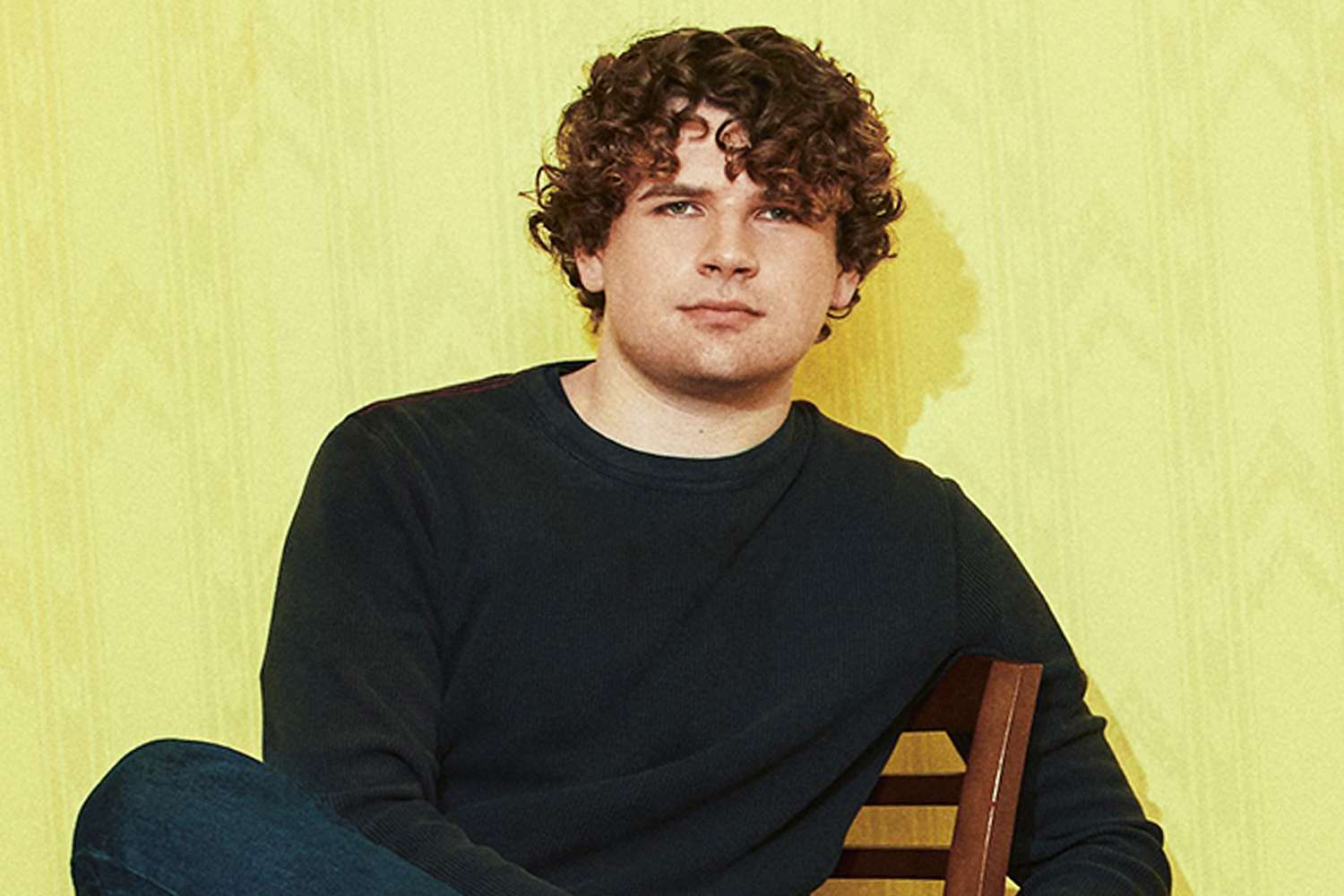
Kane Parsons posted a short video to YouTube that has grossed $141 million worldwide
LOS ANGELES
In the spring of 2021, a teenager named Kane Parsons posted a short video to YouTube. It depicted an ordinary person stumbling through fluorescent-lit, carpeted rooms that seemed to extend forever — no exits, no people, no logic. Parsons called the video "Finding myself at the backrooms," uploaded it from his bedroom, and watched it go viral with quiet disbelief.
Five years later, the mythology he built from that eerie clip has become a full-length horror film — produced by A24, released to 3,200 theaters, and grossing **$141 million worldwide**. Its opening weekend figure of $118 million shattered A24's all-time record, more than tripling the benchmark set by Civil War in 2024.
The director? Still Kane Parsons. Still 20 years old. Now the youngest filmmaker in history to debut at number one at the American box office.
Hollywood has not quite figured out what to do with any of this.
From 4chan To The Big Screen
The Backrooms began, as so much internet folklore does, in the murky depths of 4chan. In 2019, an anonymous user posted a photograph of a jaundiced, fluorescent-lit room with the caption: "If you're not careful and you noclip out of reality in the wrong areas, you'll end up in the Backrooms."
The concept spread rapidly through Reddit, TikTok, and YouTube, inspiring thousands of videos and short films. The Backrooms became a shared mythology — a post-internet ghost story about liminal spaces and the horror of being somewhere never meant to be inhabited.
Parsons, who goes by "Kane Pixels" online, took the concept further than anyone else. His YouTube series — made with consumer-grade equipment and an intuitive grasp of slow-burn terror — accumulated hundreds of millions of views. By the time A24 approached him about a feature film, Parsons had already done the hard creative work.
The $10 Million Miracle
A24 has a reputation for backing singular visions at modest budgets, and the Backrooms project fit perfectly. The reported production budget was $10 million — a fraction of what Disney spent on The Mandalorian and Grogu, the Star Wars film it faced in its opening weekend.
Parsons co-scored the film and directed every frame, maintaining the visual language of his YouTube work while scaling it for cinema. Producers described a filmmaker with a preternatural understanding of where the camera should be — and what it should not show.
"Kane understood that the scariest thing about the Backrooms isn't any specific monster," one producer told Variety. "It's the architecture itself. The endlessness."
Beating The Empire
The numbers will haunt Hollywood's traditional power structures for some time. On its opening weekend, Backrooms grossed **$81.5 million domestically** — essentially matching the launch of *The Mandalorian and Grogu*, which opened the previous week on a reported budget of $165 million. Disney's Star Wars film cost sixteen times as much. It did not open significantly better.
Also in the mix: a second indie horror film called Obsession, made by another YouTube creator, which outperformed several major studio releases. The back-to-back performance has reignited a debate Hollywood has been reluctant to have: whether the franchise-first, IP-driven model is losing its grip on audiences.
Parsons, in his first major press appearance, was characteristically understated. "I just made the film I wanted to see," he told NBC News. "I didn't think about the box office. I thought about the rooms."
A New Kind Of Filmmaker
What makes Parsons' story genuinely novel is not just that a young person made a successful film — it's that the entire infrastructure of his career was built outside the traditional studio system, on platforms that didn't exist fifteen years ago.
He did not go to film school. He did not work his way up through the assistant director system. He posted videos to YouTube, refined his craft in public, built a community of tens of millions of viewers — and then, when he took that world to the cinema, those viewers showed up.
There is a legitimate question of whether this is a repeatable model or a once-in-a-generation coincidence. But the success of Backrooms suggests that the pipeline between online creative communities and mainstream cinema is more real — and more powerful — than studios have been willing to admit.
What This Means For Cinema
For audiences, the lesson may be simpler than any industry analysis can capture: originality sells. In a summer when major studios are competing with sequels, reboots, and franchise extensions, a $10 million film built on an internet myth by a 20-year-old from his bedroom has outrun them all.
The film has now grossed $141 million worldwide and is still expanding. There is talk of a sequel, though Parsons has been publicly noncommittal. A24's stock, already high among cinephiles, has risen further.
But the most enduring consequence may be measured in the hundreds of other young creators who watched those opening-weekend numbers and understood, for the first time, that the door is open — even if they have to find it in a maze of fluorescent-lit rooms first.



