Dar es Salaam
Tanzania has quietly become one of the most compelling growth stories in Sub-Saharan Africa. While much of the continent's economic narrative in 2026 centers on debt distress, fiscal consolidation, or post-conflict recovery, Tanzania is moving in the opposite direction: the International Monetary Fund projects GDP growth of 6.3% in 2026, following 6.0% growth in 2025, putting the East African nation among the fastest-expanding economies on the continent. The African Development Bank's African Economic Outlook is slightly more conservative at 5.4% for 2026, rising to 6.1% in 2027, while the United Nations Conference on Trade and Development (UNCTAD) forecasts 5.8% growth this year as inflation eases to roughly 2.8%-3.5%. Whichever figure proves closest to reality, the consensus across multilateral institutions is the same: Tanzania's economy is accelerating, anchored by three distinct but reinforcing pillars — a transformational liquefied natural gas (LNG) project, a resurgent gold mining sector, and a tourism industry pushing toward record arrivals.
The $42 Billion Gas Bet
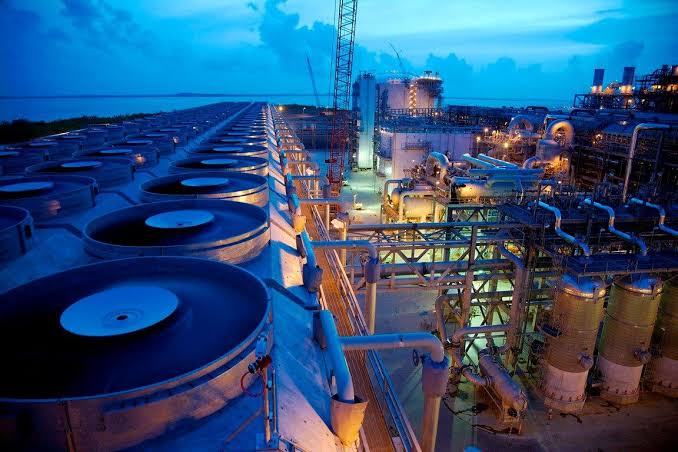
The centerpiece of Tanzania's long-term economic transformation is the long-delayed Tanzania LNG project, a joint venture between Shell, Equinor, ExxonMobil, Pavilion Energy, Medco Energi and the state-owned Tanzania Petroleum Development Corporation (TPDC). The project aims to monetize more than 47.13 trillion cubic feet of offshore natural gas reserves discovered off the southern coast near Lindi, and is now estimated to cost approximately $42 billion — which would make it the single largest investment in Tanzania's history if it proceeds to final investment decision.
After years of stalled negotiations over fiscal terms and the host government agreement, momentum returned sharply in early 2026. Tanzania's Energy Minister met with Equinor and Shell executives on April 10, 2026, to advance talks, and the government has targeted June 2026 for finalizing the legal framework governing the project — concluding the host government agreement that would unlock subsequent investment decisions by the consortium. Officials and analysts tracking the project expect first LNG production around 2034, with the development expected to create more than 100,000 jobs once construction and operations ramp up. The project would position Tanzania alongside Mozambique as one of East Africa's two major LNG exporters, fundamentally reshaping a national budget currently dominated by agriculture, tourism and mining revenue.
The gas project's significance extends beyond direct fiscal revenue. A development of this scale typically catalyzes secondary infrastructure — port expansion, road and rail links to the Lindi region, workforce housing, and a domestic gas-to-power program that could ease the electricity supply constraints that have historically limited industrial growth in southern Tanzania. The government has signaled it wants a portion of produced gas reserved for domestic use, a recurring point of negotiation with the international consortium that wants maximum export flexibility.
Gold: Tanzania's Quiet Mining Boom
While the LNG project remains a decade from production, Tanzania's gold sector is delivering immediate fiscal impact. Gold exports surged 37.4% to approximately $4.7 billion in 2025 (with some industry estimates putting the year-to-August-2025 figure at $4.32 billion), driven by a combination of rising global gold prices and expanding output from Tanzania's established mines. The mining sector as a whole now contributes more than 10% of GDP, a marked increase from a decade ago when the sector was a minor contributor to national output.
Two mines anchor the boom: Geita, operated by AngloGold Ashanti and commercialized in 2000, remains among the largest and most technologically advanced gold operations on the African continent. North Mara and Bulyanhulu, both operated under the Twiga Minerals joint venture between Barrick and the Tanzanian government — a structure created in 2019 after a dispute settlement between Barrick and Dar es Salaam — together deliver production volumes comparable to a Tier One mining complex, with Barrick projecting combined output above 500,000 ounces annually for the next decade. The Twiga arrangement, in which the government holds a 16% free-carry stake and splits economic benefits roughly 50-50 with Barrick, has become a reference model for how African governments renegotiate mining terms with multinational operators.

Government revenue from mining has grown sharply as a result: receipts rose from approximately TZS 526 billion in fiscal year 2020/2021 to over TZS 1.071 trillion in fiscal year 2024/2025 — more than doubling in four years. Tanzania's Ministry of Minerals has also launched high-resolution airborne geophysical surveys across the Nzega and Kahama districts in partnership with Barrick, aimed at identifying new exploration targets and extending the country's gold pipeline beyond its current flagship mines.
Tourism's Push Toward Five Million Visitors
The third pillar, tourism, has rebounded strongly post-pandemic and is now a deliberate target of government industrial policy. Tanzania's Ministry of Natural Resources and Tourism is targeting an increase in tourism's direct contribution to GDP to 18.9%, alongside an ambition to attract five million international visitors annually. International arrivals reached 2.29 million in 2025, showing sustained growth momentum but also illustrating how far the sector must climb to hit the government's headline target.
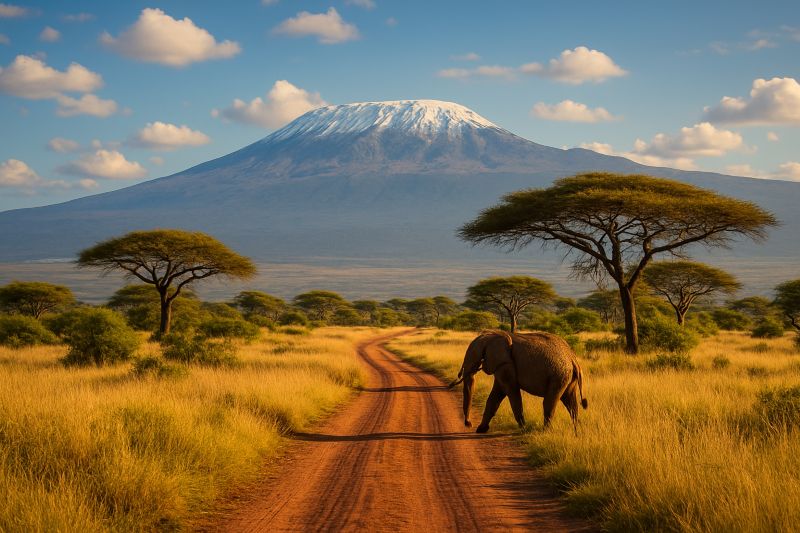
Tanzania's tourism appeal rests on a geographically diversified product: the Serengeti and Ngorongoro Crater for safari tourism, Mount Kilimanjaro for trekking, and Zanzibar's beaches and Stone Town for coastal and cultural tourism. The government's strategy has increasingly emphasized diversifying beyond the traditional northern safari circuit toward the southern circuit (Selous/Nyerere National Park and Ruaha) and Zanzibar's hospitality infrastructure, both to spread tourism revenue more evenly across regions and to reduce pressure on the most-visited parks.
Macroeconomic Stability Underpins the Growth Story
Tanzania's growth narrative is reinforced by relative macroeconomic discipline. Inflation is projected to stay moderate, rising only slightly from 3.3% in 2025 to roughly 3.5% in 2026 — a contrast with several regional peers grappling with double-digit inflation. Government debt is forecast to decline from 49.6% of GDP in 2025 to 48.3% in 2026, a trajectory the AfDB and IMF both characterize as consistent with prudent fiscal management rather than the debt distress seen in some West and Southern African economies in recent years.
Risks remain. Analysts at Tanzania-focused research groups have flagged that political volatility following the country's 2025 general election could trim growth by one to two percentage points if disputes over the result are not resolved smoothly. The economy also remains exposed to commodity price swings — a reversal in gold prices would directly hit export earnings and government revenue, given how concentrated the recent fiscal gains have been in the mining sector. And the LNG project, despite its 2026 momentum, has missed previous target dates before; the consortium and government still need to convert the host government agreement into a binding final investment decision, a step that has tripped up similarly large East African energy projects in the past.
A Template for Diversified Growth
What distinguishes Tanzania's current trajectory from many resource-driven African growth stories is the breadth of its base. Rather than depending on a single commodity, the economy is drawing simultaneous momentum from energy (gas), mining (gold), services (tourism), and continued agricultural output, which still employs the majority of Tanzania's workforce even as its share of GDP gradually declines relative to mining and services. Should the LNG project reach final investment decision in 2026 as currently targeted, Tanzania would add a fourth, longer-horizon growth pillar that could sustain elevated growth rates well into the 2030s, transforming the country from a steady East African performer into one of the continent's most significant natural resource and energy economies.
Published By | Features Editor