Written By | BK Mugizi
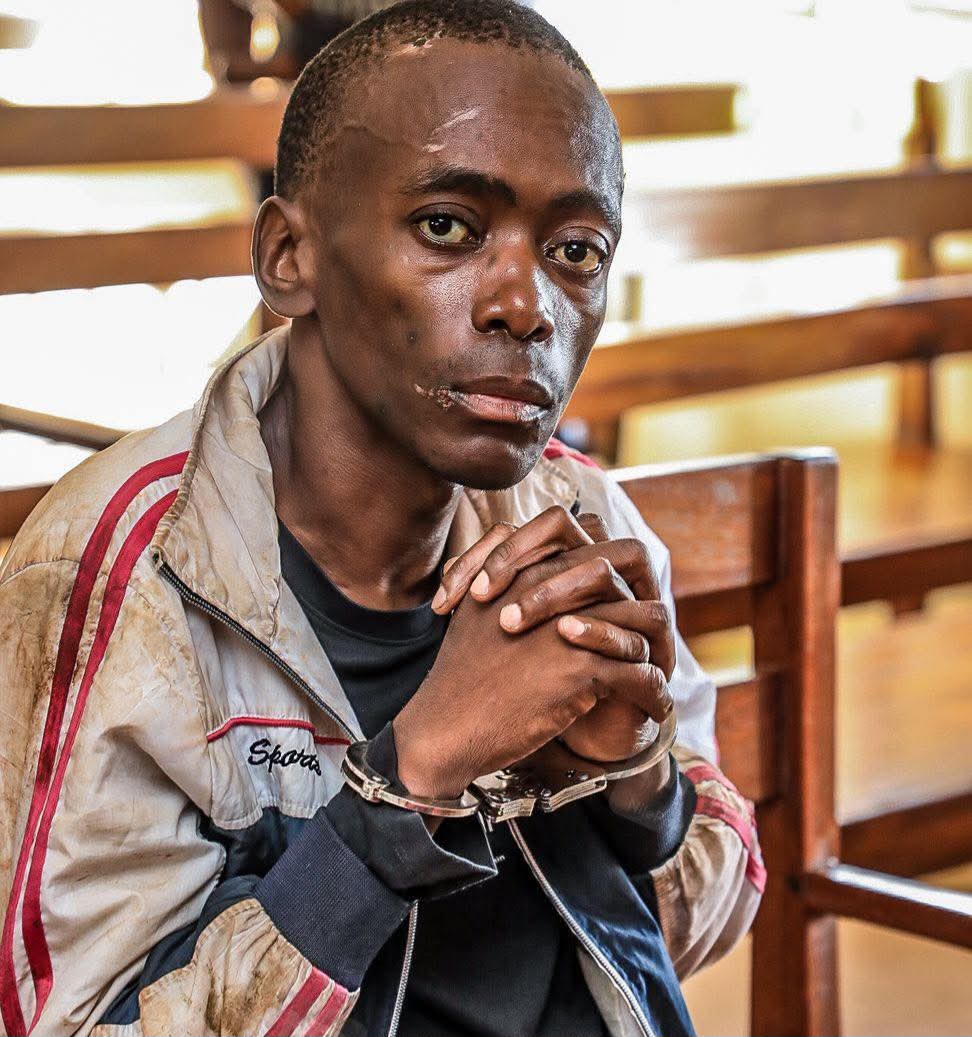
Okello Onyum has written to the Attorney General to be released
KAMPALA
Christopher Okello Onyum, the man sentenced to death for the murder of four toddlers at Ggaba Early Childhood Development Centre, has appealed both his conviction and sentence, opening a fresh chapter in one of Uganda's most shocking criminal cases.
Court records show that Onyum filed Criminal Appeal No. 288 of 2026 in the Court of Appeal, challenging the April 30, 2026 judgment of High Court Judge Alice Komuhangi Khaukha, who convicted him on four counts of murder and sentenced him to death.
Grounds of Appeal
In a memorandum of appeal dated June 12, 2026, Onyum argues that the trial judge erred in law and fact by failing to properly evaluate the evidence presented before the court, thereby arriving at what he describes as an erroneous conclusion that resulted in a miscarriage of justice.
He further contends that the trial court failed to adequately assess the medical evidence relating to his mental condition before reaching its verdict.
The appellant also challenges the sentence imposed by the High Court, arguing that it was harsh and excessive and should either be set aside or varied.
Seeks Acquittal and Release
Through his lawyers, Onyum is asking the Court of Appeal to overturn the High Court judgment, quash his convictions, set aside the sentence, and order his release from custody.
The Attorney General, representing the State, is expected to file a response before the appellate court fixes the matter for hearing.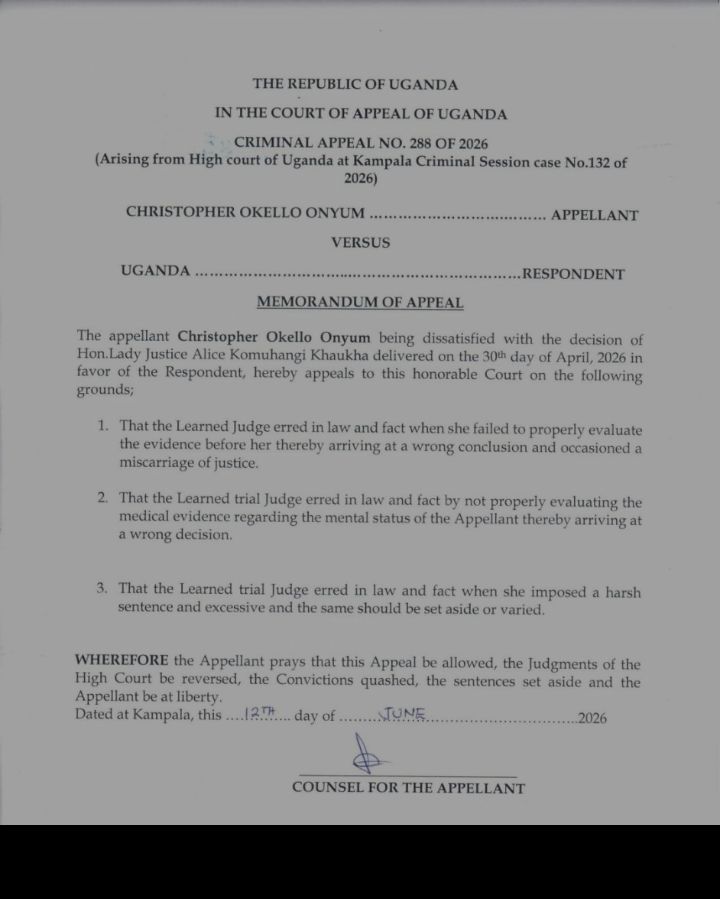
Case That Shocked the Nation
The appeal arises from a case that sent shockwaves across Uganda and sparked widespread public outrage.
On April 2, 2026, Onyum reportedly entered Ggaba Early Childhood Development Centre in Makindye Division under the pretext of seeking admission for a child. Prosecutors told the court that after gaining access to the facility, he attacked the children with a knife, killing four toddlers.
The victims were identified as Gideon Eteku, Keisha Agenorwoth Otim, Ignatius Sseruyange, and Ryan Odeke.
Mental Health Defence Rejected
During the trial, the defence argued that Onyum was suffering from a mental illness and should not be held criminally responsible for the killings.
However, Justice Komuhangi rejected the insanity defence, ruling that the evidence before the court showed that the attack had been planned and deliberately executed. The court subsequently found him guilty on four counts of murder and sentenced him to death.
Appeal to Focus on Mental State
Legal observers say the appeal is likely to focus heavily on whether the trial court properly evaluated the medical evidence relating to the appellant's mental state at the time of the offence.
The Court of Appeal will now determine whether the High Court correctly applied the law, properly assessed the evidence, and whether the sentence imposed was justified.
Until the appeal is heard and determined, both the conviction and sentence remain in force.
For the families of the four slain toddlers, the appeal reopens painful memories of a tragedy that gripped the nation and reignited debate on child safety, mental health, and the criminal justice system.
Torch Media Africa



