Written By | Sports Desk
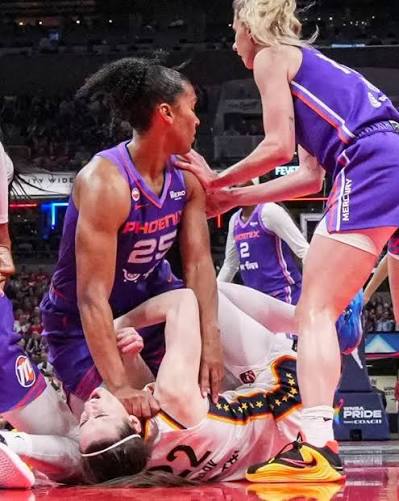
A flagrant foul to Caitlin Clark's throat, a one-game suspension, and a league still arguing about how rough the most-watched women's sport in America should be allowed to get.
PHOENIX
Six minutes and fifty-two seconds remained in the second quarter on Wednesday night when Phoenix Mercury forward Alyssa Thomas and Indiana Fever guard Caitlin Clark collided going for a loose ball. What happened next took less than a second to unfold and several days to sort out: Thomas's fist drove into Clark's throat. No whistle blew. Play continued. The Mercury won 111-109, and for a few hours, the result, not the contact, was the headline.
That changed fast. By Thursday, clips were everywhere, slowed down, zoomed in, argued over by people who have spent two years arguing about exactly this question: how physical is too physical when the player on the receiving end is the most famous guard in the sport's history? On Friday, the WNBA upgraded the play to a Flagrant Foul 2, ruling that Thomas had "recklessly" made contact with her fist to Clark's throat area, and suspended her one game. 
A Long Time Coming, By Both Teams' Account
The hit didn't happen in a vacuum. Indiana and Phoenix had met just days earlier, on Monday, in a chippy, physical contest that ended with the Fever winning 86-77—and with Thomas, Clark, and three other players picking up technicals in a fourth-quarter scuffle. Wednesday's rematch carried that tension through the opening tip.
Fever coach Stephanie White called the lack of an in-game whistle "egregious." Mercury players and staff rallied around Thomas, framing the contact as an unfortunate byproduct of a scramble rather than a deliberate shot. A handful of retired players and commentators agreed, saying the reaction was "blown out of proportion." Clark's own biographer pushed back hard, calling the one-game penalty a "very poor" deterrent.
That split reaction is, in miniature, the argument that has followed Clark through every minute of her two WNBA seasons: did the league get tougher because she arrived, or did it always play this way and the cameras simply weren't pointed at it before?
Clark's Body Is the Other Story
Thomas served her suspension on Saturday—a one-game absence that did not require her to miss a marquee matchup. Clark's situation has turned out more complicated. She did not return to Wednesday's game after the third quarter, departing with a back injury that has bothered her all season. White ruled her out of Saturday's game against the Sparks and offered no real timeline for a return.
Through the contact and the back trouble, Clark has still been arguably the most productive version of herself: she's averaging 21.2 points a game, ahead of the 19.2 she posted during her Rookie of the Year campaign. The throat hit didn't cause the back injury—it happened later—but the optics of a star this productive being knocked out of a winnable game did nothing to cool down the conversation.
Not the First Time, and Probably Not the Last
Clark's rookie season had its own version of this storyline. Then-Chicago Sky guard Chennedy Carter checked Clark hard with her shoulder in a play the league upgraded to a flagrant after the fact—almost exactly the pattern repeated this week. Clark's supporters argue the physicality directed at her specifically outpaces normal WNBA contact; her critics counter that every transformative young star draws extra attention, and this is simply what playoff-style defense looks like in a growing league.|
What's different now is the audience. The WNBA's TV numbers and arena attendance have both climbed dramatically since Clark's arrival, which means incidents once relegated to local sports coverage now get dissected nationally within hours. A play that might have drawn a single paragraph in a box-score recap two years ago became a week-long referendum on league officiating.
What This Means for Fans
For casual viewers tuning in because of Clark's star power, the episode is a reminder that the league is fully a contact sport played by professionals bigger, faster, and rougher than many longtime fans grew up with. The growth in attention has not been matched, critics argue, by consistent officiating—a gap both White and Clark's biographer pointed at this week.
With Clark sidelined and no firm return date, every Fever game will double as a barometer of how the rest of the league treats her.
The Bigger Picture
Strip away the personalities and what's left is a young league wrestling with the consequences of its own success. The WNBA wanted more eyes on its product, and it has them; what it's discovering is that more eyes means more scrutiny of every borderline foul, every disciplinary decision, and every gap between what happens on the floor and what gets called in real time. Thomas's one-game suspension will not end that conversation. It barely paused it.
"It was egregious that no foul was called in the moment." — Stephanie White, Indiana Fever head coach



