Written By | International News Agencies
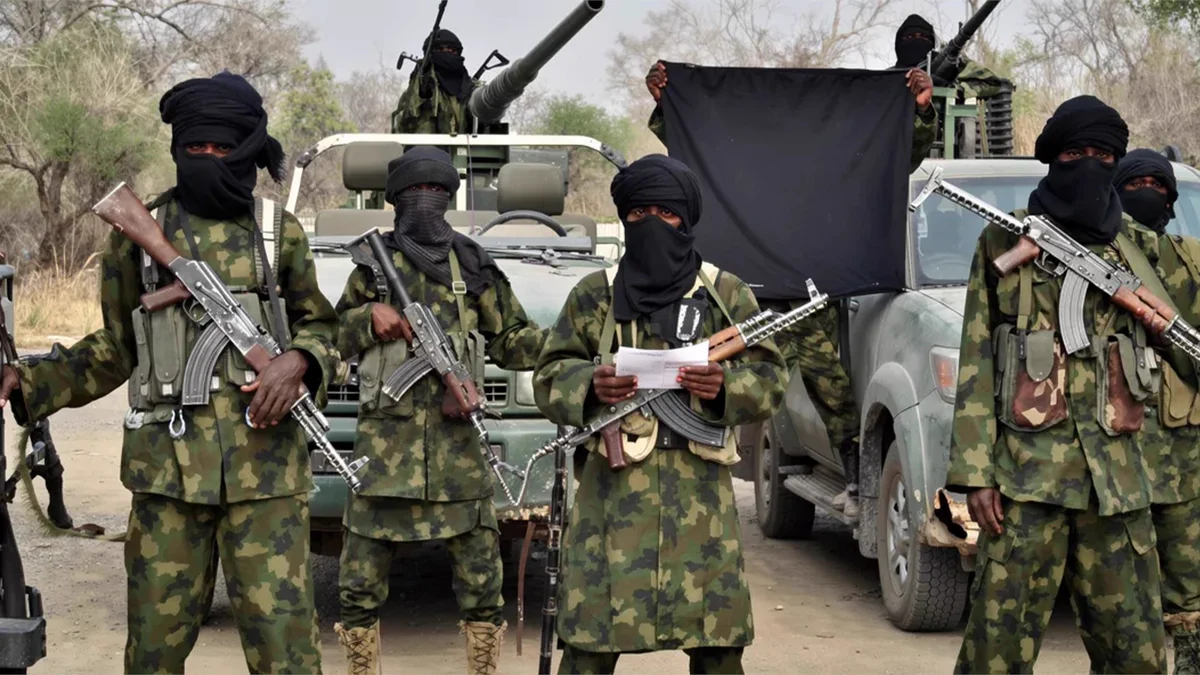
A senior Boko Haram figure has publicly disavowed a secret ceasefire that Nigerian security officials reportedly negotiated with the group in June
Abuja/Maiduguri, Nigeria
A senior Boko Haram figure has publicly disavowed a secret ceasefire that Nigerian security officials reportedly negotiated with the group in June, releasing a video this month that rejects any truce and warns attacks will continue — an unusually direct rebuttal that has thrown a rare window into Abuja's behind-the-scenes counter-insurgency strategy and raised uncomfortable questions about who, if anyone, actually speaks for a fractured 17-year-old insurgency. The denial, delivered by a Boko Haram sharia judge identifying himself as Mallam Abdulrahman, followed a Sept. 7 investigation by The New Humanitarian that reported the Nigerian government had quietly agreed to a three-month ceasefire with elements of the group beginning in June, reportedly tied to the release of hundreds of kidnapped civilians and an alleged ransom payment the government denies making.
The episode matters because it exposes the gap between Nigeria's public posture on terrorism — President Bola Tinubu has publicly rejected negotiating with Boko Haram and in July announced plans to recruit 30,000 additional troops and stand up four new army divisions — and what conflict researchers and diplomats describe as a parallel, largely covert track of negotiation that has produced real, if fragile, results, including the freeing of hundreds of civilians. Whether that track survives Boko Haram's own internal disavowal will shape the security outlook for Nigeria's northeast, a region still absorbing the human cost of one of the world's longest-running insurgencies.
The Reported Deal and Its Public Unraveling
According to The New Humanitarian's investigation, negotiations were led on the Nigerian side by the Office of the National Security Adviser and the Department of State Services, the country's domestic intelligence agency, working through intermediaries with a Boko Haram faction commanded by Ibrahim Bakura Doro — also known by the nom de guerre Abu Humaimah — who leads the group's main branch from a base in the Lake Chad basin. The reported trigger was a March attack in which a faction led by a commander identified as Ali Ngulde stormed an army base near Ngoshe, in Borno State's Gwoza local government area, and abducted more than 360 civilians. By June, according to the investigation, those civilians had been released as part of an emerging three-month ceasefire arrangement, with sources telling The New Humanitarian that a further 40-day extension was under discussion and that the government had paid roughly five billion naira, or about $3.7 million, to secure the deal.
The Nigerian government has not confirmed a ceasefire and has explicitly denied paying a ransom. Presidential spokesperson Bayo Onanuga referred inquiries to the National Security Adviser's office and the Ministry of Defence rather than addressing the claims directly, and Maj. Gen. Mike Onoja, the Defence Headquarters' director of defence media operations, "declined to comment on the report," according to Nigerian outlet The Guardian. That official silence held until Boko Haram itself broke the story open from the other side. In the video released this month, Abdulrahman rejected the entire premise of a negotiated settlement, saying: "It is not that there is no room for reconciliation in our religion. We know there is reconciliation in religion. But this reconciliation that you are spreading word of is a lie." He added that any resumption of attacks would proceed regardless of what Abuja or intermediaries claimed had been agreed.
Malik Samuel, a conflict researcher who has tracked the talks, offered a more measured read of the government's apparent strategy, telling The New Humanitarian: "The government seems very interested in having a dialogue with Boko Haram, perhaps realising a military response alone is inadequate." He and diplomats quoted anonymously in the investigation described a strategic calculation inside Nigeria's security establishment to, in the words of one official summarizing the approach, "do a deal with one, to fight the other" — pursuing quiet accommodation with Bakura's faction of Boko Haram while continuing military operations against its rival, the Islamic State West Africa Province, or ISWAP, currently led by a commander known as Ba Shuwa. The two groups split in 2016 over doctrinal and leadership disputes and have fought each other intermittently ever since; Samuel noted that for Bakura personally, the rivalry with ISWAP "is personal," a dynamic Nigerian officials have reportedly tried to exploit.
A History of Collapsed Talks
This would not be the first attempted truce to unravel. A government security official involved in past negotiations told The New Humanitarian: "We've negotiated a couple of ceasefires but they couldn't be maintained," pointing to an earlier armistice — referred to by the Arabic term hudna — that collapsed around 2022 and 2023 amid opposition from hardliners inside both the insurgency and Nigeria's own security establishment. A former hostage negotiator who has worked on previous releases was blunter about the limits of a cash-for-calm approach, warning: "If you give them money, that doesn't guarantee peace." Officials and analysts alike flagged a related risk in the current arrangement: that a lull in fighting gives Boko Haram space to regroup, resupply and reposition fighters and equipment, potentially toward the Mandara mountains along the Nigeria-Cameroon border, rather than representing genuine progress toward ending the conflict.
That risk is not hypothetical. Nigerian lawmaker Ahmed Ndume, who represents a Borno constituency and sits on the Senate committee overseeing the insurgency, said in a public accounting earlier this year that roughly 100 soldiers and 280 civilians were killed in 252 separate Boko Haram attacks over a six-month period — a toll that underscores how, ceasefire reports notwithstanding, violence has continued to grind on in Nigeria's northeast. The broader human cost of the insurgency, which began in 2009 and has now stretched on for 17 years, is difficult to state with precision, but The New Humanitarian's reporting put the indirect civilian death toll at approximately 350,000 when accounting for hunger, disease and the collapse of health and food systems across the conflict zone — on top of a separate, earlier Council on Foreign Relations tally that found more than 34,000 direct conflict deaths and roughly 2.4 million people displaced through 2018 alone, a number that has almost certainly grown substantially in the years since.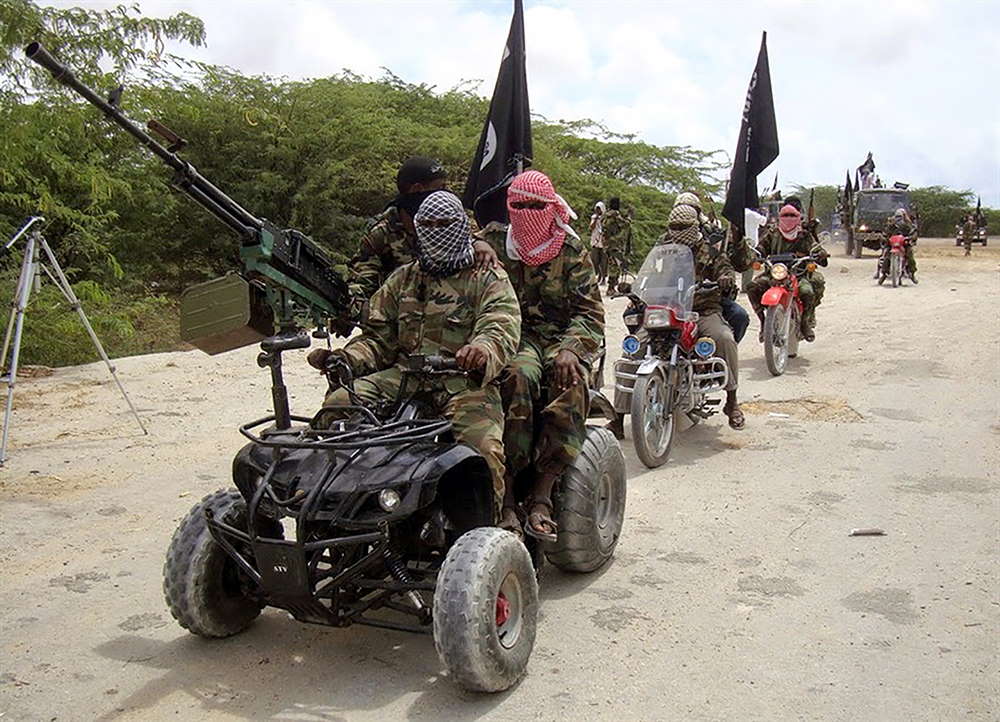
Analysis: A Credibility Problem on Both Sides
The public disavowal creates a credibility problem that cuts in multiple directions. For the Nigerian government, the episode is awkward regardless of which version of events is accurate: either officials quietly negotiated and paid for a ceasefire while publicly denying any such approach — undermining Tinubu's tough-on-terror messaging and the rationale for his announced military expansion — or the reported deal never held real weight with Boko Haram's actual chain of command in the first place, suggesting Nigerian intermediaries were negotiating with a faction whose authority to bind the wider movement is itself in question. Either reading complicates the narrative Abuja has offered domestically, where the government has emphasized battlefield gains and troop reinforcement over any suggestion of dialogue with a group both the United States and Nigeria have designated a terrorist organization.
For Boko Haram, the public denial may reflect genuine internal division as much as tactical messaging. A group that has already fractured once, spinning off ISWAP in 2016, is not a monolith, and Abdulrahman's video may represent hardliners within Bakura's own faction — or a rival current altogether — asserting themselves against a leadership seen as too accommodating. Researchers who track the insurgency have long noted that Boko Haram's command structure is opaque enough that even a genuine agreement between negotiators and one commander offers no guarantee that fighters and mid-level commanders elsewhere will observe it.
What to Watch
Three threads will determine how this episode is ultimately read. First is whether attacks in Borno, Adamawa and Yobe states measurably increase or decrease over the coming weeks, which would offer the clearest real-world evidence of whether any truce, formal or informal, is actually holding on the ground. Second is whether pressure — from Nigerian lawmakers, civil society or international media — forces the government to move beyond its current posture of neither confirming nor denying the ceasefire and ransom claims, particularly given domestic sensitivity around any suggestion that public funds were used to pay an internationally designated terrorist organization. Third is the trajectory of Tinubu's parallel military buildup: the promised 30,000 recruits and four new army divisions, which would bring the Nigerian Army to 12 divisions total, represent a significant bet on a conventional military solution that sits uneasily alongside reports of simultaneous back-channel dialogue. How Abuja reconciles — or continues to avoid reconciling — those two tracks publicly will likely shape both the security situation in the northeast and the credibility of Nigeria's counter-terrorism strategy heading into the final years of a conflict that has already outlasted three presidential administrations.



