Tripoli
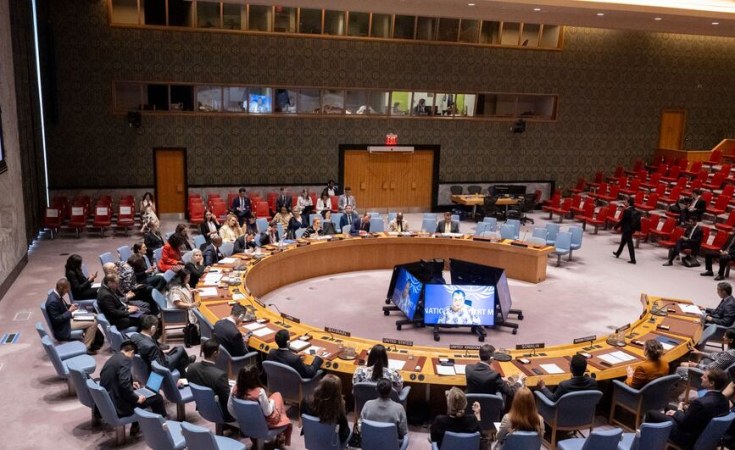
The United Nations Security Council has formally welcomed the agreement struck 11 days ago between Libya's rival power centers, calling it "an important step" toward the country's first national elections in more than a decade. But the endorsement, issued in a statement on Tuesday, lands at precisely the moment the deal's own internal deadline is coming due — and the next three weeks will determine whether the Aug. 30 accord becomes a roadmap or joins the long list of Libyan frameworks that were signed, praised and quietly abandoned.
The agreement reconstitutes the board of Libya's High National Elections Commission and amends the legal framework governing parliamentary and presidential elections, which are to be held within two years under a single, unified government. It was reached through a negotiating track brokered by the UN Support Mission in Libya, UNSMIL, and known as the "Smaller Convening." Council members urged Libya's political leaders to back the agreement and move toward implementing it, while reaffirming their "full support" for UNSMIL and its head, Special Representative of the Secretary-General Hanna Tetteh.
What makes the moment consequential is not the Council's language, which is standard, but the structure of what was signed. For the first time in the post-2021 impasse, the parties committed themselves to a self-executing timetable with a fallback clause — and that clause is about to be tested.

What was actually agreed
Representatives of Libya's rival institutions signed the agreement on Sunday, Aug. 30, at UNSMIL's headquarters in Tripoli. The talks were conducted in a smaller format known as the 4+4: two representatives each from the four institutions that between them control Libya's guns, budgets and legal legitimacy — the Tripoli-based Government of National Unity, the High Council of State, the House of Representatives, and the Libyan National Army command in the east.
Walid Ellafi, state minister of political affairs and communications in the Government of National Unity, said legislative and presidential elections should be held "within a period not exceeding 24 months" under a single executive authority and unified national institutions. Shibani AbuHamoud, who headed the army's general command delegation, said the 4+4 would work with UNSMIL "to develop a framework within one month of the signing of the agreement to follow up on all matters related to its implementation."
That one-month marker matters. The agreement also stipulates that if the House of Representatives and the High Council of State fail to approve the deal within a month, the parties will instead seek to adopt it nationally as a constitutional document through broad national mechanisms, and to secure international backing through the Security Council. In other words, the signatories built in a route around their own legislatures — and the Council's Tuesday statement can be read as an early down payment on the international backing that fallback would require.
Tetteh, speaking to UN News last week, described the accord as one that "helped overcome issues that had stood in the way for many years," adding that it gives the mission "an initial opportunity to engage more with Libyan stakeholders … and build trust in the process we are working with them to achieve."
Two specific blockages were cleared. The first was how to compose the elections commission board so that all three of Libya's historic regions are represented — a dispute that had made the commission itself a proxy battlefield. The second was a rule linking the validity of legislative elections to presidential ones, a linkage that had allowed any party fearing the presidential result to hold the entire vote hostage. Rather than shuttle separately between Libya's two rival legislative bodies, as previous envoys had done, UNSMIL put the Government of National Unity, the eastern-based Libyan National Army command and both parliamentary chambers in the same room.

How Libya got here
Libya has had little stability since the 2011 NATO-backed uprising that ended Muammar Gaddafi's rule. The collapse of the regime brought down state institutions with it, left security structures fragmented among competing armed formations, and set off recurring struggles over legitimacy, authority and control of an oil-dependent economy. The country split in 2014 between warring eastern and western factions, though there has been no major warfare since a ceasefire in 2020.
The political process has been frozen since December 2021, when a scheduled presidential election collapsed days before polling amid disputes over the eligibility of the leading candidates. Nothing has replaced it. Libya has been governed since by rival administrations, each claiming a mandate that expired years ago, each with reason to prefer an indefinite present to an uncertain vote.
That is the structural problem no framework has yet solved, and it is worth stating plainly: as Reuters noted in its report on the signing, all of Libya's major political players have repeatedly called for elections, while many Libyans doubt that those same players actually want a vote that could remove most of them from positions of authority. The 4+4 format is an attempt to work with that incentive rather than against it — by bringing the incumbents themselves into the drafting, on the theory that a deal they wrote is a deal they are less likely to sabotage.
Fragile trust, and a mission that knows it
Tetteh has been notably unwilling to oversell the moment. She cautioned that trust remains fragile — "not just between the political actors, but among the Libyan people themselves" — in the mechanisms that will eventually deliver a vote.
UNSMIL's answer to that has been a structured dialogue it ran between December 2025 and June 2026, consulting 120 Libyans drawn from across the country's regions and communities. Tetteh identified broad public buy-in as the single biggest challenge ahead, alongside the unification of Libya's divided military, security and economic institutions — a task that dwarfs the electoral machinery in difficulty and that the Aug. 30 agreement does not directly address.
"We are not here to replace the Libyan people," Tetteh said, "but to support them in achieving their political aspirations toward good governance, unity, peace and security."
She also raised a warning that has received less attention than the electoral clauses but bears directly on who will be able to stand for office. Online hate speech and harassment targeting Libyan women active in public life, she said, is designed to "intimidate them and prevent them from exercising their rights." Women made up 35 percent of participants in UNSMIL's structured dialogue, and Tetteh called for stronger legal protections so that they can take part in civic life without fear.
On security, she noted that rivalries between armed groups remain concentrated mainly in western Libya, but said local leaders there had so far shown a willingness to work with UNSMIL to defuse tensions before they escalate. That is a low bar, and Tetteh presented it as one.
Analysis: the gap between paper and practice
The Aug. 30 agreement is the most substantive Libyan political document since 2021, and the Security Council's endorsement gives it something previous UN-backed initiatives lacked at this stage: a collective statement from the Council that it considers the deal worth defending. The Council pressed all sides to move quickly from paper to practice, which is diplomatic shorthand for the recognition that Libyan parties have historically signed first and stalled second.
Three tests will separate this deal from its predecessors.
The first is ratification. The House of Representatives and the High Council of State — Libya's two rival legislative bodies, each with a long record of using procedural delay as leverage — were represented in the 4+4 talks but have not yet endorsed the outcome. Their one-month window closes around Sept. 30. If either balks, the parties are committed on paper to bypassing them, which would mean asking the Security Council to bless a constitutional document adopted outside Libya's existing legislative institutions. That would be legally messy and politically contentious, and it is not obvious that all Council members would go along.
The second is the implementation framework AbuHamoud promised within a month of signing. A follow-up mechanism with named members, a schedule and a dispute-resolution route would signal that the eastern military command intends to be bound. Its absence would signal the reverse.
The third, and hardest, is institutional unification. Elections under "a single executive authority and unified national institutions" presuppose a merger of two governments, two central bank claims, two military chains of command and two competing sets of oil revenue arrangements. None of that follows automatically from a reconstituted elections commission. If the parties treat the 24-month horizon as a deadline for the vote rather than for the unification that must precede it, the timetable will slip — and each slippage will erode the fragile trust Tetteh described.

What to watch
Between now and the end of September: whether the House of Representatives and the High Council of State formally adopt the agreement, and whether the 4+4 publishes its implementation framework. In October and November: the composition of the new High National Elections Commission board, and specifically whether the three-region formula is applied in a way both camps accept. Through the winter: any movement on unifying the security and financial institutions, which is the only real indicator of whether a vote in 2028 is plausible.
And throughout: whether the Security Council converts Tuesday's statement into a resolution. A statement welcomes; a resolution obliges. Libyan factions have long calibrated their behavior to the difference.
Published By | News Editor