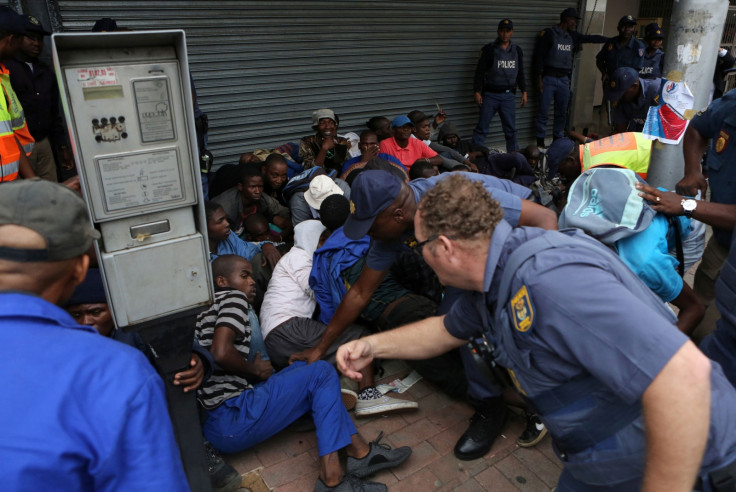
JOHANNESBURG, South Africa
The United Nations' top anti-racism body issued an urgent warning this week accusing South African authorities of failing to stop a wave of xenophobic killings, displacements and vigilante violence against migrants that has swept the country since early 2026 — a rebuke that landed just weeks after Pretoria asked fellow African governments to foot an $18 million bill for deporting more than 80,000 of their citizens. The near-simultaneous developments expose a widening gap between South Africa's public rhetoric of pan-African solidarity and a domestic security response that critics say has enabled, rather than curbed, one of the most sustained waves of anti-migrant violence in the country's post-apartheid history.
What the UN found
The UN Committee on the Elimination of Racial Discrimination (CERD), acting under its Early Warning and Urgent Action Procedure — a mechanism reserved for situations at risk of escalating into serious rights violations — said on Aug. 27 that it had documented at least four unlawful killings of migrants and the displacement of at least 50,000 people by civilians and organized vigilante groups since the start of the year. The committee's decision, adopted in Geneva, catalogued a broader pattern of abuse: abductions, looting, destruction of migrant-owned property and businesses, unlawful evictions by landlords, and restrictions on migrants' access to healthcare, education and other essential services.

CERD singled out two civic movements by name, the Insizwa Nobunsizwa Development Foundation and the March and March movement, for what it called the "widespread use of racist hate speech and the dissemination of negative and harmful stereotypes against migrants, refugees and asylum seekers," particularly online, warning that such rhetoric "fosters stigmatisation and intolerance and creates an environment of fear and insecurity for migrants." The committee also faulted South African police for what it described as an inadequate response to the violence, along with continuing patterns of racial profiling and racially motivated excessive use of force by law enforcement officers responding to migrant communities.
Crucially, the committee did not treat the violence as a purely societal phenomenon disconnected from government policy. It pointed to "the absence of effective strategies to address the root causes" of the discrimination, including deep socio-economic inequality inherited from apartheid and chronic delays in issuing and renewing migrants' identity documents and visas — bureaucratic failures that rights groups say leave migrants perpetually vulnerable to police raids and vigilante targeting regardless of their actual legal status. CERD did credit President Cyril Ramaphosa for a June 7 address in which he condemned vigilantism and warned against scapegoating migrants for the country's economic troubles, but the committee said his government needed to "step up its efforts" and gave South Africa until January 9, 2028, to report back on concrete measures taken.
A protest movement with political muscle
The violence CERD documented did not emerge in a vacuum. Since early 2026, South Africa has experienced a sustained wave of anti-immigration mobilization led chiefly by two movements: Operation Dudula, the anti-migrant vigilante network that has operated in various forms since 2022, and March and March, a newer movement founded in 2025 by Jacinta Ngobese-Zuma. The movements issued an informal ultimatum demanding that undocumented migrants leave the country by June 30, a deadline that human rights monitors say directly preceded a further escalation in attacks on foreign-owned businesses and migrant communities. On June 30 itself, roughly 120 marches took place nationwide, and more than 900 people were arrested, though authorities described most of the demonstrations as peaceful.
The government's own response has been a source of the tension CERD identified. In July, Ramaphosa adopted a five-point plan to address undocumented migration, building on "Operation New Broom," a mass-surveillance and enforcement initiative launched by Home Affairs Minister Leon Schreiber that uses biometric verification to identify and deport migrants. That enforcement drive has run in parallel with, rather than in place of, the street-level vigilantism CERD condemned — a combination critics say sends migrants the message that both the state and civil society are arrayed against them. Operation Dudula has itself gone to court over the government's migration policy, challenging Schreiber's decision to extend Zimbabwean Exemption Permits, which shield hundreds of thousands of Zimbabwean nationals from deportation, by 18 months — illustrating how migration policy has become a live legal and political battleground independent of the street violence.
The deportation bill
The scale of the government's enforcement effort came into sharper focus on Aug. 13, when South African officials appealed publicly to other African governments to cover the cost of deporting more than 80,000 undocumented migrants, presenting Malawi, Ethiopia, Nigeria and other countries with bills for the airfare, ground transport and processing of their own citizens. According to the South African government, the deportation drive — which followed the recent surge in anti-immigration protests and violence — has cost more than $18 million to date. Schreiber called the costs "unforeseen" and "unavoidable" and said the expense, which includes transportation, accommodation and overtime pay for immigration personnel, should be borne by the deportees' home governments rather than South African taxpayers.
Since March, more than 178,000 African migrants have either been formally deported or fled South Africa amid the protest wave, according to reporting compiled by legal news outlet Jurist. That figure — more than double the number CERD cited as having been displaced by vigilante violence specifically — underscores that state deportation policy, not just informal vigilantism, has been a primary driver of the exodus. Ramaphosa has sought to frame the crisis in continental terms: in a July address to the Pan-African Parliament, the legislative arm of the African Union, he called for greater cooperation among African states to tighten and jointly enforce immigration laws, effectively asking the same governments now being billed for repatriation costs to also help stem migration to South Africa at its source.
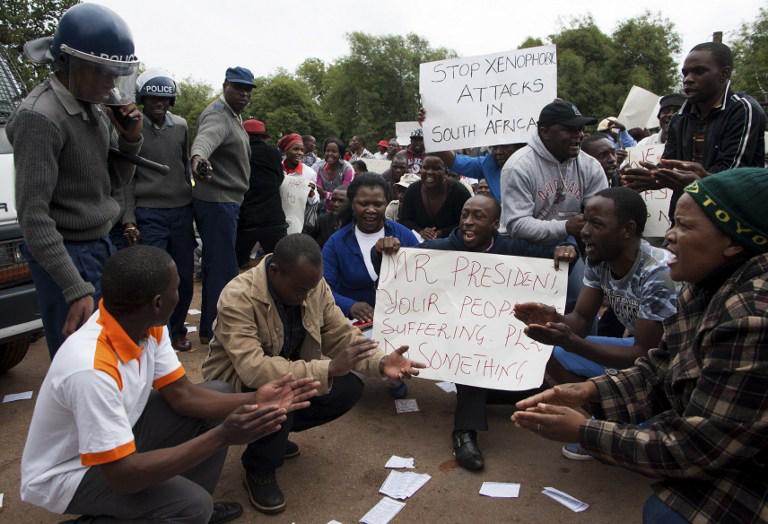
The politics beneath the crisis
The tension CERD identified — a government that condemns xenophobia rhetorically while pursuing an enforcement-heavy, cost-shifting migration policy — reflects deeper strains within South Africa's Government of National Unity, the multiparty coalition led by Ramaphosa's African National Congress that has governed since the ANC lost its outright parliamary majority. Analysts and rights groups, including Human Rights Watch, have argued that the government's comparatively muted response to vigilante violence, even as it moves aggressively on formal deportations, effectively legitimizes the narrative pushed by Operation Dudula and March and March: that migrants, rather than decades of economic mismanagement and inequality, are the source of South Africa's hardship. That narrative retains potency in a country where, according to figures reported in the first quarter of 2026, just over 60% of South Africans aged 15 to 24 are unemployed — a crisis of youth joblessness that provides fertile ground for scapegoating, regardless of migrants' actual economic footprint.
The economic costs of the crisis are also becoming harder for the government to ignore. Coverage of the protests has noted reputational damage to South Africa's standing across the continent and beyond, including the high-profile cancellation by Malian music icon Salif Keïta of a planned performance at South Africa's Macufe festival, citing concerns over the safety of African migrants — a small but symbolically resonant sign of how the crisis is affecting South Africa's soft power and cultural ties with the rest of the continent it has long sought to lead diplomatically.
What to watch
Several fault lines will determine where this crisis heads next. The first is enforcement: whether South African police, under continued international scrutiny, take the concrete steps CERD demanded — dismantling organized vigilante groups, prosecuting hate crimes, and reforming the identity-document backlogs that leave migrants exposed — or whether the committee's decision becomes another unheeded international rebuke. The second is diplomatic: how Malawi, Ethiopia, Nigeria and other governments billed for repatriation costs respond to Pretoria's request, and whether the dispute strains South Africa's relationships within the African Union at a moment when Ramaphosa has been positioning the country as a continental convener on migration policy. The third is domestic and legal: the outcome of Operation Dudula's court challenge to the Zimbabwean Exemption Permit extension will test how much room the courts leave for the government's more conciliatory measures amid a political climate the vigilante movements have shown they can shape through sustained street pressure. Finally, South Africa's own electoral calendar looms in the background: with the GNU coalition already a delicate balancing act between the ANC and its partners, including the Democratic Alliance, migration policy is likely to remain a wedge issue that smaller parties and vigilante-aligned political entrants use to pressure the coalition's center from the right.
For migrants living in South Africa, the immediate stakes are more elemental than diplomacy or coalition politics: CERD's finding that abuses continue to go underreported "because of mistrust of law enforcement, fear of reprisals and harassment" suggests that even as international attention intensifies, the people most affected by the crisis may remain the least able to safely seek protection from the state that is supposed to provide it.
Published By | News Editor