Economic & Social Transformation
Madagascar entered 2026 carrying two contradictory storylines at once. On one hand, the island nation of roughly 31 million people remains among the poorest in the world, with the World Bank estimating extreme poverty at around 66.5 percent in 2025 and the International Monetary Fund tracking a slowdown in growth from 4.3 percent in 2024 to 3.2 percent in 2025, with the African Development Bank projecting a further deceleration to just 3.0 percent in 2026 before a recovery toward 4.5 percent in 2027. On the other hand, the government's decision in January 2026 to lift a 16-year freeze on new mining permits has opened one of Africa's richest and least-exploited critical-mineral endowments to foreign capital, at precisely the moment global demand for battery metals and graphite is accelerating. How Madagascar manages that opening, alongside a fragile vanilla economy and a fast-growing but shock-exposed population, will shape whether the transformation now underway reaches ordinary households or stays confined to extractive enclaves.
A Fragile Recovery Amid Compounding Shocks
The IMF's most recent review, concluded in April 2026 under the combined third and fourth assessments of Madagascar's 36-month Extended Credit Facility (ECF) and Resilience and Sustainability Facility (RSF) arrangements, describes an economy absorbing several shocks simultaneously. A reduction in official development assistance equivalent to roughly 1 percent of GDP, combined with an initial 47 percent U.S. tariff hike on Malagasy exports, is expected to shave 0.5 to 0.6 percentage points off growth in 2025 and 2026 respectively. Inflation, meanwhile, has proven sticky: consumer prices rose 8.0 percent in the past year and the World Bank projects inflation will reach 8.3 percent in 2026, even as the central bank holds its policy rate at 12 percent. The IMF's July 2025 second review had already disbursed SDR 77.4 million (about $107 million) to support the program, and the current account deficit is projected to widen to 7.8 percent of GDP in 2026 as vanilla export earnings weaken and import costs rise. Cyclones remain a recurring drag: Cyclone Gamane's landfall in March 2024 disrupted the first half of that year's economic activity, and the AfDB's growth models continue to build in weather-related volatility as a structural feature of Madagascar's outlook rather than a one-off event.
Ending the Mining Moratorium
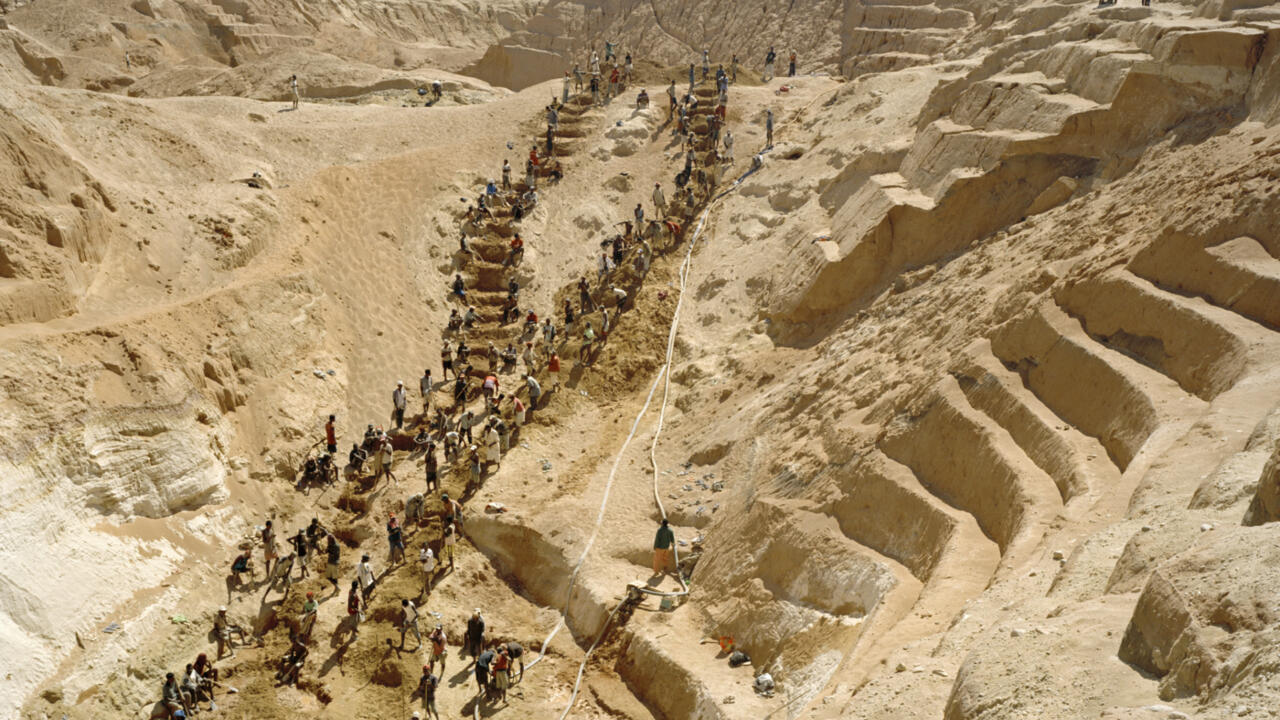
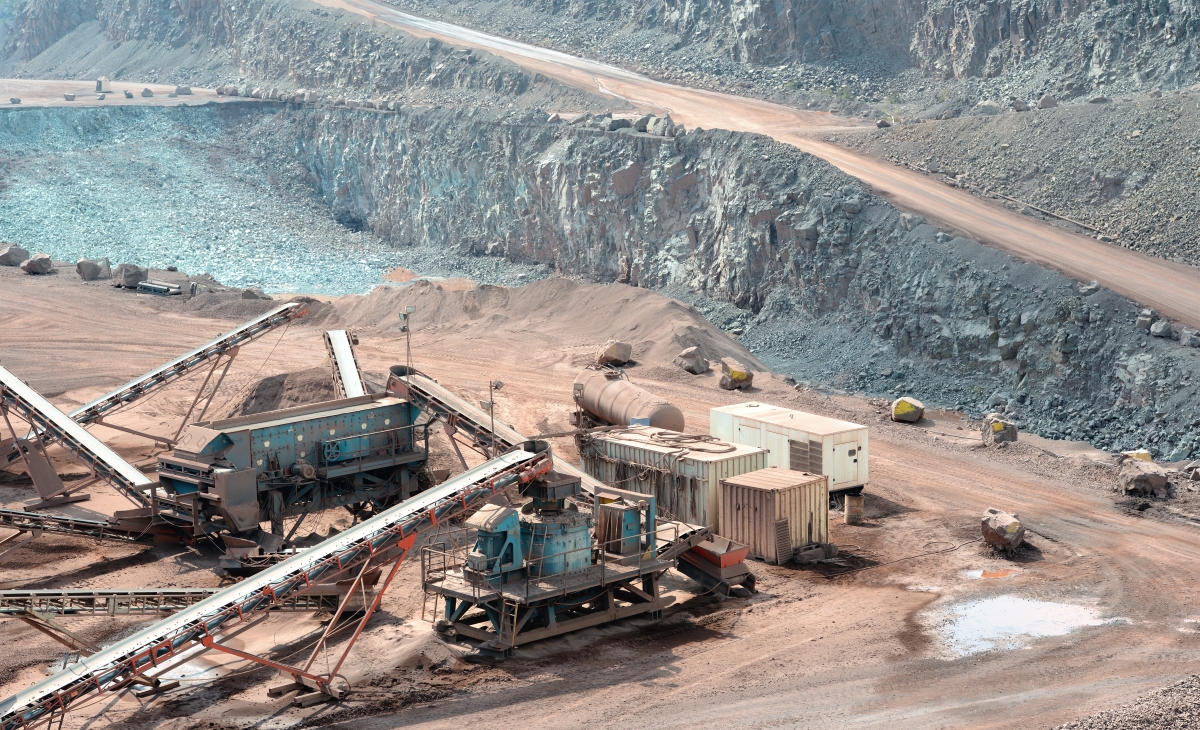
The most consequential policy shift of 2026 came on January 29, when Madagascar's transitional government lifted a moratorium on new mining permits that had been in place for 16 years, reopening applications across nickel, cobalt, graphite, rare earths, mineral sands and iron ore (gold remained excluded). The backlog was substantial: between 1,600 and 3,000 pending permit applications, representing an estimated $10 billion to $15 billion in potential foreign direct investment, according to industry trackers cited by African Mining Market and Discovery Alert. The reform builds on a mining code adopted in 2023-2024 and is aimed at a sector that already accounts for more than 40 percent of national exports.
The country's flagship mining asset, the roughly $8 billion Ambatovy nickel-cobalt project — one of the world's largest lateritic nickel deposits, with annual capacity of 60,000 tonnes of nickel and 5,300 tonnes of cobalt — is itself in transition. Japan's Sumitomo Corporation is exiting its stake, paying an estimated $418 million to offload the asset to Ambatovy Mineral Resources Investment, even as the mine continues to account for roughly 32 percent of Madagascar's foreign exchange earnings. The reshuffling of ownership at Ambatovy, alongside cyclone damage that has periodically disrupted operations, illustrates how exposed Madagascar's single largest capital project remains to both commodity cycles and climate shocks.
Graphite: Madagascar's Battery-Metal Opportunity
Graphite has emerged as the sharpest edge of Madagascar's minerals reopening. The country is the world's third-largest graphite producer, supplying an estimated 5.5 percent of global output, and national production jumped from 63,000 metric tonnes in 2023 to 89,000 tonnes in 2024. South Korea's POSCO International has signed a 10-year offtake agreement with Canada's NextSource Materials for 30,000 tonnes annually of flake graphite from the Molo mine, a deal that UNCTAD has cited as an example of how Madagascar can move beyond raw ore export toward value-added participation in energy-transition supply chains. China remains the dominant buyer of Malagasy graphite and controls more than 90 percent of global graphite processing capacity, underscoring the geopolitical stakes as Western and Asian firms compete for offtake access to reduce that concentration.
Vanilla and the Limits of a One-Crop Export Model
Even as mining expands, Madagascar's best-known export remains agricultural: the country produces roughly 80 percent of the world's natural vanilla. That dominance is a double-edged sword. The IMF's 2026 outlook flags weaker vanilla exports as a direct contributor to the widening current account deficit, reflecting both price volatility in global vanilla markets and the crop's vulnerability to the same cyclones that periodically batter the Ambatovy mine. The juxtaposition — a handful of commodities (nickel, cobalt, graphite, vanilla) generating the overwhelming share of foreign exchange while poverty remains near 66 to 75 percent — is the structural challenge that any diversification strategy, including the mining reopening, is ultimately meant to address.
Social Protection: Cash Transfers as a Poverty Lifeline
Alongside its extractive-sector strategy, Madagascar has leaned on World Bank-backed social protection to blunt the human cost of repeated shocks. A $250 million World Bank credit approved to expand safety-net coverage for extremely poor households underpins programs such as the Human Development Cash Transfer scheme (known locally as Vatsin'ankohonana, or 'family support'), which conditions payments to families with children aged 6 to 10 on regular school attendance. The results have been measurable: net school enrollment has risen by 12 percentage points in program areas, and since 2015 similar cash-transfer initiatives have helped 338,811 girls enroll in school, according to World Bank program data. These interventions matter because they are designed explicitly as shock absorbers — buffering households against the cyclones, inflation and terms-of-trade swings that macro-level mining and export data cannot capture on their own.
AfCFTA and the Path to Diversification
Regional trade integration offers a longer-run counterweight to commodity dependence. World Bank modeling published in 2026 finds that full implementation of the African Continental Free Trade Area (AfCFTA) could raise real incomes across the continent by 7 to 9 percent and lift 40 million people out of extreme poverty by 2035, with Madagascar identified as one of the economies where the AfCFTA scenario does the most to reduce extreme poverty by 2043. For a country whose exports remain concentrated in a few extractive and agricultural commodities, deeper access to African markets — for processed graphite products, agro-processing, and textiles — represents one of the few realistic diversification levers alongside the mining reopening itself.
Conclusion
Madagascar's 2026 story is one of a government trying to convert a long-dormant resource endowment into broad-based development at the same time as it manages a genuinely fragile macroeconomic position: slowing growth, high inflation, a widening current account gap, and poverty rates that have barely moved in a generation. The mining moratorium's end and the graphite offtake deals give the country a real, near-term opportunity to capture more value from the global energy transition. Whether that opportunity translates into falling poverty rates will depend on whether revenue from Ambatovy, graphite and future critical-mineral projects is channeled into the kind of social protection and diversification measures — cash transfers, AfCFTA-linked trade, agro-processing — that have so far kept Madagascar's poorest households afloat rather than into enclave projects insulated from the rest of the economy.
Published By | Features Editor