Written By | Health News Agencies
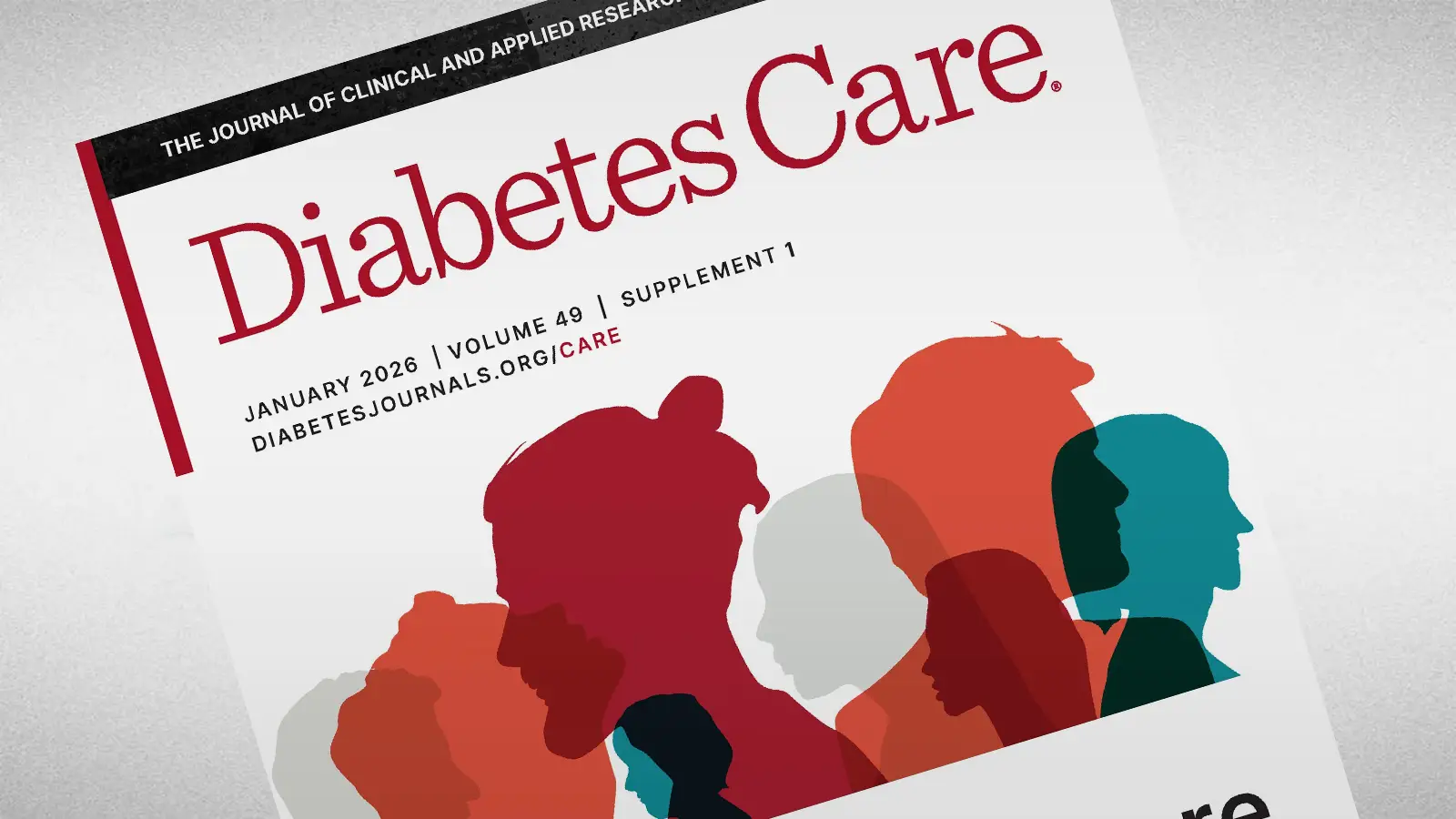
America's biggest diabetes charity had its own journal editor ejected for handing out a paper the charity itself published
HEALTH
THE LEAFLET THAT EMPTIED A CONFERENCE HALL
It began with a stack of photocopies. On the morning of Friday 5 June, at the Ernest N. Morial Convention Center in New Orleans, five of the most decorated diabetes researchers in the United States stood in a corridor outside a keynote hall and began handing out copies of a five-page editorial. The editorial argued that federal funding cuts were dismantling American biomedical research. It named no individual. It contained no insults. It had been peer-reviewed, accepted and published — in the June issue of Diabetes Care, the American Diabetes Association's own flagship journal, pages 901 to 905.
Within minutes, the men and women distributing it were surrounded by uniformed personnel. Within an hour they had been pushed out of the building and told that if they came back they would be arrested for trespassing.
The five were Steven Kahn of the University of Washington — who is also, as it happens, the editor-in-chief of Diabetes Care and one of the editorial's authors — along with Maureen Gannon of Vanderbilt, Aaron Kelly of the University of Minnesota, Justin Ryder of Northwestern and Lurie Children's Hospital of Chicago, and Desmond Schatz of the University of Florida, a former ADA president.
The hall they were standing outside had been booked for the conference's opening address by Jay Bhattacharya, the director of the National Institutes of Health. Bhattacharya pulled out at the last minute; a senior adviser spoke in his place. The researchers had planned, in Kahn's words, to hand out the editorial "just quietly as an alternative viewpoint on the whole thing from what was going to be put forward by an NIH official."
Ryder's account of what happened next is blunt. Security told the group they were not permitted to distribute the paper. "There was no 'Please stop doing this.' There was no 'Hey let's talk about this,'" he said. When an officer tried to pull the papers out of his hands, Ryder said he invoked his right to free speech and kept handing them out. "It was at this time that the security personnel and police became much more aggressive shoving me and removed me from the hall."
The group regrouped at the front of the venue and carried on distributing the editorial on the pavement. Security came back. This time the word used was arrest. Video of the ejection went online over the weekend and travelled far beyond diabetes medicine.
THE APOLOGY THAT CAME TOO LATE
The ADA's first public position was that the five had breached the conference code of conduct. "Our conference code of conduct expects that all participants will conduct themselves in a professional and respectful manner," a representative said at the time. "These attendees were escorted out by our onsite event security because they demonstrated behavior not consistent with this code of conduct." A separate statement leaned on the organisation's status as a non-partisan non-profit.
The five said nobody had ever told them that handing out a journal article required prior permission. Kahn said he only learned the alleged rule from an email the ADA sent members on the Saturday night. "Nobody told us," he said. "There's no professional member who's a scientist like me, who knew that those were the rules."
Then came the resignations. Mark Atkinson of the University of Florida, the chair of the Scientific Sessions themselves, stepped down. So did Jennifer Green of Duke, the ADA's president-elect. On Wednesday 10 June, chief executive Charles Henderson issued a video apology and promised an independent review whose findings would be made public.
For a few weeks, that looked like the end of it. It was the beginning.
THE INVESTIGATION THAT INVESTIGATED ITSELF
On 1 September the ADA published the conclusions of its Audit and Governance Committee. The committee found that the five attendees had been removed because their conduct disrupted the meeting and violated the attendee code of conduct — and that the content of the material they were distributing had nothing to do with it. It found that event security had acted appropriately. It also offered a clarification that raised as many questions as it settled: although the people who escorted the researchers out were wearing New Orleans Police Department uniforms, they were contracted security personnel, not officers summoned by the ADA.
The report conceded "communication shortcomings" before and during the incident, and proposed better communication, more staff and volunteer training, and revised policies for large meetings.
It did not land the way the ADA hoped. The central objection was structural: the review had been carried out by an ADA committee, not by an outside body. "The investigation has been a sham, and the report is in line with that; i.e., it tries to exonerate those in charge of the ADA," Kahn wrote.
Then, five days later, the ADA effectively undercut its own report. In a second statement on 6 September, the organisation said the findings released on 1 September had not taken account of the "full breadth and depth" of the investigation, and that additional information might clarify or correct some of the earlier conclusions. A final report is expected to go to the board in the coming weeks.
For the researchers, an investigation that had to be partially retracted within a week was the last piece of evidence they needed.
THE STRIKE
On 10 September a group of diabetes researchers, clinicians and professional members published a boycott notice addressed to the ADA's board of directors. Its scope is total. Signatories pledge to suspend planning or attending any ADA scientific meeting — including the 2027 Scientific Sessions — along with "other ADA activities, presentations, fund raisers, grant reviews, manuscript reviews, journal management, manuscript submissions, or position statements."
The demand is a single sentence, and it is not about the five men and women in the corridor. "This boycott will remain in place until the ADA Board of Directors allows a formal review of the overall structure and function of the ADA led by an independent academic leader and focused on having the ADA properly represent its professional membership."
By Friday 11 September, more than 400 people had signed. The list reportedly includes former ADA presidents, award recipients, committee members, journal editors and people living with diabetes. A separate Change.org petition condemning the ADA's handling of the June incident has passed 8,000 signatures.
Notably, most of the signatories did not resign their ADA roles. They chose to stay in post and refuse to do the work — a deliberate tactic designed to make the organisation feel the absence rather than simply fill the vacancies.
And then the boycott reached the journal.
THE BANNER WAR
Diabetes Care is not a minor publication. Its 2025 impact factor is 22.6, sixth among all endocrinology and metabolism journals in the world. It is where a very large share of the clinical evidence underpinning modern diabetes treatment first appears. Kahn announced that the journal's editorial leadership had signed the boycott and that, until the impasse was resolved or the editors were replaced, "they will not be performing their duties, and therefore the journal will no longer be accepting new submissions."
Four editors are reported to have stopped reviewing manuscripts: Kahn, Cheryl Anderson of UC San Diego, John Buse of the University of North Carolina and Elizabeth Selvin of Johns Hopkins.
The editors placed a notice on the journal's submission page telling authors and reviewers that "the editorial leadership of Diabetes Care has suspended its editorial review of new manuscripts submitted to the journal from September 10, 2026," adding: "We regret the uncertainty and inconvenience this situation may cause and are working to restore full editorial operations as quickly as possible."
Kahn says someone from the ADA telephoned a journal staff member late that same night asking for the message to be taken down. At some point it was. Over the following weekend a different banner appeared — on the ADA's professional website and across all of its journals.
"The ADA's mission remains unchanged," it read. "Our work and commitments continue without interruption; no programs, events, or initiatives, including the 2027 Scientific Sessions, have been stalled, suspended, or stopped. We also continue to actively accept and appropriately review all new and previously submitted manuscripts across ADA Journals."
Two messages, on the same website, one contradicting the other. The editors say they had agreed in advance to the boycott notice but had nothing to do with the banner that replaced it.
EXPERT PERSPECTIVE: 'HOW EXACTLY DOES THE ADA THINK ANY MEANINGFUL EDITORIAL WORK IS GOING TO HAPPEN?'
Michael Haller, a paediatric endocrinologist at the University of Florida and an associate editor of Diabetes Care, put the arithmetic plainly. "How exactly does the ADA think any meaningful editorial work is going to happen when the entire editorial board is boycotting?" he wrote.
Haller is careful about what the strike is for. "We do not want to see the ADA dismantled but rather we need it to be reimagined to reflect the goals and interests of its members and the people with diabetes who it is supposed to represent," he said. "Our efforts are aimed at rescuing the organization from failing leadership. We hope this boycott is short term."
Outside diabetes medicine, the case has been read as a warning about what professional societies will trade away to stay in favour. Craig Kaplan, a biologist at the University of Pittsburgh who was not at the meeting, was unsparing: "If being in the good graces of the current administration means you can't express your scientific opinion, then your organization has been corrupted."
Justin Blumenstiel, a geneticist at the University of Kansas, questioned whether the code of conduct had been breached at all. The code prohibits harassment and protesting. "I do not see [why] handing out an article would be considered a form of protest that would be sufficient to violate a policy," he said. "I would make an argument [that] asking the police to remove these people could be a form of harassing behavior towards the scientists themselves."
Kahn's own summary is the one that has been quoted most. "I feel that an organization I have belonged to for nearly four decades, and which I believed represented my views on the value of biomedical research to improve the lives of people with diabetes, has effectively disregarded my First Amendment rights. Who would have ever thought this would happen in an association representing biomedical scientists?"
The ADA, for its part, has not retreated from its position. "The American Diabetes Association is the nation's leading voluntary health organization fighting to end diabetes and helping people thrive," a spokesperson said. "As the review continues, we remain focused on serving the millions of people counting on us to deliver on our mission." The organisation did not respond to a request for comment from Retraction Watch, which broke the story of the duelling banners.
WHAT THIS MEANS FOR YOU
If you or someone you love has diabetes, the relevant number is 40.1 million — the CDC's estimate of Americans living with the disease, of whom around 11 million do not yet know. Roughly 14.9 per cent of US adults are affected, rising to 28.8 per cent of those aged 65 and over. About 1.5 million more are diagnosed every year.
None of those people will notice anything today. There is no drug shortage, no clinic closure, no cancelled appointment. The damage here is slower and harder to see.
First, the pipeline. Diabetes Care is one of the main routes by which a new finding becomes accepted clinical practice. If manuscripts are not being reviewed — and the editors say they are not, whatever the banner says — then papers are queueing. Every month of queue is a month before a result that might change how your insulin is dosed, or how your child's type 1 is screened for, reaches the doctors who would act on it.
Second, the guidelines. The ADA's Standards of Care are among the most widely used treatment guidelines in medicine, and the boycott explicitly covers position statements. The people who write them have said they will not.
Third, the money. The ADA is a major funder of diabetes research and its Scientific Sessions is the largest diabetes meeting on earth, drawing more than 12,000 physicians, scientists and clinicians. Grant review is on the boycott list too.
There is also a practical warning worth taking from this if you are a researcher rather than a patient: read your society's code of conduct. Five of the most senior figures in their field were removed under a rule none of them knew existed.
WHAT HAPPENS NEXT
Three things are now in motion at once. The ADA board is waiting on a final report from an investigation whose interim findings the organisation has already said may need correcting. The boycott is still gathering names. And Diabetes Care is in the strange position of being a journal whose publisher insists it is open and whose editors insist it is shut.
The signatories have also raised the possibility that ends the story badly for the ADA. If their demands are not met, they say, they may take their work to existing or newly created professional organisations in diabetes, endocrinology, obesity and metabolism instead.
That is the real stake here. A patient advocacy organisation can survive bad publicity. It cannot easily survive its own scientists building somewhere else to go.
It started with a stack of photocopies of something the ADA had already published. Fifteen weeks later, the association has lost its Scientific Sessions chair, its president-elect, the working cooperation of more than 400 of its professional members and the functioning editorial board of its flagship journal — and the paper is still on its website, free to read, exactly where it always was.



