Written By | Torch Media Africa
Climate Camera
Kampala
Uganda has taken a significant step in its space programme with the launch of its second mission to the International Space Station (ISS), deploying a new Earth-observation payload designed to strengthen climate monitoring and disaster preparedness across East Africa.
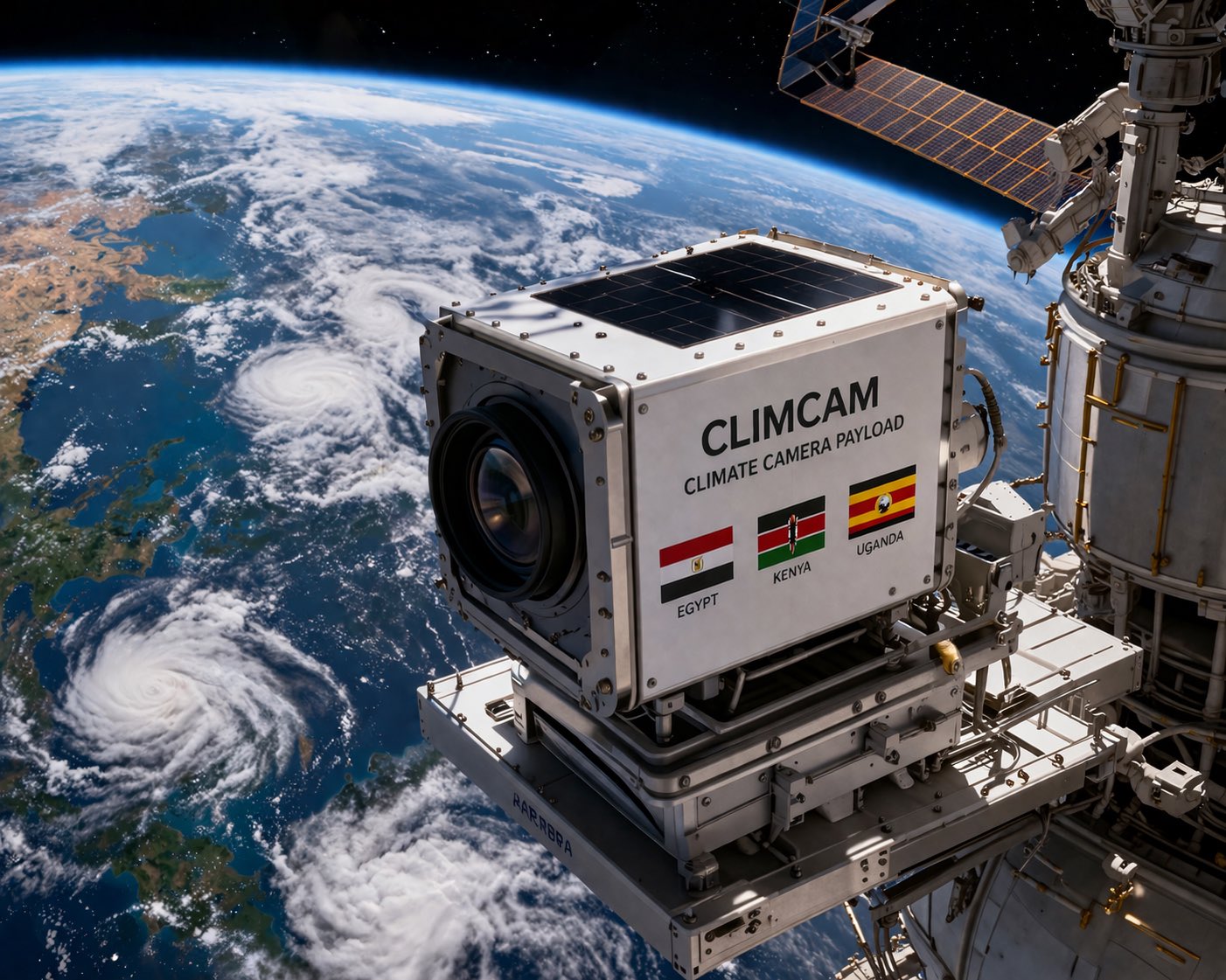
The ClimCam (Climate Camera) payload, a joint initiative involving Uganda, Kenya, and Egypt, was selected under the United Nations Office for Outer Space Affairs (UNOOSA) and Airbus “Access to Space for All” programme. It was launched aboard a SpaceX Falcon 9 rocket on April 8, 2026, as part of the Cygnus NG-42 resupply mission.
Science, Technology and Innovation Minister Dr. Monica Musenero stated on Wednesday that the advanced camera will provide critical real-time data to support flood monitoring, drought assessment, agriculture planning, disaster response, and broader environmental management in the region.
“The ClimCam payload is expected to begin operations in August and will monitor climate conditions over East Africa with up to four orbital passes per day,” Dr. Musenero said.
The project will deploy the climate-monitoring camera on the ISS via the Airbus Bartolomeo external platform and ArgUS payload carrier. It is designed to deliver approximately 10-metre resolution imagery and incorporates machine learning algorithms. The data will complement ground-based weather sensors and existing early warning systems.
The Government of Uganda funded the specialised training of four Ugandan engineers who participated in the design and development of the space camera at the Egyptian Space Agency. Assembly, integration, and testing were carried out in Egypt, followed by final validation at Airbus facilities in Houston.
Officials described the mission as a strategic milestone for Uganda, offering significant value in environmental monitoring, technical capacity-building, regional cooperation, and data sovereignty. The payload is expected to operate for up to two years.
This collaborative effort between the Uganda National Space Programme, the Kenya Space Agency, and the Egyptian Space Agency marks the first joint ISS payload developed by the three African nations and underscores growing regional leadership in space-based solutions for climate challenges.



