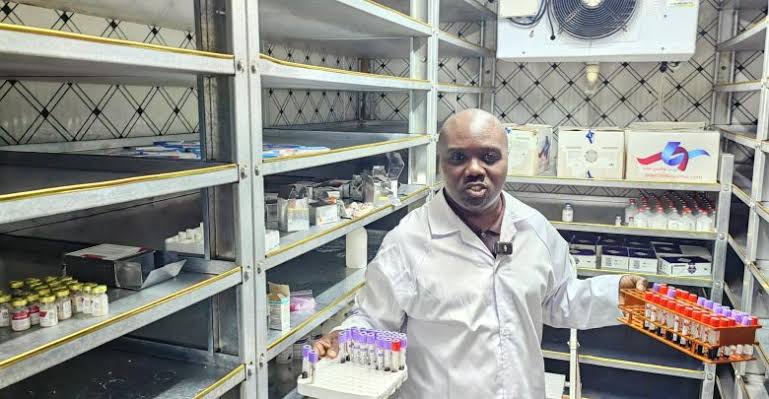
A refurbished laboratory in Karamoja has multiplied Uganda's capacity to detect livestock disease more than fifteen-fold — a quiet infrastructure upgrade with outsized stakes for a region where cattle are wealth, and disease outbreaks can wipe out both herds and export markets in a single season.
In Moroto, the dusty administrative heart of Uganda's Karamoja sub-region, a newly rehabilitated veterinary laboratory is doing something the facility could barely manage a year ago: keeping pace with the diseases moving through one of East Africa's most active pastoralist corridors. The Karamoja Regional Referral Veterinary Laboratory has expanded its monthly testing capacity from as low as 300 samples to as many as 5,000, according to Dr Moses Okino, the Moroto District Veterinary Officer who also directs the lab — a jump that officials and technicians say is already changing how quickly outbreaks can be caught before they spread across borders.
The upgrade was delivered through the Pastoralism and Livestock Adaptation to Climate Change project, known as PLACE, a European Union-funded programme implemented by the Food and Agriculture Organization of the United Nations in partnership with Uganda's Ministry of Agriculture, Animal Industry and Fisheries. Under PLACE, FAO rehabilitated the facility's infrastructure — including secure fencing and a hybrid solar power system to keep sensitive equipment running through the region's frequent grid outages — and equipped it with modern diagnostic tools.
Why Karamoja's lab capacity matters beyond Karamoja
Karamoja is not an isolated case study in Uganda's livestock economy; it is the epicentre of it. The sub-region's pastoralist communities hold a large share of the national cattle herd, and animals move constantly along migratory routes that cross into Kenya, South Sudan and Ethiopia in search of pasture and water, particularly during dry spells. That mobility, which is essential to how pastoralist households survive, is also exactly how diseases such as Foot-and-Mouth Disease, Contagious Bovine Pleuropneumonia, Peste des Petits Ruminants, brucellosis, rabies and anthrax spread across national boundaries.
Before the upgrade, the Karamoja lab's limited capacity meant samples often had to be sent elsewhere for testing, or simply couldn't be processed fast enough to inform real-time decisions about vaccination, quarantine or trade restrictions. According to Dr Okino, the newly upgraded facility is now central to Uganda's ability to access livestock and beef markets both domestically and internationally, because export markets — particularly in the Middle East, where Uganda has been pushing to expand beef sales — increasingly demand scientific proof of disease-free status before they will accept shipments. A laboratory that can generate that evidence quickly and reliably is, in effect, a trade facility as much as a health one.

Training the front line
Equipment alone does not solve a diagnostics gap; someone has to collect, package and transport samples correctly before a single test can run. Recognising this, FAO and MAAIF's National Animal Disease Diagnostics and Epidemiology Centre organised a training programme for animal health workers from across the Karamoja sub-region, covering proper sample collection, packaging, transportation, and biosafety and biosecurity precautions.
Nineteen animal health workers took part, including staff from district local governments such as Kaabong and Karenga, where laboratory capacity at the local level remains thin. “We have a small lab in Kaabong, but we often do not have enough equipment and supplies. So, the little equipment we have must be used efficiently,” said Evaline Awilli, an Animal Husbandry Officer with Kaabong District Local Government, who took part in the training. After classroom sessions, participants went into the field to collect samples themselves, which were then transported to the Moroto laboratory for processing — a practical rehearsal of the exact workflow the upgraded facility is meant to support at scale.
Emmanuel Ogwang, a Senior Veterinary Officer at Karenga District Local Government, said the training filled a gap that frontline workers had long felt. “Part of what I have learnt is proper planning before you go to the field. You must prepare yourself and know exactly what samples you are going to pick so that you carry the appropriate tools,” he said. He added that the skills would help extension workers identify infections earlier, allowing control measures — and community engagement to prevent further spread — to begin sooner.

The economics of disease in a cattle economy
For Karamoja's pastoralist households, cattle are not simply livestock; they are savings accounts, dowries and social insurance rolled into one. The sub-region also remains among Uganda's poorest, with poverty rates far above the national average, and periodic droughts have already strained herds and forced difficult trade-offs between selling animals and holding onto them. Disease outbreaks compound that vulnerability directly: an undetected outbreak of a transboundary disease can force the closure of markets, trigger movement bans that cut pastoralists off from grazing routes they depend on, or kill animals outright, erasing a household's accumulated wealth in a matter of weeks.
At a national level, Uganda has been investing heavily in expanding its livestock export ambitions, from new meat-processing capacity to plans for local vaccine manufacturing aimed at controlling Foot-and-Mouth Disease more cheaply and consistently than imported doses allow. A functioning diagnostic backbone in the cattle corridor's most disease-exposed region is a precondition for those ambitions rather than a side note to them: without reliable, fast testing, neither vaccination campaigns nor export certifications can be trusted by trading partners or by the herders whose animals are at stake.
What comes next
The Moroto lab's expanded capacity is a significant step, but officials and development partners familiar with the region caution that it addresses only part of a much larger diagnostic gap. Facilities like the one in Kaabong remain under-resourced, illustrating that a single regional referral laboratory, however upgraded, cannot substitute for a fuller network of district-level capacity across a sub-region as vast and remote as Karamoja. Sustaining the gains will also depend on what happens after the EU-funded PLACE project concludes — recurrent costs such as reagents, equipment maintenance and staff retention typically fall to government budgets once donor-funded rehabilitation ends, a transition that has undermined similar facilities elsewhere in Uganda in the past.
For now, though, animal health workers on the ground describe a tangible shift. Diagnostics that once took weeks, or simply didn't happen, can now be processed at a scale that matches the size of the problem. In a region where livestock disease can travel faster than the institutions built to contain it, that additional capacity — plus a newly trained corps of field workers who know how to feed it — represents a rare case where investment in laboratory infrastructure translates almost directly into protected household wealth and open export doors.
Published By | News Editor