SCIENCE & TECH
The countdown clock at China's tropical Wenchang Space Launch Center is ticking down to what officials in Beijing are calling the most ambitious lunar mission ever attempted by any nation — and it is aimed squarely at a 200-square-mile stretch of the Moon that both superpowers are now racing to plant their flag on.
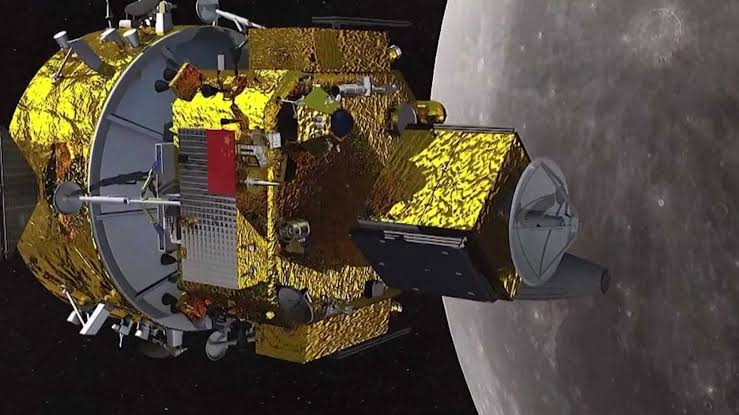
Chang'e 7, a four-piece robotic armada named for the Chinese goddess of the Moon, is scheduled to thunder off the pad this weekend atop a Long March 5 rocket, according to the China National Space Administration. Its target isn't the familiar gray plains where Apollo astronauts once bounced around. It's heading for the Moon's south pole — specifically the rim of Shackleton Crater, a jagged bowl gouged into the lunar surface that scientists believe hides one of the solar system's most valuable resources: frozen water, locked away in permanent darkness for billions of years.
Whoever controls that ice, experts say, may end up writing the rules for how humanity lives and works on the Moon for decades to come. And right now, China is racing to get there first.

THE MOST COMPLICATED MOON SHOT EVER ATTEMPTED
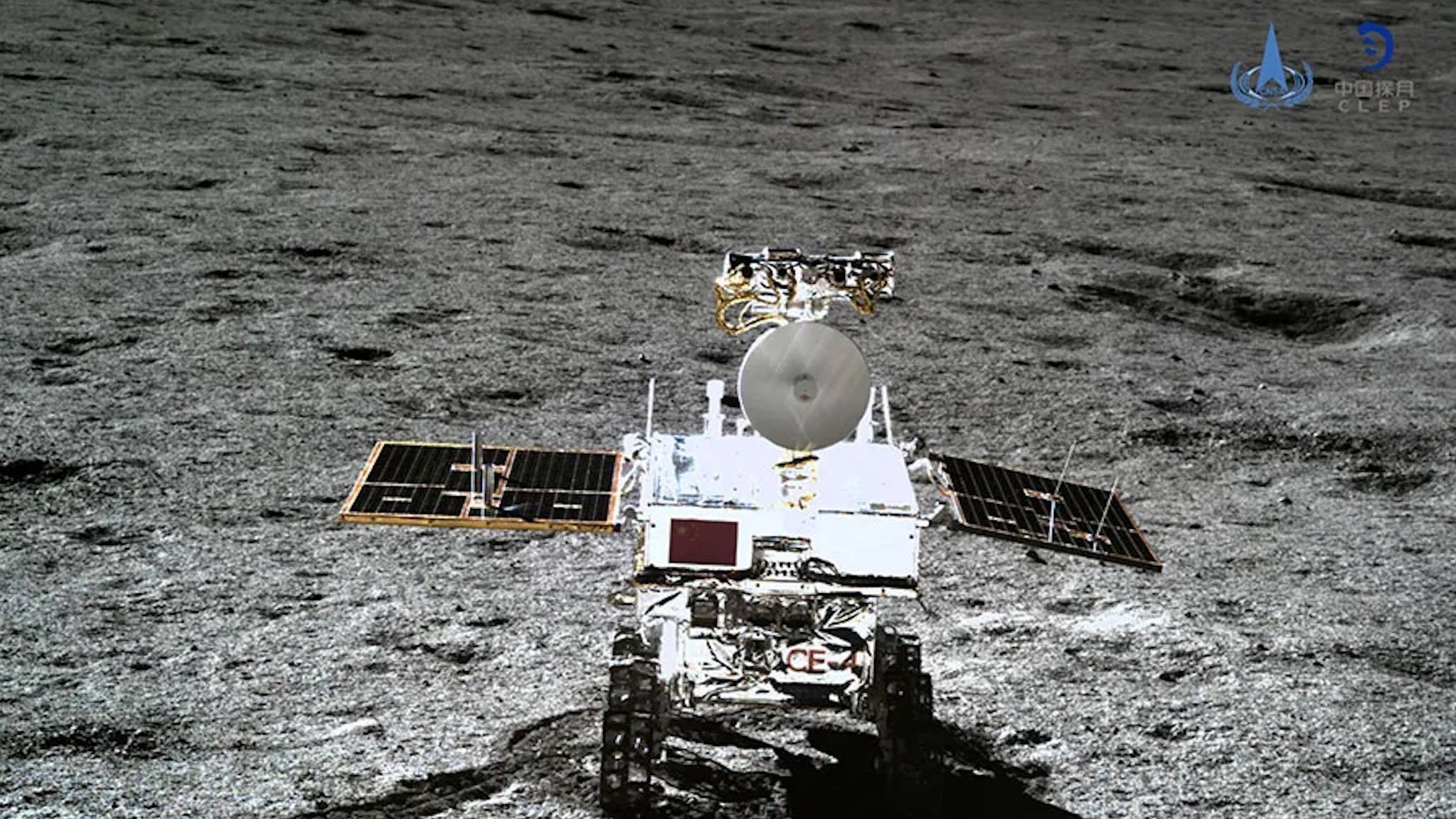
Chang'e 7 isn't a single spacecraft — it's practically a small invasion fleet. Packed onto the mission are an orbiter, a lander, a rover, and a genuinely strange addition: a mini hopping probe designed to leap into the permanently shadowed craters near the pole where sunlight has not touched the ground since before complex life existed on Earth. Those craters are so cold — hovering just a few dozen degrees above absolute zero — that they're believed to be frozen vaults, preserving water ice that may have arrived on ancient comets and asteroids and simply never left.
The spacecraft is loaded with 21 scientific instruments in total, including six built by international partners, according to mission details released by Chinese space officials. After a six-day cruise to lunar orbit, the fleet will spend roughly two months studying the terrain and refining its approach before attempting a landing near Shackleton's rim in November — a touchdown China is billing as a "near bull's-eye" on the pole itself, a feat no nation has managed before. Most previous Moon landings, including every crewed Apollo mission, touched down near the lunar equator, where sunlight and communications are far easier to manage. The south pole is a nightmare by comparison: jagged, shadowed, and largely unmapped at the resolution engineers need for a safe landing.
If Chang'e 7 pulls it off, China will have landed a spacecraft closer to the pole than any mission in history, according to space agency officials — a milestone with scientific value, and enormous symbolic weight.
WHY EVERYONE WANTS THIS PATCH OF ICE
Here's the part that turns a science mission into a geopolitical flashpoint: water ice on the Moon isn't just interesting to planetary scientists. It's rocket fuel. Split into hydrogen and oxygen, lunar water ice could theoretically be refined into propellant, letting future spacecraft refuel on the Moon itself instead of hauling every drop of fuel from Earth. It could also, in theory, be purified into drinking water for astronauts living at a future lunar base — turning the Moon from a place humans visit into a place humans could actually live and work for extended stretches.
That's exactly why NASA and China are eyeing the same neighborhood. NASA's Artemis program has targeted the lunar south pole as the site of a future permanent research base, and China's own long-term project — the International Lunar Research Station, a joint effort with Russia and other partners — is aimed at the very same region. Chang'e 7 is explicitly described by Chinese officials as scouting work for that future outpost, and as a stepping stone toward China's goal of landing its own astronauts on the Moon by 2030.
NASA, meanwhile, is not standing still — but it is moving slower. The agency revived its own polar ice-hunting rover, VIPER, after controversially canceling it in 2024, and has now handed the job of delivering it to the Moon to Blue Origin's Blue Moon Mark 1 lander, targeted for no earlier than 2027. NASA's own crewed south pole landing, Artemis IV, isn't currently scheduled before 2028. That gap — Chang'e 7 attempting a near-polar touchdown this November versus NASA's earliest robotic follow-up more than a year later — is the gap that has space policy watchers in Washington paying very close attention.
There is no official international treaty carving up the Moon's resources the way, say, the Antarctic Treaty carves up (or rather, deliberately doesn't carve up) Antarctica. Instead, both the U.S. and China have been building competing coalitions — the U.S.-led Artemis Accords, signed by dozens of countries, and China's rival International Lunar Research Station partnership — each implicitly jockeying to set the norms for who gets to extract what, and how, once mining technology matures. Being physically present first, with working hardware on the ground and data on where the best ice actually is, gives whichever nation gets there an outsized voice in how those norms eventually get written.
WHAT SCIENTISTS ACTUALLY WANT TO LEARN
Strip away the geopolitics, and Chang'e 7 is also a legitimate, ambitious science mission. Its formal objectives, as laid out by CNSA, include mapping the distribution and abundance of water ice in the lunar soil, conducting high-precision surveys of the south pole's terrain, composition and structure, probing the Moon's interior structure, magnetic field and thermal properties, and even using the Moon as a vantage point to observe Earth's magnetotail — the long, comet-like tail of magnetic field lines Earth trails behind it, away from the Sun.
The hopping probe is the mission's wildcard. Unlike a wheeled rover, which can get stuck or tip over navigating a crater's steep, rubble-strewn walls, a hopper can use small rocket thrusters to literally jump from the crater rim down into the permanently shadowed floor, take measurements, and — mission planners hope — hop back out. It's an approach no other space agency has attempted on the Moon, and if it works, it could become the go-to method for exploring the solar system's darkest, most inaccessible nooks, from other lunar craters to icy pits on Mercury and beyond.
Getting a firm read on exactly how much ice is down there, and how it's distributed, matters enormously for engineers on both sides of the Pacific. Early estimates of lunar polar ice have varied wildly — from small, scattered pockets to potentially vast reserves — and until a mission like Chang'e 7 or NASA's VIPER actually drills into the shadowed regolith and measures it directly, nobody can say with confidence whether there's enough there to support a real, self-sustaining lunar base, or just enough for a few publicity-friendly scientific firsts.
THE VIEW FROM THE GROUND
Space analysts describe the current moment as the most consequential stretch of lunar exploration since the Apollo era, precisely because it's no longer just about flags and footprints — it's about infrastructure. "This isn't a one-off stunt landing," one space policy analyst tracking the mission told reporters this week, noting that Chang'e 7 is explicitly framed by Chinese officials as reconnaissance for a permanent, staffed research station. Officials in Beijing have been unusually candid that the mission's ultimate purpose is establishing "ground truth" for where China's future lunar base should be built — turning a robotic probe into the opening move of a decades-long infrastructure project.
On the American side, officials have been careful not to frame the relationship as an outright race, publicly emphasizing NASA's own timeline and scientific goals rather than reacting directly to China's schedule. But privately, congressional space policy staffers and NASA-watchers have pointed to Chang'e 7's November target as exactly the kind of "getting there first" milestone that fuels renewed urgency — and renewed budget arguments — for accelerating America's own polar lander plans.

WHAT THIS MEANS FOR YOU
If you're not an astronaut or a space contractor, it's fair to ask why any of this should matter to you. The honest answer: the outcome of this race will likely shape where humanity's next major frontier gets built, who writes the rules for it, and which country's companies end up supplying the technology — from mining equipment to life-support systems to communications networks — for a economy that could eventually be worth hundreds of billions of dollars. Lunar ice mining, if it proves viable, could also slash the cost of deep space exploration generally, since fuel produced on the Moon is vastly cheaper to use than fuel launched from Earth's gravity well. That could accelerate everything from Mars missions to asteroid mining ventures that might, eventually, touch the electronics, materials, and resources used in everyday life back home.
There's also a more immediate stake: prestige and soft power. Just as the original Space Race reshaped Cold War politics, a successful Chang'e 7 landing — especially one that beats America's own south pole ambitions by more than a year — would be a powerful propaganda win for Beijing, reinforcing China's narrative of itself as a rising technological superpower capable of out-executing the United States on hard engineering problems.
WHAT COMES NEXT
If Chang'e 7 launches on schedule this weekend, the spacecraft will spend the next several months in a careful, phased approach: roughly six days to reach lunar orbit, then close to two months of orbital reconnaissance and landing-site refinement before mission controllers commit to the actual descent, targeted for November. A successful touchdown near Shackleton Crater's rim would set the stage for China's rover and hopping probe to begin their search for ice almost immediately, with early data expected to start flowing back to Earth within weeks of landing.
Meanwhile, NASA and its Blue Origin-built VIPER rover remain on track for a 2027 launch at the earliest — putting the United States roughly a year to a year and a half behind China's first polar boots-on-the-ground (or wheels-on-the-ground) presence at the very site both nations have circled as their preferred spot for a future base.
For now, all eyes are on Wenchang. If the countdown holds and the Long March 5 lifts off cleanly this weekend, the world's most consequential piece of real estate beyond Earth's atmosphere will have a new visitor within days — and the race to claim the Moon's water will have entered an entirely new, and far more concrete, phase.
Published By | Tech Wiz