Share
By Atukunda Olivia
Tucked in the heart of Kakoba Division, Mbarara City South, lies a modest structure known to many as Brave Hostel. More than just a shelter, it is a temporary home, a quiet refuge, and, at times, a battleground for young interns navigating the often chaotic transition from student life to the professional world.
Internship is more than just a checkbox on an academic calendar. It’s a pivotal rite of passage—a brief but intense period where theory meets reality. For many students, it marks the first unfiltered encounter with workplace expectations, economic hardship, and adult independence. As someone who has walked these roads and observed others do the same, I believe we too often overlook what this chapter truly means.
Take Donah Aryatuha, for instance—a student of Bishop Stuart University whose hostel life is not just about lectures and assignments, but about survival.
"There are days when a cup of tea is all I can afford till evening," Donah says, offering a smile that barely hides the struggle beneath.
His story mirrors countless others—young people grappling with low or no income, emotional fatigue, and the silent pressure of making something of themselves. These challenges, although temporary, shape their character in permanent ways. What doesn’t make it into polished résumés are the sleepless nights, the anxiety of unpaid internships, and the inner battles fought in silence.
But the intern experience doesn’t exist in isolation. It ripples through the communities they temporarily leave behind—hostel owners, local traders, boda boda riders—whose livelihoods hinge on student activity.
Marion Ankunda, a shopkeeper in Kasinjenje, has witnessed the ebb and flow of business with the student calendar for over seven years.
“My business slows down when students leave for internship or holidays,” she explains. Most of her customers are university students, and when they go, so does a significant portion of her income. Worse still, some students take goods on credit before departing—debts she may never recover.
Nabaasa Joshua, a boda boda rider in the same area, paints a different picture—one that offers a glimpse into the evolving social dynamics of student life.
“We ferry students to clubs, guesthouses, and back to hostels in the early hours of the morning,” he says. “Some girls are sponsored; others pay their own way. Either way, nightlife is a big part of their lives.”
He even describes what he calls “weekend marriages”—a term used to refer to young women who spend weekends away with distant lovers or older benefactors. While this might be dismissed by some as moral decay, I see it as a symptom of deeper issues—economic strain, social influence, and the pressure to conform to curated lifestyles.
What does this tell us? It tells us that internship isn’t just about learning a job—it’s about navigating a system that often asks too much and gives too little. It’s about young people managing academic expectations while juggling personal survival, often in environments far removed from their support systems.
It also tells us that communities surrounding universities are economically dependent on students, and when these students leave for internship, a financial vacuum is created. The relationship between student life and local economies is intricate, symbiotic, and often underappreciated in policy and planning.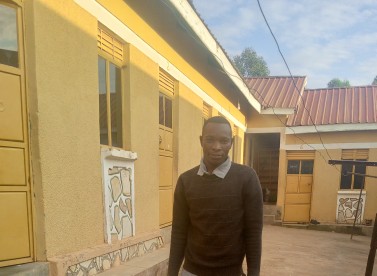
Custodian Brave hostels
So what can be done? Internship programs must be redesigned not just as academic requirements but as supported transitions into work life. Institutions can collaborate with host organizations to provide stipends, transportation, and housing support. At the same time, universities should partner with local businesses to build mutually beneficial frameworks—credit tracking systems, scheduled repayment plans, and student-community engagement forums.
And perhaps, most importantly, we must stop romanticizing the "struggle" as some noble necessity. Struggle without support is not character-building—it’s exhausting, and sometimes even dangerous.
As our cities continue to grow into education hubs, the stories of students like Donah, and locals like Ankunda and Joshua, must not be footnotes. They are central to the story of where we live and grow.
Because behind every certificate is a diary—a quiet testament to resilience, risk, and the complex dance between hope and hardship.
The writer is an Intern at Torch Media Africa



