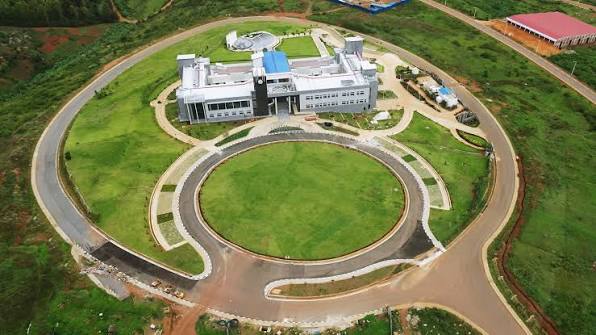
Rwanda has spent the past decade building a reputation as one of Africa's most deliberate technology strategists — a small, landlocked economy compensating for limited natural resources with an outsized bet on digital services, e-government, and innovation infrastructure. In 2026 that bet is entering a new phase, anchored by a $2 billion innovation district rising on the outskirts of Kigali, a nationwide digital identity rollout, and a services-led growth model in which ICT and fintech are now central rather than peripheral drivers of the economy.
Services, ICT, and a 9.4% Growth Year
Rwanda closed 2025 with full-year GDP growth of 9.4%, positioning it among the fastest-growing economies in Sub-Saharan Africa, according to government economic data compiled in the UNDP's Annual Economic Brief 2025. The services sector did much of the heavy lifting: in the fourth quarter of 2025 alone, services contributed more than half of GDP — 51% — driven by trade, ICT, transport, and professional services. The Ministry of ICT and Innovation has separately noted that the ICT sector has continued to fuel Rwandan GDP growth, with the country's IT services market projected to reach $99.95 million in 2025, a modest absolute figure that nonetheless reflects rapid year-on-year expansion from a low base.
That growth composition marks a deliberate policy choice. Under Rwanda's National Strategy for Transformation (NST2), the government has shifted its digital focus away from simply expanding ICT as a standalone sector and toward deepening ICT penetration inside non-ICT sectors — agriculture, tourism, and energy chief among them — so that digital tools raise productivity economy-wide rather than remaining confined to a small tech industry.
Kigali Innovation City: A $2 Billion Bet on Becoming Africa's Digital Heart
The centerpiece of Rwanda's technology ambitions is Kigali Innovation City (KIC), a 61-hectare mixed-use development that broke ground in September 2024 and has advanced through early infrastructure work into 2026. Once complete, KIC is designed as an integrated live-work-play ecosystem combining university campuses, research labs focused on artificial intelligence, biotechnology, and robotics, Grade A office space, startup incubators, student and residential housing, retail, and hospitality — explicitly modeled on hubs like Rwanda's own Vision City but scaled up to compete continentally.
The numbers behind the project are substantial for an economy of Rwanda's size. KIC is projected to generate $2 billion in economic value upon completion and to attract $300 million in foreign direct investment, while producing an estimated $150 million in ICT exports annually once operational. In November 2025, Africa50 — the pan-African infrastructure investment platform backed by the African Development Bank Group — announced a $400 million investment (roughly FRW 348.9 billion) specifically to accelerate Rwanda's push to become a continental technology hub through the KIC project, one of the largest single infrastructure-finance commitments the platform has made to a digital-economy project on the continent.

A Nationwide Digital ID Goes Live
Rwanda is preparing to launch a new national digital identification system allowing residents to use a fully digital ID starting in June 2026, part of a project valued at more than €50 million. As of November 20, 2025, more than 300,000 people had already registered ahead of the full rollout — an early adoption signal the government is using to calibrate onboarding and support infrastructure before nationwide launch. The digital ID is designed to interoperate with Rwanda's existing e-government backbone rather than function as a standalone credential, reducing friction for citizens accessing services that already require identity verification, from banking and mobile money to land registration and health insurance enrollment.
That backbone is IremboGov, Rwanda's central digital-services platform, which now offers more than 600 services — over 240 of them paid — spanning civil registration, business licensing, immigration, land administration, health insurance, and taxation. A significant operational improvement has come from streamlining how new services are added to the platform: onboarding time for new Irembo services has fallen by 87%, from roughly three months down to about 1.5 weeks, a change that lets government agencies digitize additional service lines far more quickly than in the platform's earlier years.
Fintech and Mobile Money: A Financial Sector Strategy Through 2029
Rwanda's Ministry of Finance and Economic Planning unveiled a Financial Sector Development Strategy (FSDS) covering 2025-2029, designed to catalyze private-sector growth by channeling more than 70% of NST2's private-sector financing needs through the domestic financial system — a signal that digital financial infrastructure is being treated as core national economic plumbing rather than a niche fintech vertical.
Mobile money usage data from the country's largest telecom operator illustrates the underlying momentum: monthly active users on MTN Rwanda's MoMo platform climbed 17.3% to 6.2 million, while fintech revenue generated from MoMo services jumped 27.6% year-on-year, helping drive MTN Rwanda's broader return to profitability in 2025-2026, according to reporting compiled by TechCabal. Artificial intelligence, fintech, and space technology were all flagged by Rwandan officials as increasingly important emerging-technology priorities for the economy going into 2026, extending the country's digital ambitions well beyond payments and identity into frontier technology sectors.
Closing the Connectivity Gap: The Digital Acceleration Project
Underpinning all of Rwanda's digital-service ambitions is the more basic challenge of getting more citizens connected in the first place. To address that, the government is rolling out a Rwf 280 billion ($200 million) Digital Acceleration Project, financed jointly by the World Bank and the Asian Infrastructure Investment Bank, aimed at significantly expanding broadband access, digitalizing additional public services, and improving digital inclusion for underserved and rural populations. The project follows an earlier $100 million World Bank commitment made in December 2021 to accelerate Rwanda's digital transformation, suggesting a sustained, multi-phase financing relationship between Kigali and its development partners on connectivity infrastructure specifically, separate from the KIC innovation-district investment.
A Growing, if Still Modest, Startup Ecosystem
Rwanda's homegrown startup sector remains small relative to regional leaders like Nigeria, Kenya, and Egypt, but it is expanding steadily. According to data compiled by Tracxn, Rwanda now counts roughly 1,080 tracked startups, which have collectively raised approximately $463 million in funding across all rounds to date. That figure underscores both the opportunity and the gap Kigali Innovation City is explicitly designed to close: Rwanda's policy bet is that purpose-built infrastructure, anchor investment from platforms like Africa50, and a stable, digitally literate regulatory environment can help local startups scale toward the kind of billion-dollar outcomes that have so far been rare outside a handful of larger African markets.
What to Watch
Several milestones over the remainder of 2026 will indicate whether Rwanda's digital strategy is translating from infrastructure and policy into measurable economic returns. The June 2026 digital ID launch will test whether the platform can scale smoothly beyond its initial 300,000 registrants to the national population. Continued construction progress and tenant commitments at Kigali Innovation City will show whether the $2 billion valuation and $300 million FDI target are on track, particularly following Africa50's $400 million capital injection. And ICT sector growth figures in Rwanda's upcoming quarterly GDP releases will reveal whether the NST2 strategy of embedding digital tools into agriculture, tourism, and energy is beginning to show up in productivity data outside the tech sector itself.
Taken together, Rwanda's approach represents one of the more coherent, state-coordinated digital transformation strategies on the continent — pairing large anchor infrastructure investment, an ambitious identity and e-government rollout, and a financial-sector strategy explicitly built around digital rails. Whether that coordination can produce the kind of homegrown billion-dollar technology companies that have emerged in Lagos, Nairobi, and Cairo remains the open question defining Rwanda's next phase as a self-styled digital hub for the continent.
Published By | Tech Wiz