Written By | Fashion and Design Desk
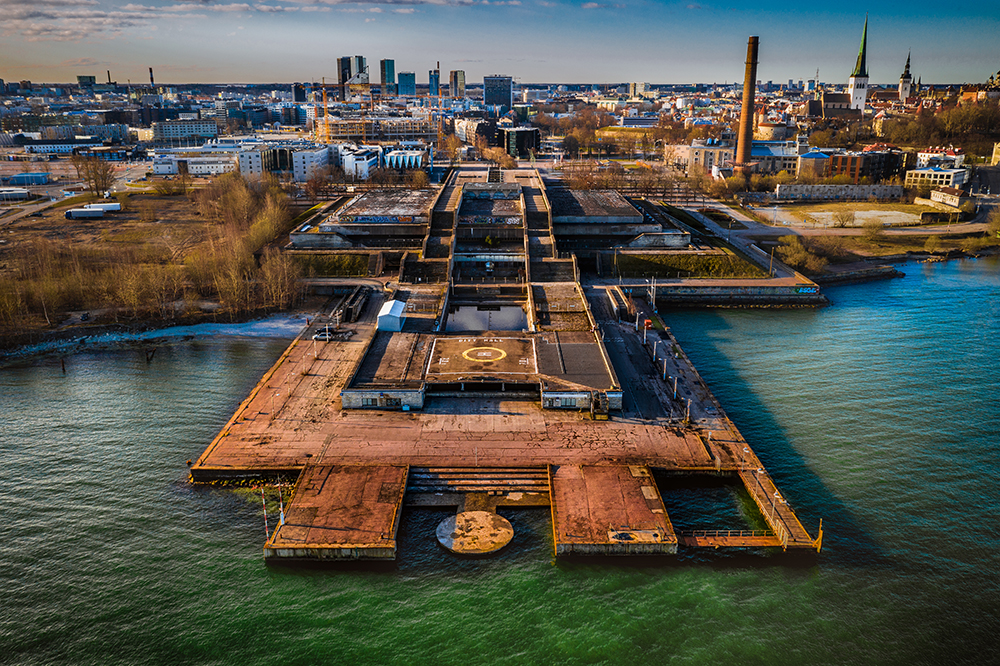
Estonia's architecture biennale has moved into Linnahall, a derelict Soviet Olympic hall crumbling into the Baltic, to ask the question the profession keeps avoiding:
TALLINN
If you want to understand the 8th Tallinn Architecture Biennale, you do not need to read its curatorial statement. You need to stand on the roof of the building it has occupied.
Linnahall is a low, vast, disintegrating slab of concrete and limestone sitting between Tallinn's medieval Old Town and the Baltic Sea. It has been closed since 2009. Grass grows through its staircases. Its future has been debated by Estonian politicians for the better part of two decades without resolution, for a reason that could have been written as a biennale brief: it is considered too expensive to restore, and also too expensive to knock down.
The biennale, which runs from 9 September to 30 November and is in the final day of its opening week, is titled "How Much?" The pairing of theme and venue is about as unsubtle as architecture curation gets, and it works.
The building that outlived its reason
Linnahall was built for the 1980 Moscow Olympics. Moscow, being landlocked, could not host the sailing regatta, so the event was handed to Tallinn — then the capital of the Estonian SSR — and a set of Olympic facilities was built to receive it. Architects Raine Karp and Riina Altmäe designed the centrepiece: a 4,200-seat amphitheatre, an ice hall, an exhibition space and a dance hall, packaged in a monumental symmetrical mass and pressed deliberately low into the shoreline so that it would not obstruct the view of the medieval city behind it.
That restraint is the building's great quality and the source of its predicament. Visitors climb wide external staircases onto a public roof terrace that functions as an artificial headland over the sea — one of the most generous pieces of public space in northern Europe, attached to an interior nobody has been able to afford to operate since 2009. The exterior has meanwhile aged into global shorthand for late-Soviet monumentality, appearing as a backdrop in international film productions: an uncomfortable afterlife for a building meant to hold concerts.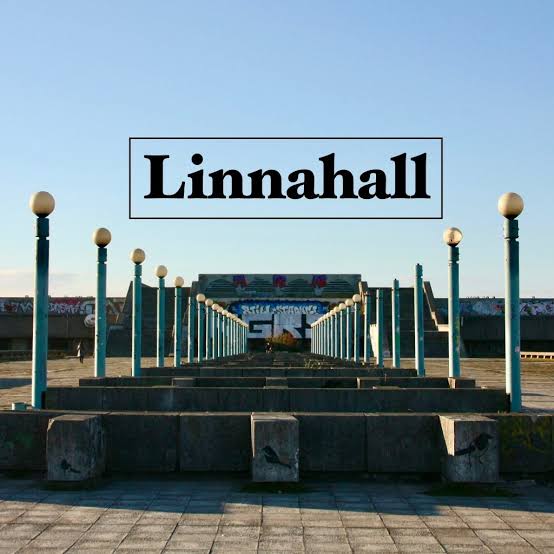
"How Much?" — and who is asking
The curatorial theme was selected through open competition, and won by a young Estonian collective, Stuudio TÄNA — Tristan Krevald, Kertu Johanna Jõeste, Ra Martin Puhkan and Siim Tanel Tõnisson — working with Mark Aleksander Fischer and the Austrian curator Mira Samonig. Their proposal argued that architecture has spent a generation discussing quality, sustainability and form while treating cost as somebody else's department, and that this is no longer tenable.
The framing is sharper than the usual biennale abstraction. "How Much?" is not primarily about budgets; it is about hidden costs — social, ecological and temporal. The two-day symposium held on 10 and 11 September at the Estonian Academy of Arts split neatly along that fault line. Day one, titled "To Be Continued," dealt with adaptation, reuse and transformation. Day two took on what the curators call the illusion of cheapness: the situations, familiar to anyone who has ever renovated anything, in which a low initial cost does not eliminate expense but merely postpones it and hands it to somebody else.
It is difficult to think of a more literal illustration than the building the exhibition sits inside. Linnahall was cheap to the Soviet state in 1980 in the sense that the state did not itemise. Forty-six years later, an independent Estonia is holding the invoice.
Budget bougie
The biennale's installation competition carried the deliberately flippant title "Budget Bougie" — an invitation to demonstrate that constraint can produce quality rather than merely subtracting it. It was won by "Resonance," from Aru Ma- Architects, a practice founded by Cheng Hao Chung and Zhang Jie, working with Cui Jiakai and Matteo Minnicelli. The piece was fabricated over the summer and inaugurated during opening week.
Alongside it, an opening action titled "You Reap What You Sow: An In-Between Landscape" was staged on the Linnahall roof — a landscape installation that will remain in place for the full duration of the biennale, slowly changing across autumn. It is an elegant piece of curatorial logic: rather than argue about whether the roof should be a park, plant one and let visitors form an opinion by walking on it.
The rest of the programme spreads across the city in three tiers — core, architecture-focused supplementary, and an interdisciplinary satellite strand of exhibitions, lectures, workshops and concerts running to the end of November.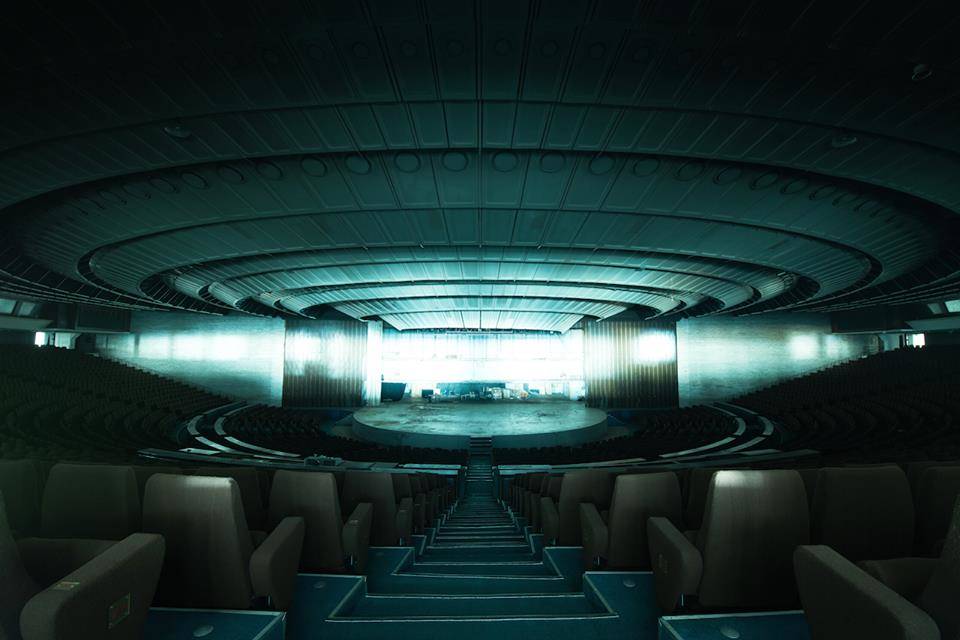
Why a small Baltic biennale is worth your attention
Because the question it is asking is the one dominating housing politics in almost every country with a housing crisis, and architecture as a profession has been conspicuously bad at answering it.
The standard public debate about buildings runs on capital cost — the headline figure, the tender, the overrun. The costs that actually determine whether a building is good are almost all downstream: what it costs to heat, what it costs to maintain, what it costs to adapt when its original purpose expires, and what it costs to remove when it cannot be adapted. A structure that is cheap to build and expensive to keep is not a bargain; it is a debt with a ribbon-cutting ceremony.
That has direct consequences for anyone who rents, buys or works in a building. The cheap-to-build, expensive-to-run logic is why energy bills in newer housing stock are frequently worse than in older stock, why conversion of obsolete offices is so often declared impossible, and why so many buildings from the 1960s to the 1990s are now facing exactly Linnahall's dilemma at a smaller scale.
There is also a quieter argument embedded in the venue itself. Linnahall is a difficult building — politically loaded, aesthetically divisive, built by an occupying power for an event that half the world boycotted. The easy path for a national cultural institution would be to hold its biennale somewhere flattering. Choosing instead to invite several thousand international visitors to walk through a ruin and ask what it would cost to fix is an unusually honest piece of programming.
Opening week ends tomorrow. The exhibition stays until 30 November, by which point the roof landscape will have gone over and the Baltic wind will be doing its annual work on the concrete. The question in the title will still be unanswered — which, one suspects, is rather the point.



