Soroti / Kampala
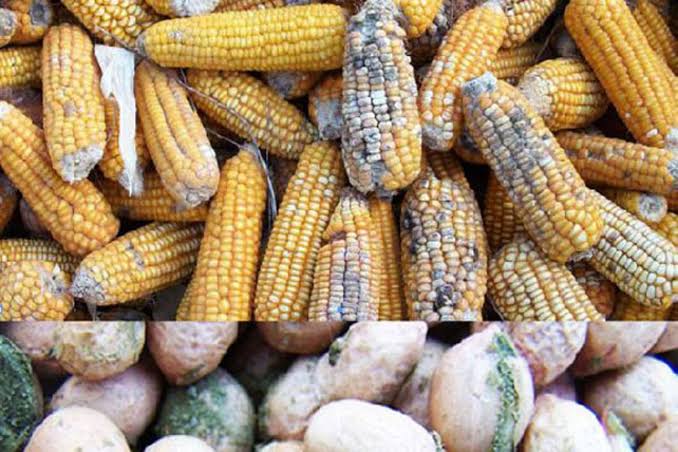
When Bukedea County MP David Beecham Okwere rose in Parliament in late August, he brought a number that should unsettle anyone who eats grain grown in eastern Uganda. Of the cereals being bought by PELA Commodities, a value-addition factory at Soroti Industrial Park that processes millet, sorghum and maize, roughly 80 per cent were testing positive for aflatoxin.
“What we learnt is that all the cereals which this factory is purchasing have got about 80 per cent of aflatoxins, and this is a red flag that all the people in Teso Sub-region are consuming aflatoxins,” Okwere told the House. The finding, he said, emerged during an oversight visit by the Committee on National Economy to the industrial park. Left unaddressed, he warned, residents of Teso risk cancer from what is on their plates.
What aflatoxin actually does
Aflatoxins are poisons produced by Aspergillus moulds. They colonise maize, groundnuts, sorghum, millet and tree nuts, and they thrive precisely where East African grain is stored: warm, humid, poorly ventilated conditions, and grain that goes into a sack before it is properly dry. Chronic exposure causes liver damage and is a recognised cause of liver cancer; acute exposure can kill. Cooking does not destroy them.
The toxin is also invisible, odourless and tasteless at the doses that matter. A farmer cannot see it. A trader will not smell it. Only a test finds it, which is why aflatoxin is a governance problem rather than a farming skill problem.
The machine nobody used
The government’s response in Parliament sharpened the story considerably. The Minister of State for Agriculture, Desire Muhoozi, replied that the state had already invested in an aflatoxin removal machine for the Teso sub-region — and that it has sat largely unused since 2018.
“Ever since government availed the equipment according to your requirement, you have not been using it, and right now the Uganda Development Corporation has taken on the responsibility to privatise it,” she said, calling on local leaders to encourage communities to use such facilities when they are provided.
The Minister of State for Trade, Industry and Cooperatives (Industry), David Bahati, undertook to coordinate with the agriculture ministry and send a technical team to Soroti to establish the facts on the ground.
Eight idle years is a long time for a piece of public equipment installed to solve a problem that has, on the evidence of the committee’s visit, only grown worse. The ministerial framing places the failure on farmers who did not turn up. The more useful question is why they did not.
Why the equipment failed the market test
Aflatoxin removal — whether by optical sorting, density separation or physical cleaning — is a mid-chain intervention. It works when there is grain aggregated in one place, a test that flags contaminated lots, and a price signal that makes cleaning worth paying for. Take away any one of those and the machine is a shed ornament.
In Teso, all three are weak. Most grain is dried on bare ground or on murram roadsides, not on tarpaulins or raised racks, because tarpaulins cost money a household short of food does not have. Moisture meters are rare at village buying points. Grain moves in small lots through village agents to town traders, so no single actor accumulates enough volume to justify a cleaning run. And crucially, nobody at the village level pays more for clean grain than for dirty grain: a trader offering the same price per kilogramme regardless of quality gives the farmer no reason to invest an extra day in drying, let alone haul a sack to a processing facility.
The result is a chain in which contamination is discovered at the factory gate — the last point where anyone can do anything about it, and the point where the loss falls on the buyer or gets quietly passed back to the farmer as a discount.

A processor that cannot source clean grain
That has a direct bearing on Uganda’s agro-industrialisation programme. Soroti Industrial Park exists to move Teso up the value chain, from selling raw cereals to selling processed food. A plant like PELA Commodities is exactly the sort of investment the strategy is built around.
But a factory that rejects four in five sacks it inspects cannot run near capacity, cannot offer farmers a dependable offtake price, and cannot credibly enter export markets with residue standards. Contaminated supply does not just poison consumers; it strangles the industrial project meant to lift the region out of subsistence.
The regional trade cost
The commercial stakes reach well beyond Teso. The Eastern Africa Grain Council has put Uganda’s potential losses from mycotoxin contamination at as much as US$577 million, with Shs32.8 billion in documented export rejections since 2023. Kenya banned Ugandan maize imports in 2021 explicitly on aflatoxin grounds, an episode that redirected the bulk of Uganda’s maize exports to South Sudan — where trucks have in turn been turned back at the border for exceeding aflatoxin limits.
Uganda already loses an estimated 22 to 30 per cent of its crop to post-harvest failures, according to World Bank assessments cited repeatedly in parliamentary debate this year. Aflatoxin is the sharpest edge of that broader loss: grain that physically survives storage but is commercially and nutritionally worthless.
The food security bind
There is a harder dimension still. Teso is not a region with the luxury of discarding food. The Office of the Prime Minister was tasked earlier this year with reporting to Cabinet on worsening crop failure in the sub-region after prolonged dry conditions, with staples including cassava and sweet potato drying up. Household food security data has put the share of food-secure households at around 31.9 per cent in Soroti and 30.8 per cent in Katakwi.
In that setting, telling a family that its millet is contaminated is not the same as telling it not to eat. Rejected grain does not disappear; it is consumed at home or sold informally. The health burden therefore lands disproportionately on the households least able to replace the food — a pattern that makes aflatoxin as much a public health equity issue as a trade one.
What would actually shift the numbers
Practitioners across the region converge on a short list. Test at the buying point, not the factory gate, so that quality is priced where the farmer can respond to it. Pay a differential for clean, dry grain, so drying and sorting become investments rather than costs. Put drying and storage infrastructure — tarpaulins, cribs, hermetic bags, community stores — within reach of the farmers who need it. Deploy biocontrol treatments in the field where they are approved. And enforce standards consistently enough that traders cannot simply route contaminated lots around the checkpoints.
Uganda has the beginnings of an institutional answer. The Food and Agriculture Regulatory Authority Bill, given its first reading in Parliament in late August, would consolidate food safety, agrochemical and residue oversight in a single regulator, replacing a patchwork that has left mycotoxin monitoring nobody’s clear responsibility.
Whether that helps Teso depends on details still unsettled — and on a smaller, more immediate question that Bahati’s technical team should answer first: who owns the Soroti aflatoxin equipment, who will operate it after privatisation, and what will make a farmer in Bukedea walk grain through its door when nothing yet pays her to do so. Eight years of idleness is the answer to the second question already. The machine was never the missing piece.
Published By | Features Editor