BUSINESS
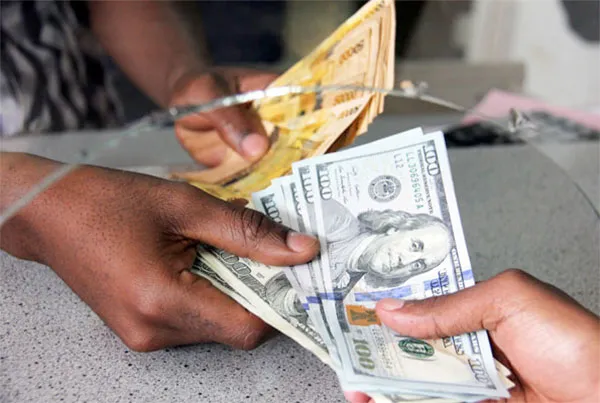
The Ugandan shilling has weakened sharply this month, hitting its lowest level against the US dollar in roughly two years and pushing pump prices toward record territory just as the country's central bank had hoped to keep a lid on inflation. After trading relatively steadily through August at an average of about Shs3,704.51 per dollar, the currency slid to Shs3,917 per dollar on Monday, September 15, and continued to weaken to around Shs3,920 by midday Tuesday, September 16 — a depreciation of roughly 6 percent in a matter of weeks. Bloomberg reported the move as a two-year low for the shilling, driven by a surge in dollar demand that is outpacing supply in the local foreign exchange market.
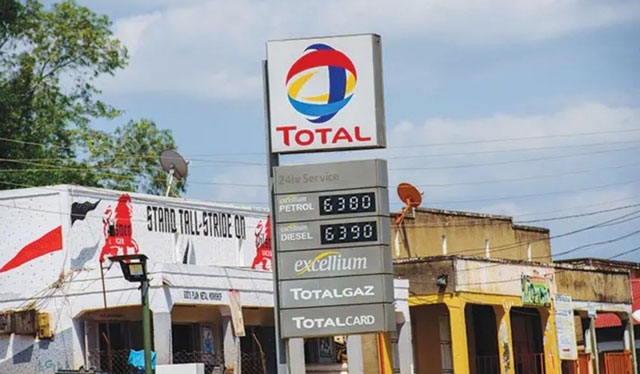
The currency's slide is feeding directly into fuel prices, which are climbing toward the psychologically significant level of Shs7,000 per litre. At Total stations, petrol was quoted at Shs6,899 per litre and diesel at Shs6,699, while Shell listed petrol at Shs6,850 and diesel at Shs6,750. Independent market data from earlier in September had put average petrol prices at Shs6,529 and diesel at Shs6,647, meaning prices have moved up noticeably even within the past two weeks. Because Uganda imports virtually all of its refined petroleum in US dollars, the combination of a weaker shilling and firmer global oil prices is compounding at the pump.

Two forces are being cited as the main drivers of the shilling's weakness. First, global crude prices have firmed, with Brent crude trading around $107.40 a barrel, well above the levels Uganda's economic planners had been budgeting around. Second, and closely related, elevated geopolitical tensions in the Middle East have pushed up freight and insurance risk premiums for oil cargoes, adding further cost to imports that must ultimately be paid for in dollars. Analysts also point to broader dollar demand across the economy — from fuel importers, from businesses restocking ahead of the year-end, and from investors — as outstripping the supply of hard currency coming into the country, a dynamic that some commentators have described as part of a wider bout of currency pressure hitting several African economies at once, with Uganda and Ghana both cited as currencies bracing for further losses.
Dr. Susan Kavuma, an economist at Makerere University, warned that the currency slide has direct inflationary consequences for ordinary Ugandans: "A depreciation of the shilling means a higher cost of imports and, therefore, the economy is likely to experience inflationary pressures." Downstream oil sector expert Peter Ochieng similarly cautioned that the combination of a weaker currency and firmer global oil prices creates conditions for further fuel price increases in the coming weeks, a warning that will be unwelcome news for transporters, farmers who rely on fuel for irrigation and transport, and households already grappling with rising living costs. Notably, the Bank of Uganda did not respond to media inquiries seeking an official explanation for the depreciation, leaving markets to draw their own conclusions about how much intervention, if any, the central bank is prepared to undertake.
The timing is awkward for the central bank, which had projected a measure of confidence in the economy's trajectory only a month earlier. On August 13, the Bank of Uganda's Monetary Policy Committee held its Central Bank Rate steady at 9.75 percent, opting for caution rather than a further loosening of policy. At the time, headline inflation stood at a still-modest 4.0 percent in July, up slightly from 3.7 percent in June, with core inflation at 3.4 percent. But the details beneath those headline numbers were already flashing warning signs: inflation in the energy, fuel and utilities category had jumped to 14.9 percent, up sharply from 11.9 percent the previous month, while food crop inflation had risen from 0 percent to 1.6 percent. Central Bank Governor Adolf Mutinda Atingi-Ego flagged the risk explicitly at the time, saying that "while inflation remains modest, the risk that higher food, fuel, and other input prices will translate into a broad-based increase in inflation persists." September's currency slide and fuel price increases suggest that risk is now materializing faster than the central bank may have anticipated when it held rates steady just weeks ago.

The broader economic backdrop is, on paper, a relatively strong one. Uganda's economy grew by 6.4 percent in the 2025/26 financial year, and the Bank of Uganda has projected growth accelerating to between 7.0 and 7.5 percent in 2026/27, with medium-term growth potentially reaching 8 percent, supported by resilient private sector credit, household consumption and continued government spending. The central bank's medium-term inflation forecast had pegged core inflation at 4.0 to 4.5 percent and headline inflation at 5.5 to 6.0 percent — a range officials described as manageable. But that outlook explicitly flagged geopolitical conflict, adverse weather, and elevated global interest rates as upside risks to inflation, all three of which are now visibly in play: Middle East tensions are pushing oil and freight costs higher, and the resulting dollar demand is weakening the shilling in a self-reinforcing cycle with fuel prices.
There is also a longer-run angle to Uganda's currency story. The country has been counting on its long-delayed oil sector — the Tilenga development and the East African Crude Oil Pipeline (EACOP) — to eventually bring in substantial dollar revenues once exports begin, with the project reportedly around three-quarters complete and first oil now targeted for 2027 after repeated delays. Until that inflow of oil dollars materializes, however, Uganda remains a net importer of refined fuel, meaning it is exposed on both sides of the ledger: it pays more for its energy imports when global oil prices rise, without yet earning offsetting export revenue from its own crude. That structural gap helps explain why a relatively modest move in global oil markets and regional risk sentiment can translate so quickly into shilling weakness and pump-price increases at home.
For now, the immediate questions are how much further the shilling will slide, whether the Bank of Uganda will intervene more visibly in the foreign exchange market or adjust its policy stance at its next Monetary Policy Committee meeting, and how quickly rising transport and energy costs feed into broader consumer prices. Businesses that depend on imported inputs — from manufacturers to retailers — are likely to face margin pressure in the coming months, while households will be watching pump prices and matatu and boda-boda fares for signs of pass-through inflation. With Brent crude prices and Middle East tensions largely outside Uganda's control, and oil export revenues still more than a year away, policymakers have limited near-term levers to pull, making the shilling's trajectory over the next few weeks one of the most closely watched indicators in the Ugandan economy.
Published By | Business News Editor