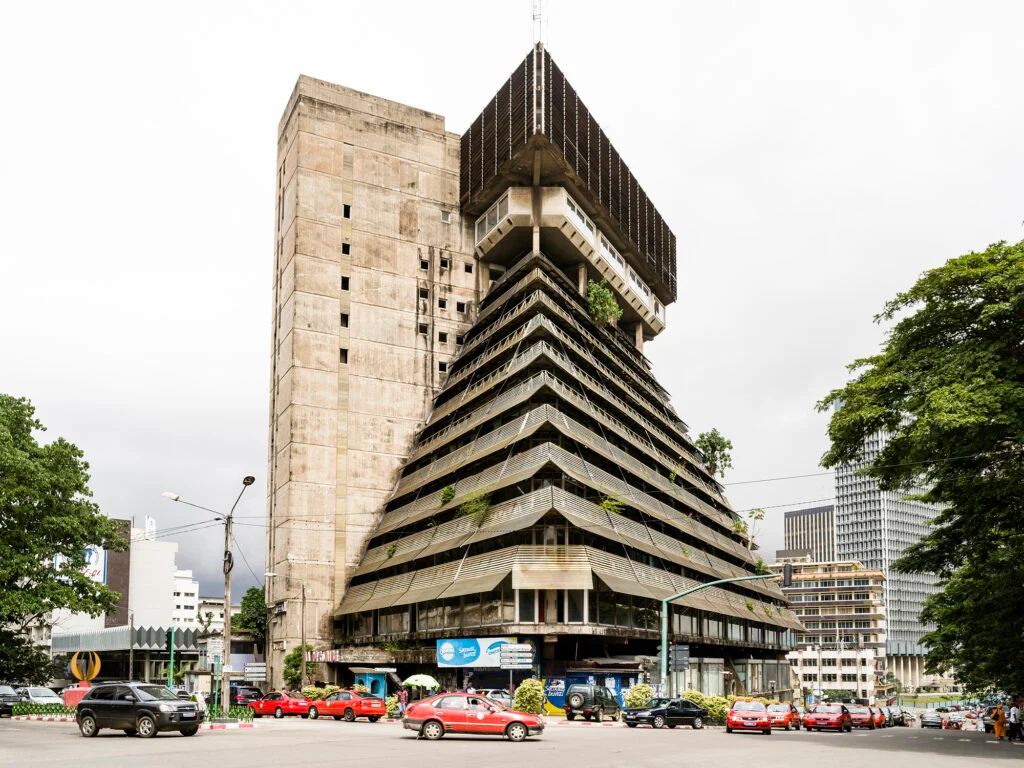
Opening July 5, 'Architects of Liberation' unearths roughly 450 never-before-seen drawings, models, and photographs from seven nations — arguing that architecture was itself a declaration of freedom.
NEW YORK
A Chapter of Architecture History Nobody Told
This weekend, the Museum of Modern Art opens what may be its most quietly radical architecture exhibition in years. "Architects of Liberation: Modernism in Western Africa" is the first major exhibition to examine modern architecture across the region in the context of the political independence movements that swept the continent from the late 1950s through the early 1980s — and it arrives with a simple but pointed argument: these buildings weren't just shelter. They were statements.
On view from July 5, 2026 through January 2, 2027 in the Robert B. Menschel Galleries on MoMA's third floor, the show spans seven countries — Benin, Cameroon, Côte d'Ivoire, Ghana, Nigeria, Senegal, and Togo — during a period when newly independent nations were, quite literally, building their own identities from the ground up.
Nation-Building, One Blueprint at a Time
The exhibition's central thesis is that modern architecture in West Africa was inseparable from the political ambitions of the states that commissioned it. As colonial rule ended across the region, newly formed governments turned to architecture — schools, housing developments, government buildings, cultural centers, entire planned cityscapes — as a tool to visibly, physically declare a break from the colonial past and a vision for what independence could look like.
The show is organized around anchor projects that serve as entry points into broader categories: cityscapes, education, and housing chief among them. It's a structure that lets visitors trace how architectural ambition moved from individual buildings up to entire urban visions, and how those visions were tied directly to the political leaders and movements that funded them.
Inside the Archive
The scale of the research behind "Architects of Liberation" is part of what makes it significant. The exhibition will feature approximately 450 objects — architectural drawings, models, and archival photographs — drawn from more than 50 lenders across 17 countries. The vast majority of these materials have never been shown publicly before, and most of the architects featured have never previously been the subject of any exhibition or scholarly publication.
That last detail is worth sitting with. An entire generation of architects who shaped the physical landscape of newly independent African nations has, until now, been largely absent from the canon of modern architecture as it's typically taught and exhibited in major Western institutions. MoMA's show is as much an act of historical recovery as it is a curatorial exercise — pulling names, drawings, and buildings out of archives and family collections and placing them, for the first time, in the same institutional spotlight long reserved for European and American modernists.
The Curatorial Vision
The exhibition is organized by Martino Stierli, MoMA's Philip Johnson Chief Curator of Architecture and Design, alongside guest curator Ikem Stanley Okoye, an associate professor at the University of Delaware, with curatorial associate Mallory Cohen rounding out the team. Their approach resists a simple, celebratory narrative. While the show foregrounds the genuine hope and aspiration that defined the independence period, its accompanying catalogue was deliberately built as a forum for more complicated readings of that era — the curators invited a range of outside writers specifically to avoid presenting a single, tidy point of view, opting instead for what they've described as a polyphonic reconsideration of the period and its aftermath.
That nuance matters. The buildings in this exhibition were raised during moments of enormous optimism, but many of the nations that commissioned them went on to face coups, economic crises, and political instability in the decades that followed. The show doesn't shy away from that tension — it treats the architecture as a lens onto both the hope of liberation and the complicated history that came after it.
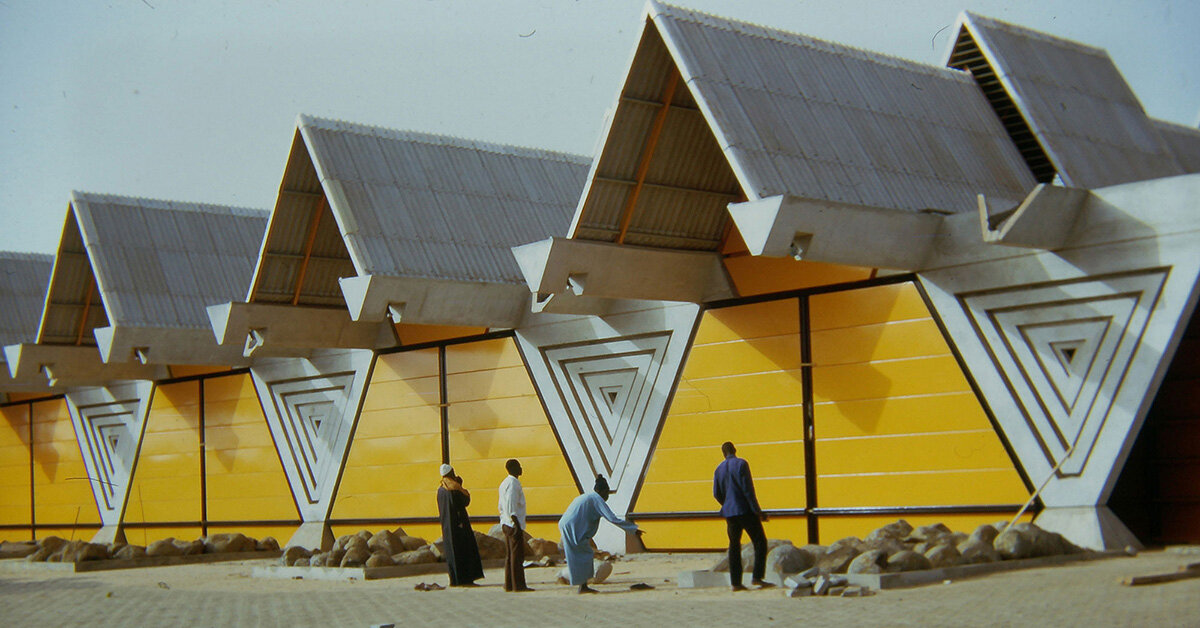
Why This Exhibition, Why Now
"Architects of Liberation" lands at a moment when major institutions across art, architecture, and design are under increasing pressure to broaden whose stories get told in their galleries — and to do so with real scholarly depth rather than token gestures. MoMA's commitment here is substantial: a full third-floor gallery, a seven-month run, and a catalogue meant to stand as a lasting scholarly resource, not just an exhibition companion.
For the architecture world specifically, the show also arrives as a useful corrective to a modernist canon that has long centered Europe and North America almost exclusively, treating other regions' modernist movements — when acknowledged at all — as derivative rather than original. This exhibition argues, forcefully and with an enormous trove of primary material, that West African modernism was its own distinct, politically charged, and formally inventive movement.

What This Means for Visitors
You don't need an architecture background to find this show compelling — the through-line is fundamentally about identity and self-determination, told through buildings instead of speeches. For design enthusiasts, it's a rare chance to see hundreds of previously unseen drawings and models from architects with essentially no prior public exposure. For anyone interested in African history, it's a visual record of how independence was imagined and physically constructed, block by block, in real time.
"Architects of Liberation: Modernism in Western Africa" opens July 5 at MoMA and runs through January 2, 2027 — plenty of time to make the trip, and likely enough material inside to warrant more than one visit.
The accompanying catalogue, published to coincide with the opening, is designed to outlast the exhibition itself as a reference point for scholars and design students alike. With most of the featured architects entering the public record here for the first time, the book — and the show it documents — is likely to become a foundational text for anyone studying African modernism going forward, not just a souvenir of a single museum visit.
Published By | Features Editor