Written By |
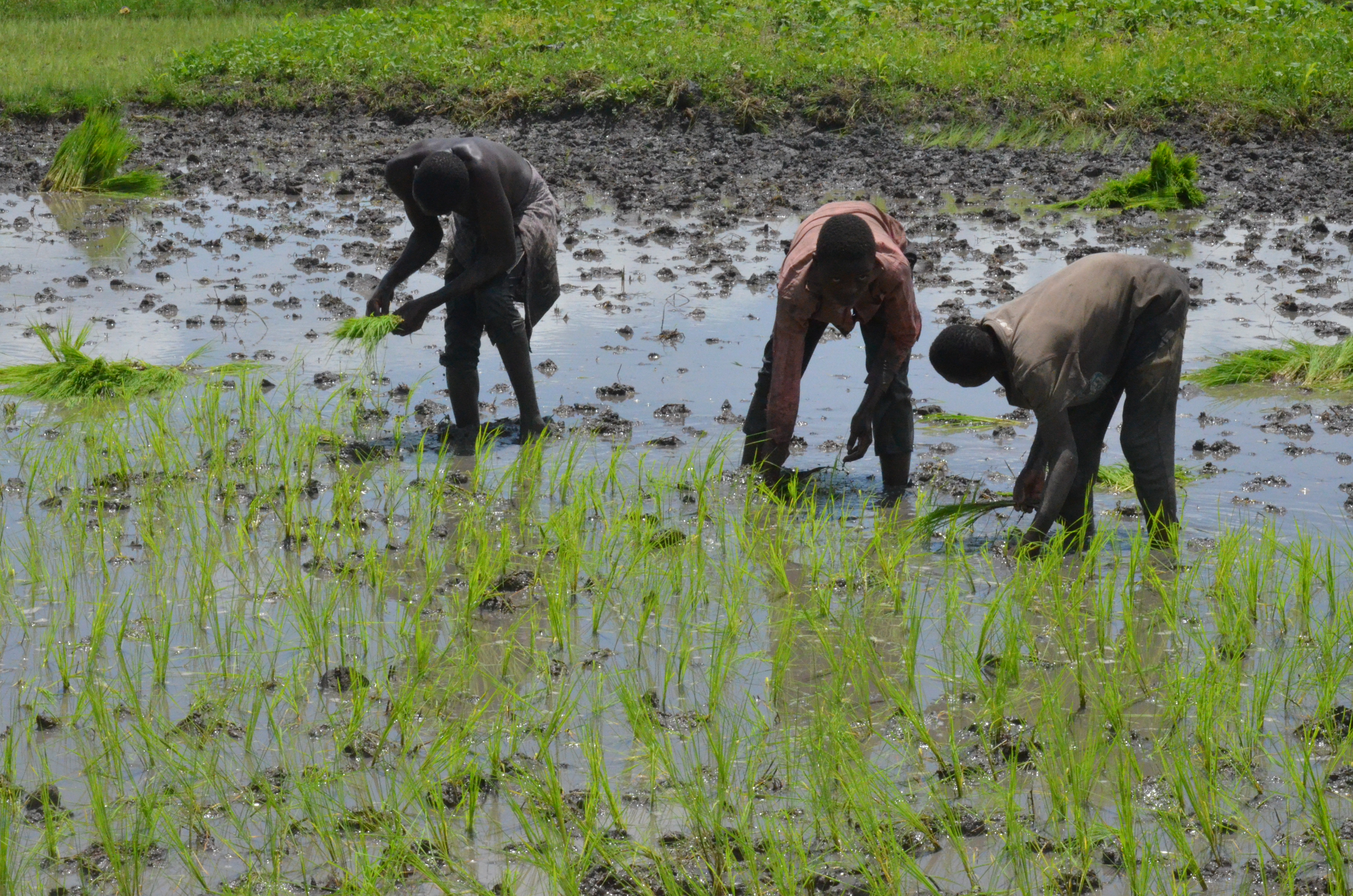
Children used to plant rice in big shambas in a wetland-like environment. (Photo by Milton Niinga)
By Milton Niinga
Rice farmers in Khamoto Parish, Bungokho Sub-County, Mbale District are urging the government to support them with rice huller machines to enhance their production and value addition efforts.
The farmers, who belong to the Wambewo Ikakasa Farmers Association, say the lack of rice huller machines is hampering their ability to process rice efficiently and package it as ready-to-cook rice.
"We are struggling to hull our rice manually, which is not only time-consuming but also labor-intensive," said Robert Mugosya, a commercial farmer and chairman of the association. "We need the government to provide us with rice huller machines to make the process easier and faster."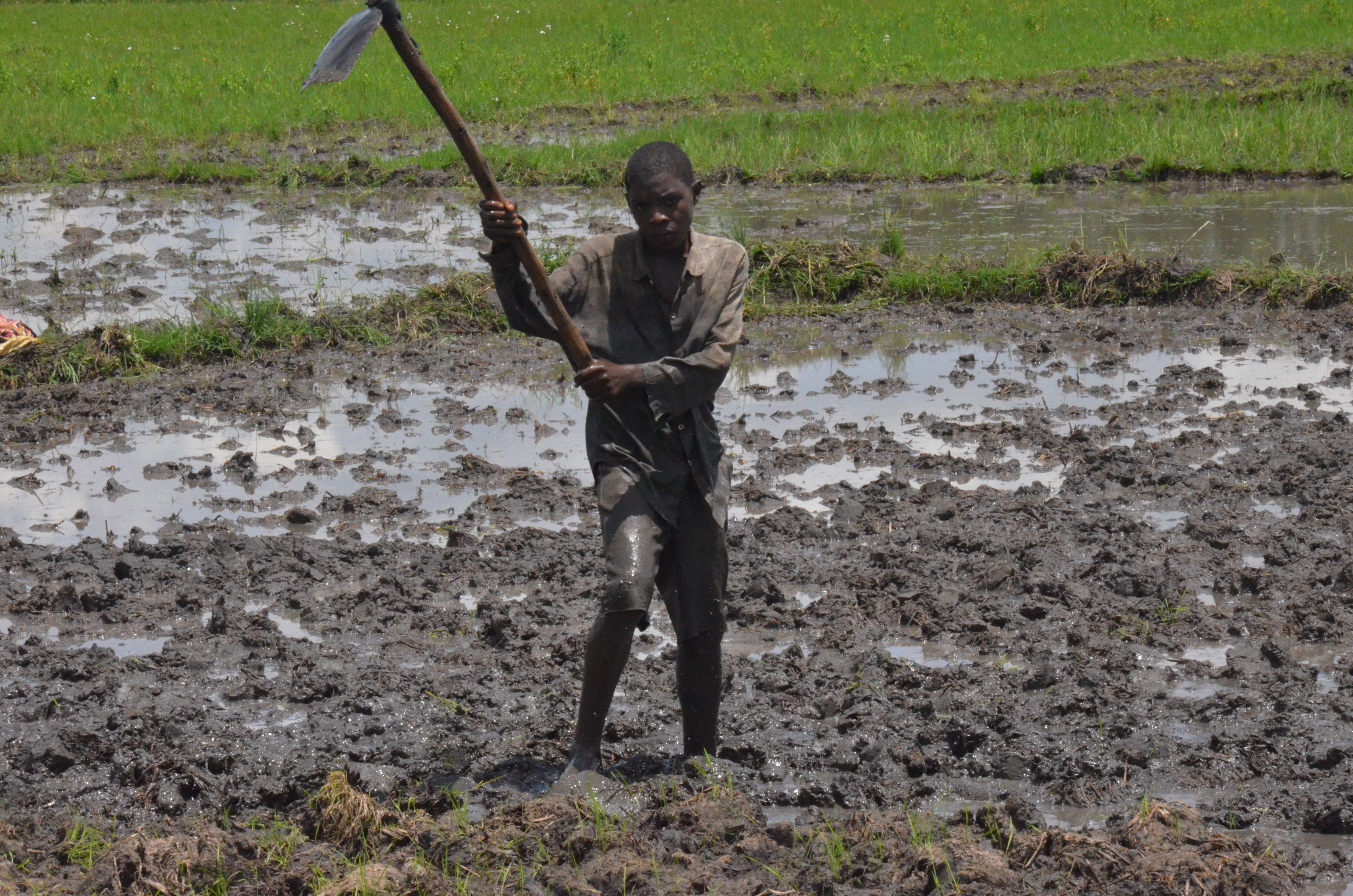
Children used to cultivate rice fields in Bungukho sub-county. (Photo by Milton Niinga)
Mugosya explained that the association has tried to secure funding for the machines from various organizations, but their efforts have been unsuccessful.
"We have also been hiring tractors for farming, which is costly. We would like the Ministry of Agriculture, Animal Industries, and Fisheries (MAAIF) to consider providing us with tractors to ease our farming operations," he added.
Mugosya, who cultivates over 80 acres of land per season, says he hires tractors from Bugisu Cooperative Union, but the costs are overwhelming and drain their capital.
"We have sought funding from NGOs and other organizations, but they have all turned us down," he said. "We are now appealing to the government for support."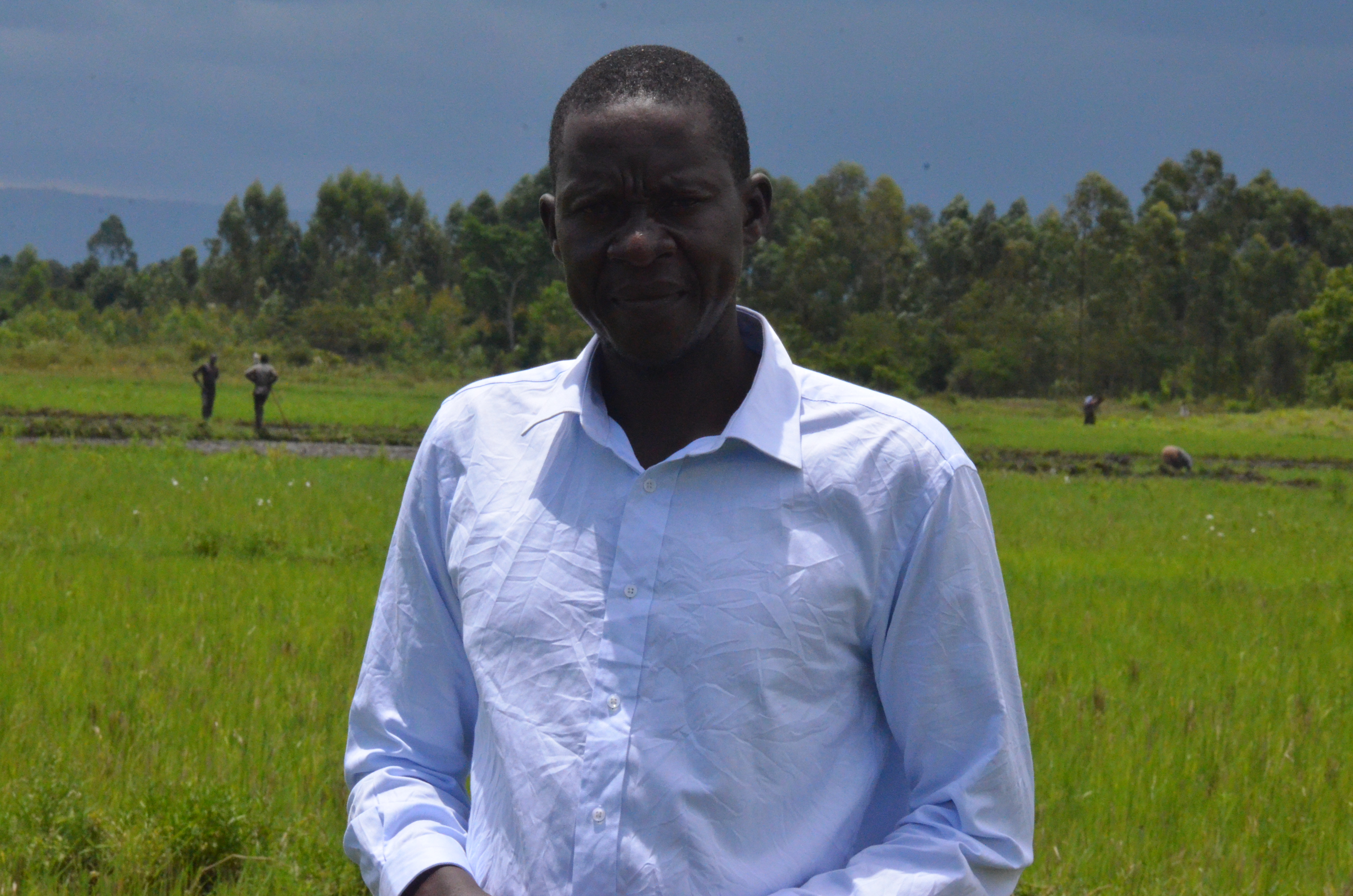
Robert Mugosya, a commercial farmer and the chairman of the association monitoring his rice fields in Bungokho sub county. (Photo by Milton Niinga)
Benefits of rice huller machines
The farmers believe that rice huller machines will not only boost their production but also improve the quality of their rice.
"With these machines, we can produce high-quality rice that meets both local and international standards," said Isaac Wakalanga, a member of the association and Local Council I Chairperson of Wampewo, Khamoto Parish. "This would increase our income and improve our livelihoods."
Additionally, the farmers have asked the government to provide them with training and technical assistance on how to operate and maintain the machines effectively.
"We need training on how to use and maintain the machines, as well as technical support to ensure they function properly," Wakalanga noted.
Although the government is yet to respond to the farmers' request, they remain hopeful that help will come soon.
"We are confident that the government will support us," said Elinest Kimanayi. "We are ready to work with them to ensure that the machines are well utilized to improve rice production."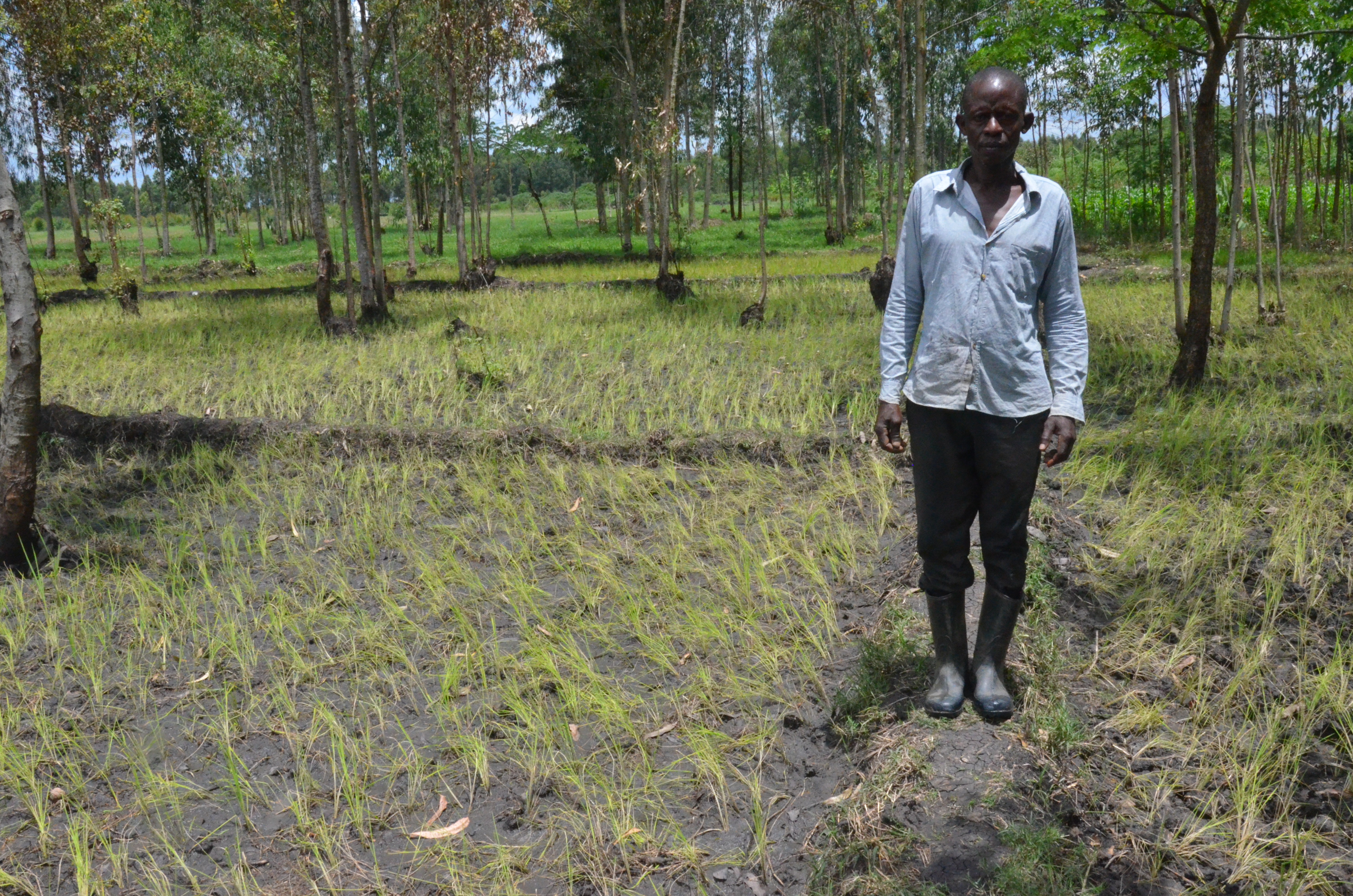
Isaac Wakalanga, a member of the association and the LC I Chairperson Wampewo – Khamoto parish in his new rice fields. (Photo by Milton Niinga)
Rice hulling and its importance
A rice huller (or husker) is an agricultural machine used to remove the outer husks (chaff) of rice grains.
Historically, rice hulling was done manually using a mortar and pestle, but early mechanized machines, such as the Engelberg Huller, designed by Evaristo Conrado Engelberg in 1885, revolutionized rice processing.
Currently, milling rice in Mbale City costs UGX 180 per kilogram, meaning a 100kg bag is milled at UGX 18,000, according to Wakalanga.
Impact of expanding rice farming in Mbale
The growing population and economic development in Mbale have increased the demand for rice, pushing farmers to expand their rice fields into low-lying areas, including swamps.
According to Kimanayi, land for rice farming in Mbale is limited, forcing farmers to encroach on swamps to meet production demands.
"Due to a lack of irrigation infrastructure, climate change has altered precipitation patterns, making previously flooded lowlands suitable for rice farming," he explained.
However, the encroachment of swamps has led to environmental degradation, including soil erosion, water pollution, and biodiversity loss.
"Destroying swamps disrupts the natural water cycle, increasing flood risks that damage homes, infrastructure, and crops," Kimanayi warned.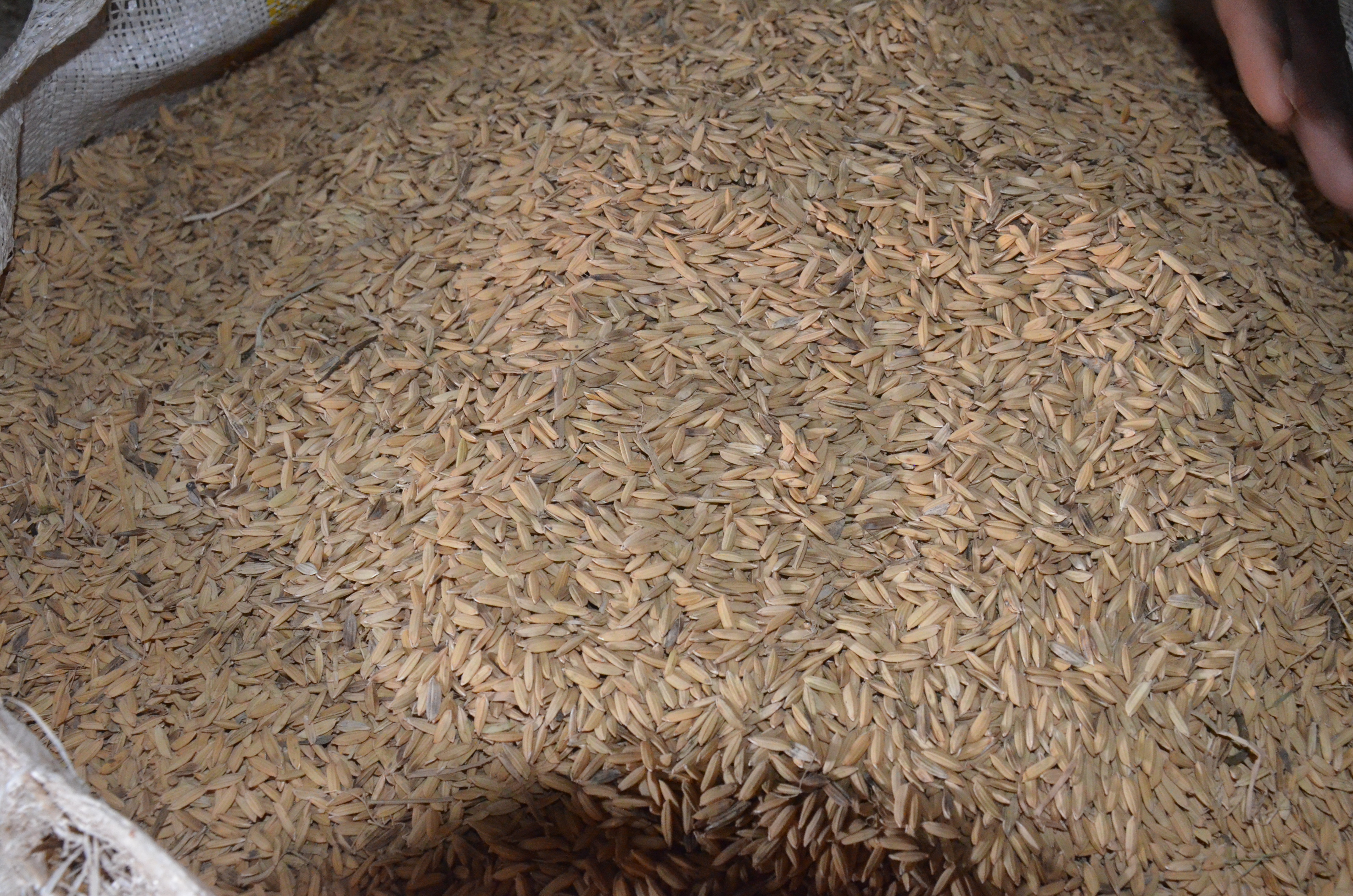
Unhulled rice that is ready for planting in the nursery beds. (Photo by Milton Niinga)
The Role of Micro-Irrigation in Agriculture
Unreliable rainfall in eastern Uganda has hindered agricultural production, making micro-irrigation a viable alternative, especially in arid areas. Micro-irrigation, also called localized or precision irrigation, delivers water directly to plant roots through a system of tubes and emitters.
Unlike traditional flood irrigation, which results in high water loss through evaporation and runoff, micro-irrigation conserves water, making it ideal for drought-prone regions like Karamoja, West Nile, and Northern Uganda. Despite its benefits, irrigation has never been prioritized by the government in Uganda’s driest regions, leaving many residents vulnerable to hunger and starvation.
The farmers in Mbale believe that government investment in irrigation and mechanization would greatly improve rice farming and food security in the region.
Torch Media Africa



