Written By | Staff Writer
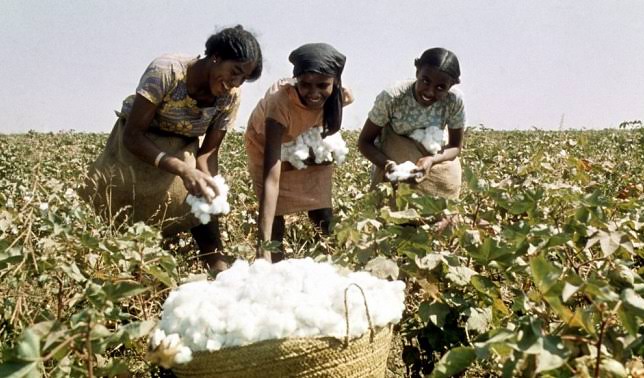
Cotton is typically planted in Kasese between July and August, timed to the onset of seasonal rains, and harvested five to six months later between February and March
Kampala/Kasese
For nearly a century, cotton has been woven into the economic fabric of Kasese District, the western Uganda borderland that sits in the shadow of the Rwenzori Mountains and the shared frontier with the Democratic Republic of Congo. It paid Rwomubuza John's school fees, then his children's. It built him rental houses that now generate a second income. It is, in the words of farmers who have grown it for generations, a crop that "does a lot" for a family.
But cotton in Kasese, and across Uganda more broadly, is entering a period of reckoning. Farmers, ginners and district officials say the crop's future now hinges on a narrow set of interventions — expanded irrigation, faster-maturing seed varieties, cheaper inputs and more transparent pricing — that could either unlock a new chapter for the industry or leave it further behind competing cash crops such as coffee, cocoa and vanilla.
A crop under climate pressure
Cotton is typically planted in Kasese between July and August, timed to the onset of seasonal rains, and harvested five to six months later between February and March. That rhythm, dependable for decades, has become erratic. In 2026, rains that would normally arrive by mid-July had still not delivered enough moisture to plant by late in the month, according to Adrian Katwetegeke, regional field officer for the Uganda Ginners and Cotton Exporters Association (UGCEA), who supports cotton production and marketing in Kasese, Rubirizi and Kamwenge districts.
"The rains have changed. Many farmers are anxious and want to plant immediately after receiving a small amount of rainfall, but the soil is still too dry," Katwetegeke said, describing a pattern that has become familiar across Uganda's cotton belt: short, unreliable showers followed by prolonged dry spells that can prevent germination or kill young seedlings outright.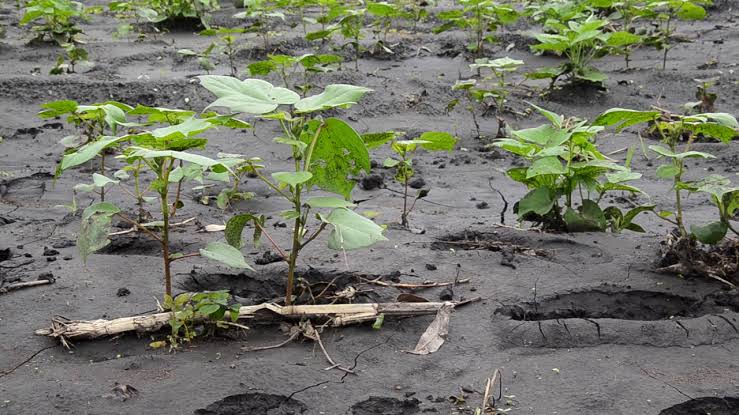
His advice to farmers — prepare land and secure quality seed, but wait for sufficient rain before planting — reflects a broader shift in how the sector is adapting to climate variability that it has little power to control. The bigger structural fix, he and other officials argue, lies in irrigation. The Mubuku Irrigation Scheme in Kasese already demonstrates what is possible, though its coverage remains limited to a fraction of the district's cotton-growing areas.
Julius Rukara, Kasese District's Principal Agricultural Officer, said government plans exist to expand irrigation infrastructure around zones such as Mubuku Prison Farm, an important cotton-producing area that regularly suffers extended dry spells. If realised, an expanded irrigation network would let farmers plant with more confidence and protect young cotton from drought stress — reducing the risk that currently discourages investment in inputs, labour and land.
The economics of six months and six weedings
Growing cotton is not cheap. Farmers may weed their fields as many as six times in a single season and must spray repeatedly to control pests and disease. The crop currently takes around six months to mature from planting to harvest — a long horizon in a region where rainy seasons are narrowing and less predictable.
Mwesige Eric, who farms four acres of cotton in Rukoki Cell in Nyamwamba Division, said the crop remains "the backbone of many households" and a business passed down through generations. But he wants government to help broker fairer, more predictable pricing between farmers and buyers.
"The government should bring farmers and buyers together to agree on a fair price per kilogram," Mwesige said, estimating that farmers have generally received between UGX 1,500 and UGX 2,000 (roughly US$0.40 to US$0.53) per kilogram in recent seasons, even as the cost of pesticides and other inputs has climbed.
Katwetegeke's figures echo that squeeze: growers received about UGX 1,500 to UGX 1,700 (US$0.40–US$0.45) per kilogram last season, down from roughly UGX 1,900 (US$0.51) the season before and about UGX 2,000 (US$0.53) in earlier years. Because cotton is a cash crop rather than a food crop, households depend entirely on sale proceeds to recover their production costs — meaning any decline in farm-gate prices lands directly on family budgets, school fees and the following season's input purchases.
Compounding the uncertainty, Mwesige said, is a gap between the prices announced at planting time and those actually offered at harvest — a mismatch that makes it difficult for farmers to plan how much land to commit to cotton versus other crops. Greater transparency between growers, ginners and government, he argues, would help close that gap.
Uganda's cotton sector remains heavily export-oriented, which ties local farm-gate prices to swings in international cotton markets that Ugandan smallholders have no ability to influence. National output is projected to reach roughly US$43.8 million in export value by 2026, a modest 1.1 percent annual increase since 2021 — growth that industry figures describe as underwhelming relative to the sector's potential and its history as one of Uganda's original colonial-era export crops.
Ginneries, cooperation and a narrowing window
Kasese's cotton economy is anchored by three operating ginneries — Rwenzori Cotton Ginnery in Nyakatonzi, Hamudani Ginnery and Mundawulira Ginnery — all based within Kasese Municipality. Together they provide an established buying market for growers in Nyamwamba Division, Muhokya Sub-county and Mubuku Town Council. That processing infrastructure, combined with an experienced farming community, gives the district a foundation that many other cotton-growing regions lack.
Yet farmers say the limited number of buyers leaves them with little bargaining power, a dynamic that mirrors concerns raised elsewhere in Uganda's cotton belt. In December 2025, the African Development Bank approved a US$2 million grant — financed through the Fund for African Private Sector Assistance — to strengthen the cotton value chain in northern Uganda, an area facing similar challenges of ageing infrastructure and price volatility. That project, to be implemented through Uganda's Ministry of Agriculture, Animal Industry and Fisheries, aims to modernise ginning equipment, introduce improved seed and quality-control training, and support cooperatives, with an estimated 300,000 smallholder farmers and more than a million people expected to benefit directly or indirectly across northern Uganda. No comparable dedicated financing package has yet been announced for Kasese, but the northern Uganda intervention signals that government and development partners increasingly view cotton's revival as requiring coordinated investment rather than piecemeal support.
Rukara has also called on Uganda's National Agricultural Research Organisation (NARO) to develop cotton varieties that mature in three to four months rather than the current six. "If shorter-maturing varieties are developed, farmers will be able to harvest even when rainfall is limited," he said. A shorter production cycle would let farmers work within increasingly narrow rainy windows, reduce drought exposure and bring in income sooner — provided the new varieties are paired with extension services that teach farmers how to grow and protect them.
What is at stake for Uganda's rural economy
Cotton's significance extends well beyond Kasese. It remains one of the few cash crops widely grown across drier, less fertile parts of Uganda where coffee and bananas struggle, making it an important source of income diversification for households in northern and western Uganda alike. Nationally, the crop still supports hundreds of thousands of smallholder livelihoods and a chain of ginners, transporters and exporters that depend on stable, growing volumes to remain viable.
But cotton is also losing ground to competing crops. Rukara noted that in Kasese, cotton is increasingly competing for land with cocoa, vanilla and coffee — crops that currently offer farmers more attractive prices and more dependable markets. That competition, he argued, does not spell the end for cotton, but it does define the terms on which the crop must survive: competitive returns, manageable production costs, and greater price certainty.
For a farmer like Rwomubuza, whose cotton earnings built rental houses and educated a generation of children who have since taken up the crop themselves, the stakes of getting this right are concrete rather than abstract. Whether expanded irrigation, shorter-cycle seed varieties and fairer pricing arrive in time will determine whether Kasese's cotton tradition continues into a third generation — or gradually gives way to crops that better withstand Uganda's shifting climate and volatile input costs.



