A Shs10 million licence, confiscated cargo and reports of sexual extortion at the border are pushing regional fish trade further underground, just as East Africa's own 2026 deadline to scrap such barriers quietly lapses
When traders from Uganda, Kenya and South Sudan sat down together in Jinja on 23 September, the meeting was billed as a routine cross-border stakeholder dialogue on fisheries. What emerged instead was a blunt account of a regional trade slowly strangling itself — through licence fees few small traders can afford, border officials who confiscate cargo on a whim, and, according to several women who spoke up, demands for sexual favours in exchange for the paperwork needed to move fish at all.
The gathering, convened by the agribusiness non-profit Kilimo Trust under its Women and Youth Economic Empowerment in Fisheries initiative, was meant to take stock of how far East Africa has come in dismantling the non-tariff barriers that have long dogged intra-regional trade. The answer, delegates made clear, is not very far. Uganda's Ministry of Agriculture, Animal Industry and Fisheries charges roughly Shs10 million for a fish trading licence — a sum Sharon Nkamushaba, a trader working the Uganda-Kenya border, said is simply unaffordable for traders who are themselves often relying on government-backed loans just to keep their businesses afloat. For the small, largely female traders who dominate the informal fish trade, that fee alone is enough to push them out of the legal market entirely.
Those who stay in, formally or otherwise, described a gauntlet of obstruction once cargo reaches the border. Fish consignments arriving with what traders insist is proper documentation are still routinely challenged over the size or maturity of the catch, according to accounts shared at the Jinja meeting, with some loads confiscated outright over disputed claims about where the fish originated. Atieno Florence, who chairs the Kenya Women Cross-Border Traders association, raised similar concerns about goods seized and trade routes effectively controlled by middlemen who charge their own fees on top of official ones — with non-compliance risking impoundment of an entire truckload.
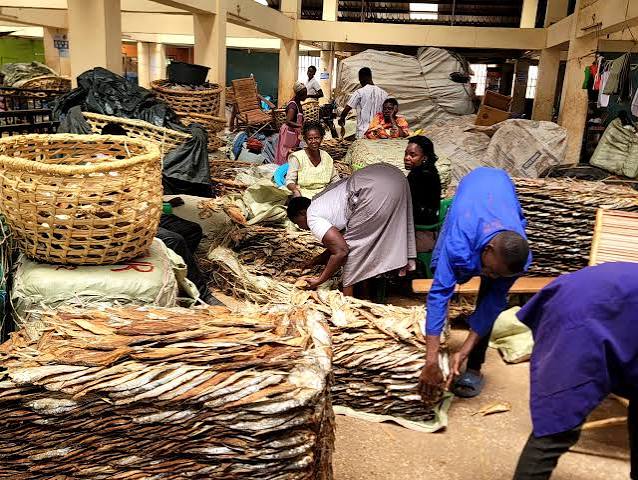
The volumes at stake are not trivial. Atem Chol Deng, a South Sudanese trader, told the meeting his country alone exports around 50 truckloads of dried fish a month along routes running through Mpondwe and Arua, much of it ultimately destined for markets in the Democratic Republic of Congo. Multiply that by the parallel flows moving through Busia and other crossing points with Kenya, and the fish trade represents a substantial, if largely undocumented, slice of regional commerce — one that current rules appear better designed to tax and obstruct than to formalise and grow.

For women traders in particular, the costs are not only financial. Reports shared at the Jinja dialogue described solicitation for sexual favours in exchange for permits and access to trading routes — a pattern that echoes complaints raised at an earlier Kilimo Trust and TradeMark Africa dialogue in Kasese in May, where a Busia trader named Zira Babu told organisers she faced "sexual harassment and extortion at every turn," and Angela Nafula Odongo, who chairs a fish traders' cooperative in Busia, described cargo impounded over what officials called incomplete documentation. That the same complaints are surfacing four months and one border region apart suggests a pattern rather than an isolated failure of a single checkpoint or official.
Industry figures argue the harassment and the cost structure are two sides of the same coin. William Tibyasa, chief executive of the Uganda Fish Processors and Exporters Association, told the Jinja meeting that roughly 70 percent of the country's fishing sector remains informal, with only 30 percent operating through registered, formal channels. A licensing system priced at Shs10 million a head all but guarantees that ratio persists: traders who cannot afford to formalise do not stop trading, they simply trade outside the rules, where they have no protection from the confiscations, extortion and harassment now being documented.
Uganda's Ministry has a rejoinder, of sorts. Richard Mangeni, a senior fisheries officer, told delegates that licences are deliberately issued to organised entities — registered companies and savings and credit cooperatives (SACCOs) — rather than individuals, and encouraged traders to form registered groups instead of relying on informal middlemen. It is a policy logic aimed at professionalising a fragmented sector, but for a trader working alone with modest capital, the advice to "form a SACCO" is a medium-term fix for an immediate cash problem: the fee is due, or the fish does not move.

The timing sharpens the story. East African Community member states set 2026 as the deadline year to finally clear the backlog of non-tariff barriers that have been negotiated over, catalogued and promised away for more than a decade, according to trade analysts at TradeMark Africa. That deadline is now lapsing with the backlog largely intact — Tanzania alone is reported to account for close to 39 percent of the region's unresolved barriers — and the Jinja meeting's fresh complaints about Ugandan licensing costs are a reminder that Uganda's own house is not fully in order either, even as it looks to its neighbours to reform.
The economic logic for fixing this is straightforward enough that it barely needs stating: Lake Victoria's fisheries and the informal trade routes that move fish onward to Congo and beyond are a source of income for tens of thousands of Ugandan households, disproportionately women, in a sector the Ministry itself has flagged for growth as it chases ambitions of expanded fish exports to the European Union and other formal markets. A trade that pushes 70 percent of its participants into informality is one where quality control, tax revenue and food-safety traceability all suffer — the very things a functioning export sector needs to prove to buyers abroad.
What happens next will likely be shaped as much by politics as by economics. Kilimo Trust and its partners have said the Jinja dialogue's findings will feed into calls for harmonised EAC regulations and stronger protections for traders, particularly women, at border posts. The Ministry, for its part, has pledged to work on harmonisation. But traders who have now raised near-identical complaints in Kasese in May and in Jinja in September say they have heard promises of reform before. For Zira Babu, Sharon Nkamushaba and the thousands of traders like them moving fish across Uganda's borders every week, the test will not be another dialogue but whether the next consignment crosses without a bribe, a confiscation, or worse.
Published By | Features Editor