Written By | Joshua Nahamya
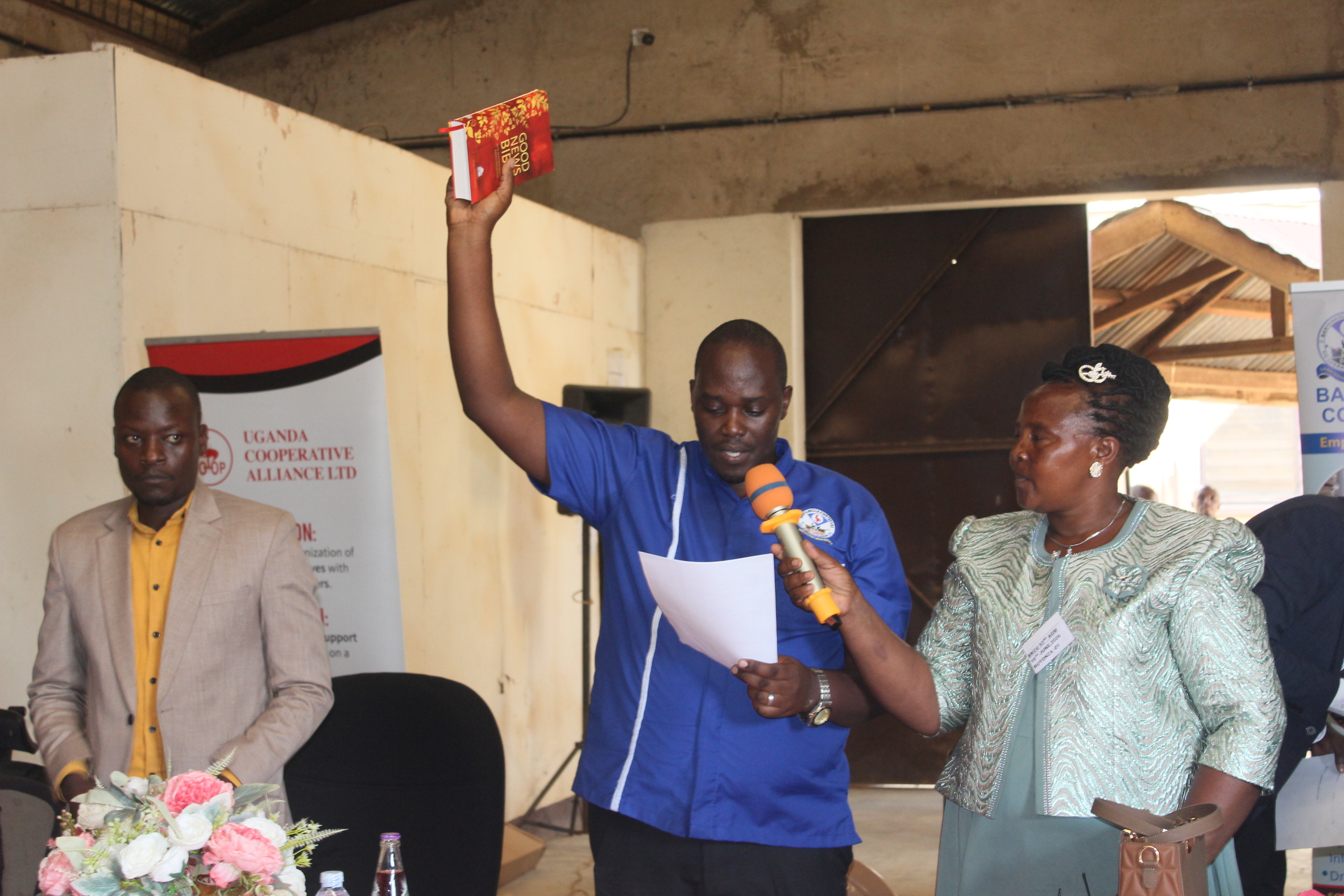
Ainamani Abaasa Rubaromba- Chairman elect for 4 years term of office at the head office in Kakoba
Mbarara City
Banyankore Kweterana Co-operative Union (BKCU) has elected a new board to lead the historic coffee union for the next four years, following a successful 53rd Annual General Meeting at the Union's headquarters in Kakoba, Mbarara City.
The Elections
Joseph Muganga Twine, Chairperson of the Vetting Committee, said the electoral process strictly adhered to the Cooperative Societies Act and the union's bylaws. "We expedited all legal processes to get qualified and experienced leaders," he said.
All nine board members were elected unopposed: Abaasa Ainamani Rubaromba (Chairman), Annah Ashaba (Vice Chairperson), Jones Asingwire (Treasurer), Peninah Mworozi Kempaka, Harriet Kentore Kahumba, Johnson Bashaija, Stephen Bongonzya, Betty Musiime, and Dickson Nabihurira. Alex Tugume Tumuhimbise, Mohammoud Ganjo, and Julius Atwijukye were returned as supervisory board members.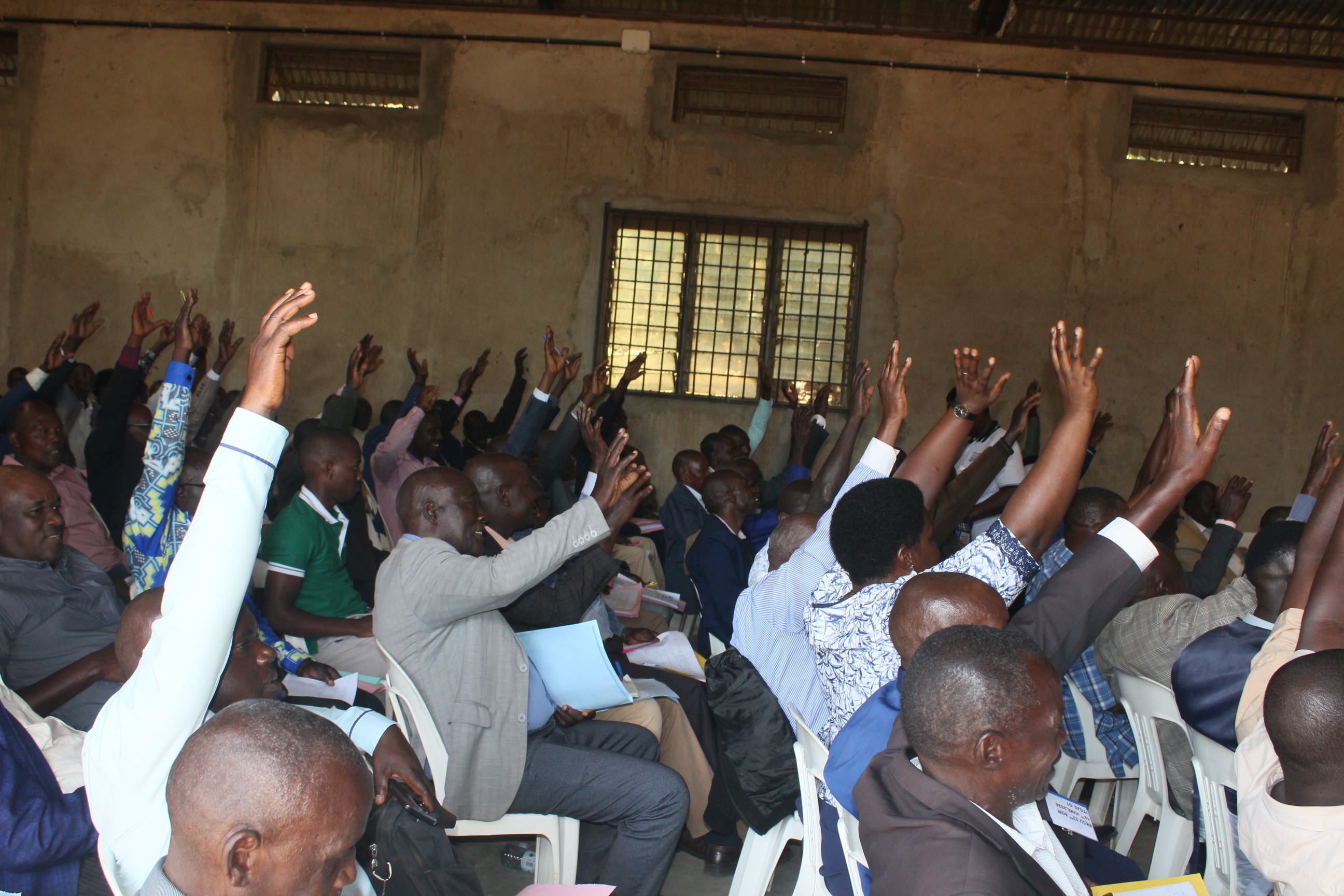
Delegates at Banyankore Kweterana Co-op Union anonymously re-elected Abaasa Ainamani Rubaromba as the Chairman of Banyankole Kweterana Co-op Union
Rubaromba's Pledge
Following his re-election, Rubaromba pledged to focus on income-generating activities for the union's sustainability. "We shall put more emphasis on income generation — that's where the major roots are. Once the institution gets more income, it can easily be sustained," he said.
He promised to expand foreign markets to attract more buyers and secure better prices for farmers. "Previously we sold to the local market, but we have contracts from Turkey, Europe, and China. We believe export markets will fetch fair prices and allow us to pay farmers highly."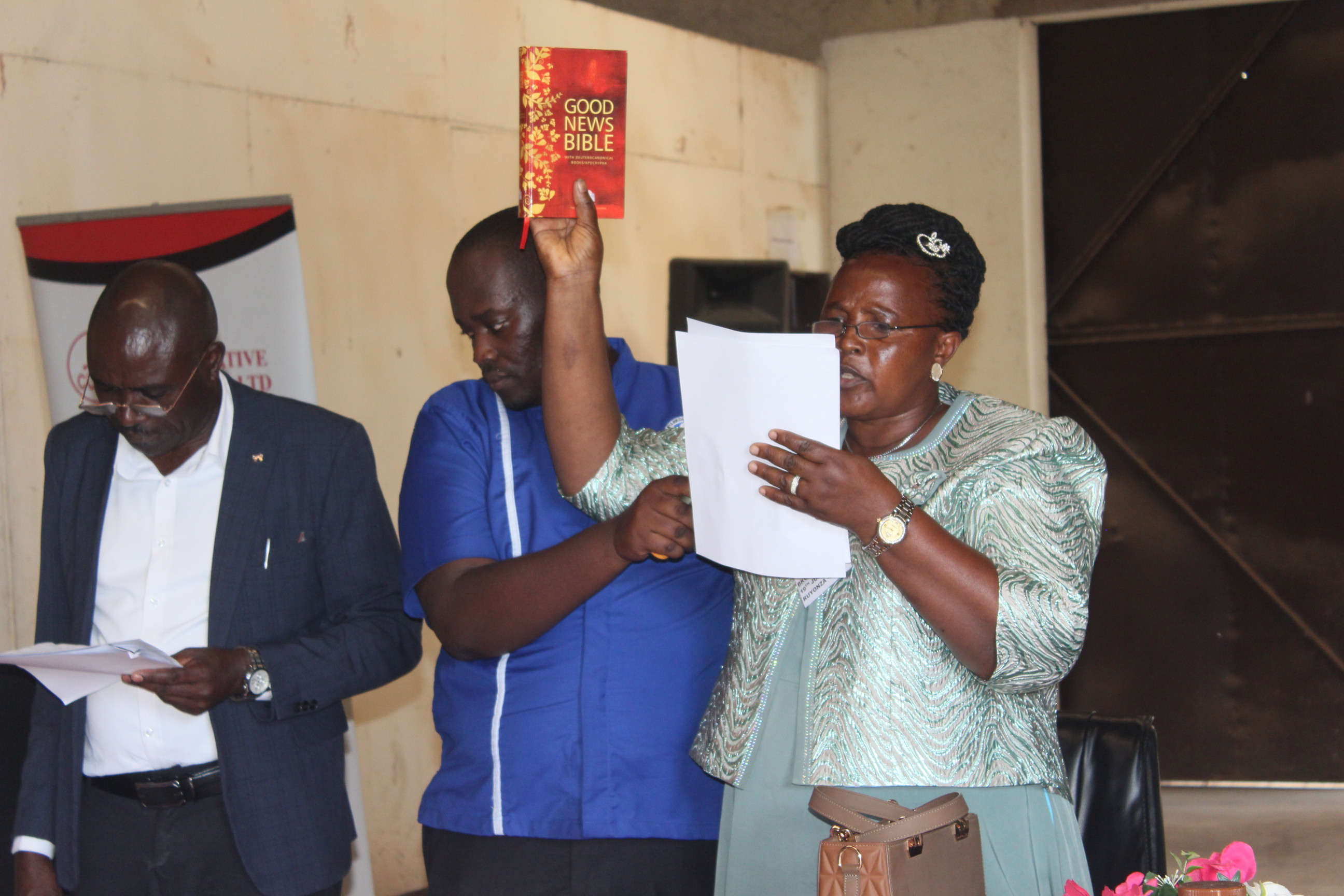
Chairman holding a mic for his Vice-Chairperson while swearing-in
Background
Rubaromba first served as Chairman of the Supervisory Committee from November 2021 to May 2022, later becoming chairman after a forensic audit revealed that the former board and management defrauded Shs 1 billion from government war loss compensation. The former chairman, general manager, treasurer, and operations manager were suspended and referred to police, though the case later stalled.
Warning Against Divisionism
Rubaromba condemned lack of unity among former board members, alleging some leaked internal discussions and held parallel meetings. "We had divisionism as a board. When we divide ourselves, nothing much can be done. We lost very many things because of divisionism — we almost won a Shs 900 million grant but it was cancelled due to board disorganization."
He warned: "If we become united and have one voice, the enemies will not defeat us."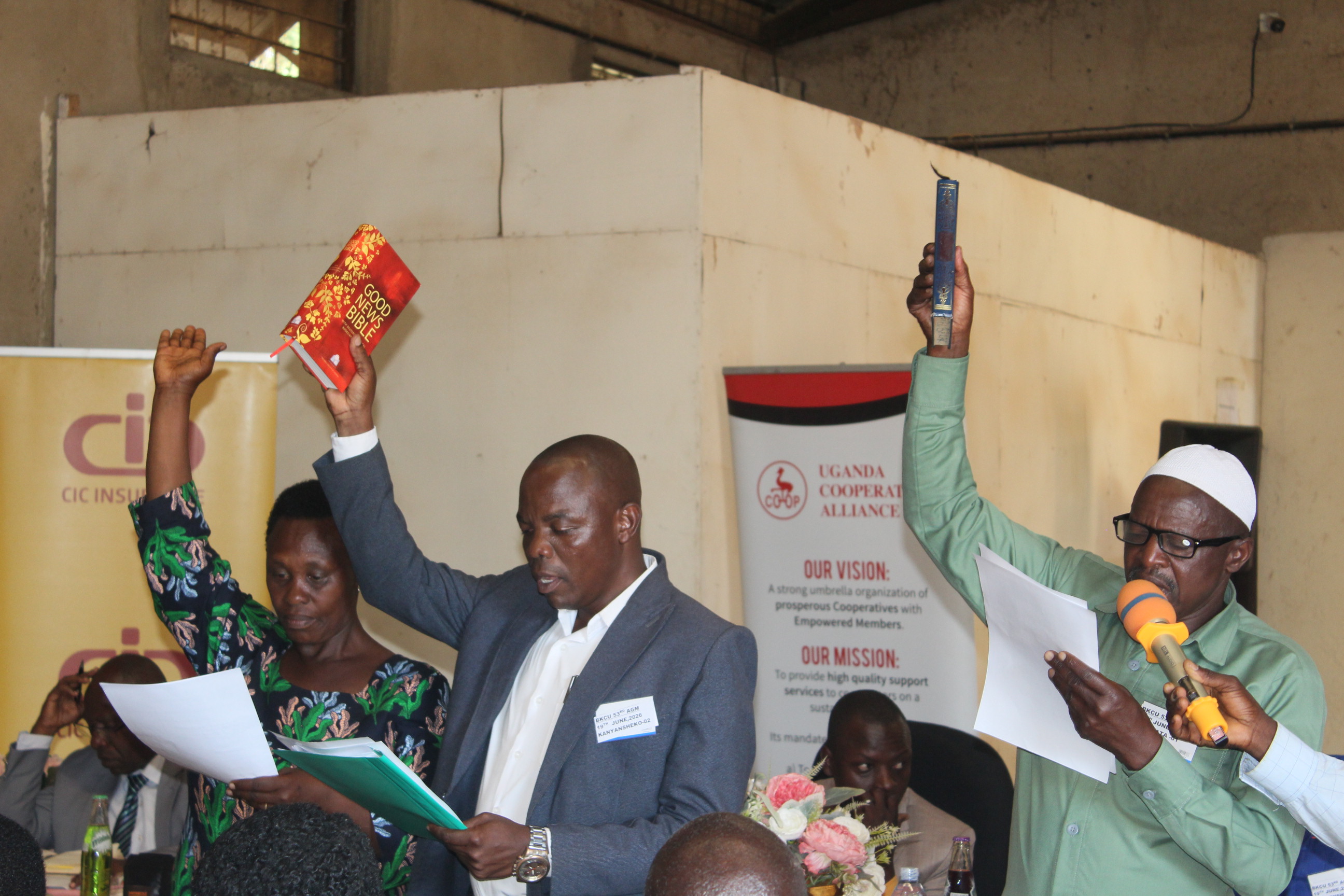
Members of SUPCO swearing in upon their re-elect for the 2nd term
Challenges Faced
Rubaromba detailed the union's struggles when he took over: "There was no money on our account. We had no capital to buy farmers' coffee. Many debts were stuck here and almost collapsed BKCU."
He listed debts that had mortgaged union properties:
"I was elected on the day MSC came to take pictures to advertise our head office for sale," he recalled. "But we sat as the board and planned for a new Banyankole."
Achievements
Rubaromba thanked the government for Shs 9.5 billion war compensation — of which BKCU was the only cooperative among 244 claimants paid 100%. This enabled the union to:
"The weighbridge earned Shs 15 million in three months," he added. "Even if BKCU gets challenged now, it cannot struggle like before. We are now at take-off stage."
Delegate Concerns
Muhwezi Timiseho, one of 131 delegates, requested coffee prices increase from Shs 11,800 to Shs 12,000 per kilogram, citing rising fertilizer and input costs.
Delegates also recommended forming an arbitration committee to enforce discipline, stressing that divisionism among the board threatens the union's survival.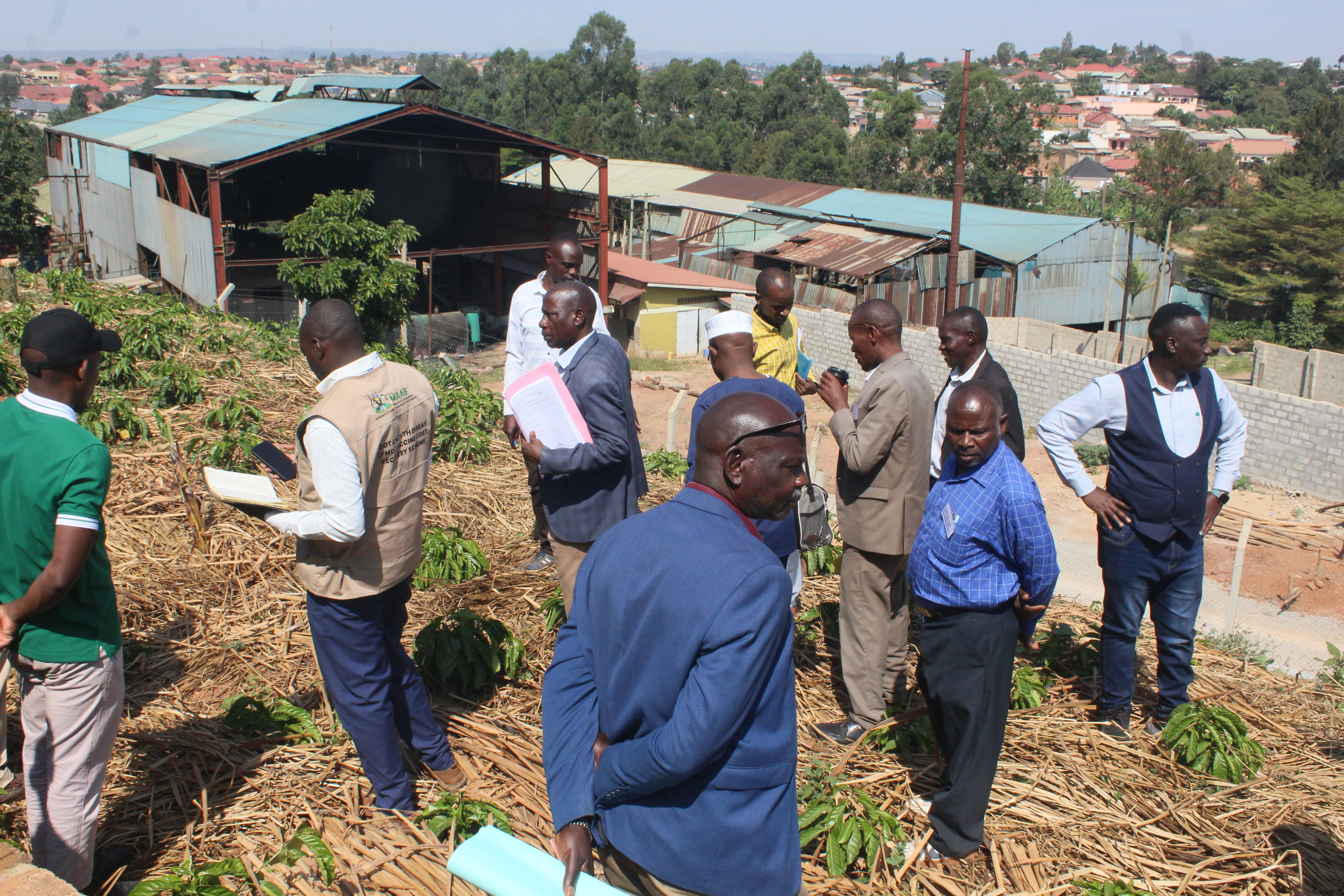
Delegates make a field tour to their coffee mother garden at head office Kakoba
Keynote Addresses
Ivan Asiimwe (General Secretary, Uganda Cooperative Alliance) commended the union's revival: "Banyankole had died — you resurrected it from the dead." He urged unity: "Don't take your issues to Kampala. Cooperatives finish their matters from inside, as a family. Section 142 of the Cooperative Societies Act talks about arbitration — sit and agree."
He challenged members to grow more coffee, citing Brazil's success: "One cooperative union in Brazil has 10 square miles of coffee. The money they get every year funds Uganda's entire budget — that's a cooperative."
Allan Buhanda Karakure (Commercial Officer, Mbarara City) urged the board to utilize union land productively: "It doesn't make sense to declare acres of land when you have nothing in your pockets. Plant coffee and you will have money."
He emphasized quality, quantity, and consistency in supply for export markets. "Our coffee market is guided by three things: quality, quantity, and consistency in supply. Stop drying coffee on the ground and harvesting immature coffee."
Karakure also urged the board to exhibit transparency and accountability. "The four years are not many. You will keep sitting in front only if members believe you are the rightful leaders. Be the problem solvers — never be the reason people kneel before God cursing every Sunday."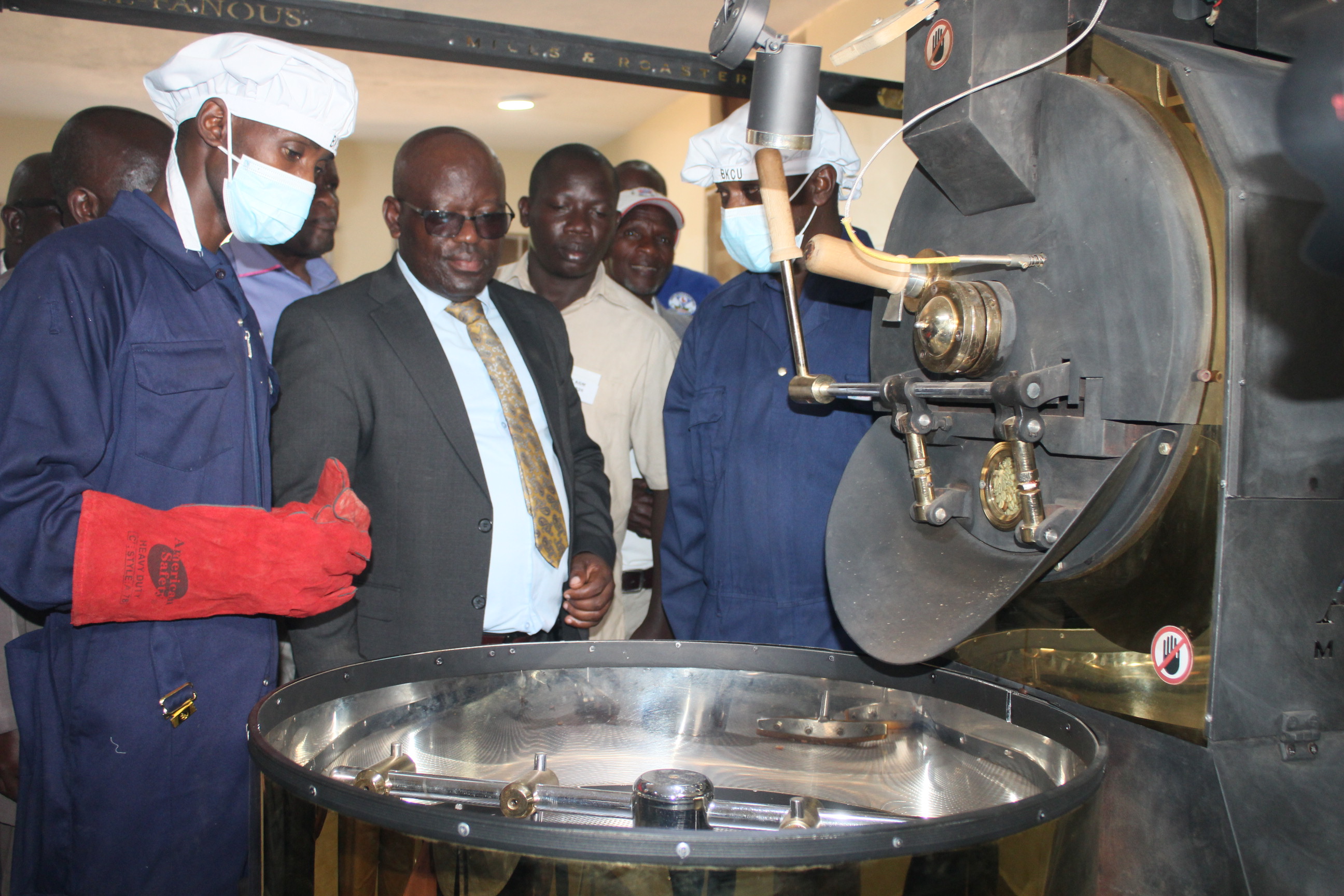
Ivan impressed by imported coffee roaster at BKCU
Sedrack Muhangi (Senior Agriculture Officer, Western Region) appealed to the union to increase production under the national coffee roadmap targeting 200 million bags. "Currently we are at 8.9 million — how much will your society contribute for BKCU's sustainability?"
He encouraged members to use certified seedlings and expand mother gardens. "If you don't supply your coffee here, your union will remain in deficit."
Background
Founded on May 7, 1958, BKCU once boasted around 350 primary societies but now operates with 73 active ones. The union currently has total assets of over Shs 7.9 billion and is determined to reclaim its former stature.
Torch Media Africa



