Kazo
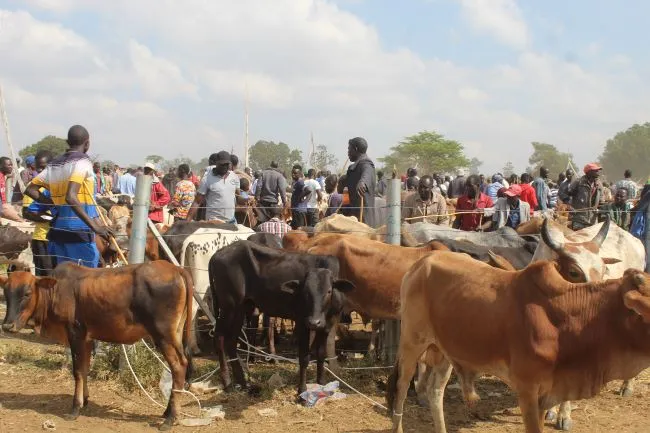
Nearly two months after Kazo District shut down its livestock markets to contain a foot-and-mouth disease outbreak, the district's Foot-and-Mouth Disease Task Force met this week to weigh a question that will matter to thousands of cattle keepers: whether it is finally safe to reopen.
The proposal, discussed at a task force meeting on Tuesday and reported by Nile Post, would see markets reopen as early as next Monday, pending a final review of the disease situation. It marks the tentative end of an outbreak that closed animal markets across the district for nearly two months and disrupted trade in one of the beating hearts of Uganda's cattle economy — the Ankole cattle corridor, a belt of south-western Uganda long associated with the country's indigenous long-horned Ankole cattle as well as a growing commercial dairy and beef industry.
The numbers, on their face, look encouraging. Kazo District Production Officer Zephrine Tumwesigye told the task force that only one farm — in Orwigi Parish — currently has an active case, down from an outbreak that at its peak had spread across multiple sub-counties. "The situation is encouraging. At the moment, only one farm in Orwigi Parish is affected, which shows that the measures we put in place have helped to control the spread of the disease," Tumwesigye said. Kazo Assistant Resident District Commissioner Gershom Mushabe credited veterinary officers, the district production department and farmers themselves for the turnaround, while cautioning against complacency: markets, if reopened, would come with a warning that a relapse into carelessness could easily trigger another outbreak.

HOW IT SPREAD
The outbreak that shut Kazo's markets did not begin there. It was first confirmed in neighbouring Kiruhura and Sembabule districts in June, before crossing into Kazo's Nkungu and Burunga sub-counties, prompting the district to declare a fresh outbreak in early June and impose a quarantine. That geography matters: Kiruhura, Sembabule and Kazo sit along one continuous stretch of the cattle corridor, a diagonal belt running from Uganda's south-west to its north-east that is home to roughly 60 percent of the national cattle herd, according to researchers who have mapped livestock movement patterns in the region. Animals, traders and grazing land cross district boundaries routinely in this belt, which is precisely why foot-and-mouth disease — one of the most contagious viral diseases known in cloven-hoofed livestock — spreads so readily once it takes hold, and why a quarantine in one district rarely stays contained to that district alone.
Sembabule's outbreak, which predates Kazo's by only a matter of weeks, was traced by local farmers to a herd of cattle brought in from Mubende District and placed on contested grazing land — a reminder that much of the risk in Uganda's cattle economy travels with the animals themselves, through informal cross-border and cross-district movement that is difficult to police in real time. Checkpoints were subsequently set up on routes connecting Sembabule to neighbouring districts, and vaccination campaigns began in the most vulnerable areas even as the disease continued to spread.
WHAT A TWO-MONTH CLOSURE COSTS
Market closures are the standard containment tool for foot-and-mouth disease, and for good reason — but they are expensive for the farmers living through them. Research into a previous Ugandan outbreak in Isingiro District, in the same broader cattle corridor, found that FMD-related losses fell hardest on cattle keepers with small and medium-sized herds, who faced disproportionately high disease-control costs relative to their herd size, while larger commercial herds bore the brunt of milk-yield losses. In that episode, farmers forced to salvage-sell sick or exposed animals took losses of 83 to 88 percent below normal market value — a single sale that can wipe out a season's income for a smallholder. Separate economic analyses of FMD along Uganda's cattle marketing chain have found that every actor in that chain — farmers, traders, butchers, transporters — absorbs losses once a market shuts, though smallholders are consistently the worst affected, because they have the least capacity to hold animals off the market and wait out a quarantine.
Kazo's own economy is built substantially on livestock. The district, carved out of Kiruhura in the 2019/2020 financial year, sits at the centre of the Masaka-Ankole cattle corridor, where livestock farming — indigenous Ankole cattle alongside imported Friesian dairy breeds — is the dominant economic activity alongside crop growing. President Yoweri Museveni has repeatedly urged farmers in Kiruhura and Kazo to move away from free-range grazing toward intensive, commercial dairy production, describing the area's potential to become Uganda's largest hub of milk-based wealth creation. A nearly two-month market closure, even a successfully contained one, is a direct hit against that ambition: cattle that cannot be sold cannot generate the income that pays for veterinary care, feed supplements or the very intensification programmes the government has been promoting in the area.
A DISEASE UGANDA HAS NOT ELIMINATED
Foot-and-mouth disease is endemic in Uganda, meaning outbreaks like Kazo's are a recurring feature of the cattle corridor rather than an isolated shock. The country has recorded major multi-district quarantines in past years, and Kazo's own outbreak sits alongside a string of related developments this year: neighbouring Kamwenge extended a cattle market closure until FMD vaccination was completed, while separately, Uganda and Egypt have been working to establish a joint FMD vaccine manufacturing facility intended to support a mass vaccination campaign covering tens of millions of animals nationally. That vaccine programme, still in its early stages, points to the scale of the underlying problem: a national herd is only as strong as its weakest, least-vaccinated corner, and an outbreak that starts on one contested grazing plot in Mubende can, within weeks, be shutting down markets fifty kilometres away.
The stakes extend beyond the districts directly affected. Uganda has been pushing to grow its livestock export ambitions — chilled beef, live cattle and dairy products bound for Gulf and regional markets — and those ambitions depend on the same traceability and disease-surveillance systems that a localised outbreak like Kazo's exposes as still under construction. Export markets, particularly in the Middle East, increasingly require certification that animals come from disease-free zones with verifiable movement records — precisely the kind of documentation that is hardest to produce in a corridor where, as Sembabule's experience showed, a herd can simply be walked onto disputed land without anyone officially tracking where it came from.

WHAT COMES NEXT
For now, Kazo's task force says the reopening will depend on the disease situation holding steady through the coming days, and on farmers continuing to comply with veterinary guidance — including, critically, reporting suspected cases promptly rather than concealing them to avoid a market closure, a temptation task force officials explicitly warned against. "Farmers should not hide suspected cases," Tumwesigye said. "If you notice any signs of Foot-and-Mouth Disease, report immediately to the veterinary officers so that action can be taken before the disease spreads."
If the markets do reopen on Monday, it will be a genuine relief for a district whose economy runs on cattle sales. But the underlying vulnerability that allowed one outbreak in Mubende to cascade through three districts in a matter of weeks has not gone anywhere. Until Uganda's cattle corridor has the vaccination coverage, movement tracking and cross-district coordination to match the density of animals moving through it, Kazo's story — outbreak, quarantine, painstaking recovery — is one likely to repeat itself somewhere along that same 60-percent-of-the-national-herd belt before long.
Published By | Features Editor