Written By |
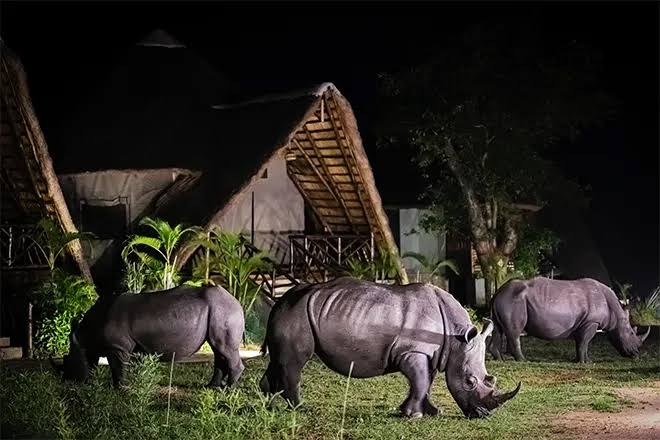
Rhinos vanished from Uganda in the early 1980s, victims of poaching and the instability that gripped the country in those years.
UGANDA TOURISM
Ziwa Rhino Sanctuary
The ranger lifts one hand and the whole group stops. Ahead, in the late-morning haze of the Nakasongola savannah, a grey boulder shifts, resolves into a shoulder and a horn, and exhales. You are on foot, perhaps ten metres away, with nothing between you and a southern white rhinoceros but your guide's calm voice and a rifle he hopes never to raise. There is no vehicle, no window, no fence in the frame. This is what Ziwa Rhino Sanctuary does that almost nowhere else in East Africa can: it puts you on the ground beside an animal that Uganda once lost completely.
A Species Erased, a Species Restored
Rhinos vanished from Uganda in the early 1980s, victims of poaching and the instability that gripped the country in those years. For two decades the animal that had roamed Murchison Falls and Kidepo existed here only in old photographs and older memories. The idea of bringing it back took shape in the early 2000s, and in 2005 Rhino Fund Uganda, working with the Uganda Wildlife Authority, opened a sanctuary on former ranch land at Ziwa with a founding group of six southern white rhinos.
Today the herd numbers in the several dozen, with new calves arriving regularly, which is exactly the point. Ziwa was never meant to be only an attraction. It is a breeding ground, a place to let a population recover under armed protection until animals can be moved to the national parks where they once belonged. Translocations have already begun, and each calf born at Ziwa is, in the quietest sense, a down payment on a wild Uganda that again has rhinos in it.
Walking With Giants
Rhino tracking at Ziwa is a guided walk led by a ranger, usually lasting between an hour and a half and two and a half hours. The rhinos are habituated, so the group can approach to within a few metres, close enough to hear the grind of grazing and to watch an ear swivel toward you. Rangers read the animals' moods and brief visitors on how to move, where to stand and when to keep still. It is intimate in a way a game drive can never be, and children, who pay a reduced fee, tend to remember it for life.
The ranch offers more than rhinos. Early-morning canoe trips into the papyrus wetlands go in search of the shoebill, the prehistoric, boot-billed stork that is the dream bird of nearly every visiting birder; sightings are never guaranteed, but the setting is magnificent regardless. Guided birding walks pick up savannah and wetland species, and night nature walks reveal a different cast of nocturnal characters. Antelope, warthogs and other mammals share the grassland with the rhinos, and the sanctuary makes a natural pause for anyone driving north to Murchison Falls National Park.
Planning Your Visit
Ziwa lies in Nakasongola District along the Kampala to Masindi road, roughly three to four hours by road from Kampala or Entebbe on good tarmac, which makes it one of the easiest wildlife stops on the northern circuit. Most visitors break the journey here on the way to or from Murchison Falls, allowing half a day for the visit. Operators quote entry at around US$60 for an adult and US$30 for a child up to 12, which includes the rhino tracking. Extras are priced separately: roughly US$25 (adult) and US$15 (child) for the early-morning shoebill trek, and about US$20 and US$10 for birding tours and night walks. These figures come from operator listings, so confirm current rates with Rhino Fund Uganda or the Uganda Wildlife Authority when you book.
Early morning and late afternoon bring cooler temperatures and more active animals, and booking ahead is wise, especially for the shoebill trek, which depends on guide and canoe availability. Wear neutral colours, closed shoes and a hat, and bring water. Uganda's two rainy seasons (roughly March to May and September to November) can turn tracks muddy, but the drier months of December to February and June to August are generally the most comfortable for walking.
This Week in Ugandan Tourism
27 October: The Uganda Wildlife Authority has cut mountain gorilla tracking permits for international visitors from US$800 to US$600, with Ugandans and East Africans paying Shs300,000, according to a Red Pepper report published today. The cut comes alongside the inaugural Mountain Gorilla Festival, set for 19 to 22 November in Kisoro District under the theme "Protecting Gorillas, Empowering Communities." It includes the Virunga Gorilla Marathon on 21 November, with organisers expecting about 2,000 participants. UWA is also finalising a new gorilla census and exploring partnerships for affordable weekend trips to parks.
16 to 18 October: At the Uganda Marketers Society's UMS Ignite event in Kampala, Uganda Tourism Board CEO Juliana Kagwa said Uganda is still early in building its tourism brand and that promotion must be matched by better access, including domestic air connectivity, and investment in hospitality and skills. Panellists also urged Ugandans to travel their own country. Coverage cited receipts of US$1.7 billion in the 2025/26 financial year and a 19.7 percent rise in international arrivals in 2025, to about 1.64 million.
1 October: Uganda hosted the inaugural African Dragon Boat Racing Competition on Lake Victoria, according to the Uganda Tourism Board.
30 and 28 September: UTB engaged an import promotion desk on expanding Uganda's European market and promoted intra-African travel at the ATPSA roadshow.
28 August: The World Health Organization certified the end of the Bundibugyo virus (Ebola) outbreak, and Uganda was declared free of the disease, easing a concern that had weighed on visitor confidence earlier in the year. Also in August, the country launched "Race the Nile," its first 800-kilometre gravel biking race across West Nile.
The Last Word
Uganda's headline stories are rightly about gorillas, but Ziwa offers something quieter and, in its way, more hopeful: proof that an extinction can be reversed within a single generation. Walk out at dawn, find the herd, and stand where a species is being given back its future.



