AGENCIES
There is a version of the Democratic Republic of the Congo's 2026 that reads as an unambiguous success. Inflation, which ran at 17.7 percent in 2024, had fallen to roughly 2.5 percent by the end of April 2026 and has held at or below that level since October 2025. The Congolese franc, historically one of the continent's more brittle currencies, appreciated by about 5 percent on an annual average. The Central Bank of the Congo, which held its policy rate at a punishing 25 percent until October 2025, cut it to 13.5 percent in April 2026 and trimmed a further 100 basis points in July. The International Monetary Fund expects real GDP growth of about 5.5 percent in 2026. In April, Kinshasa sold its first sovereign eurobond and was oversubscribed more than four times over.
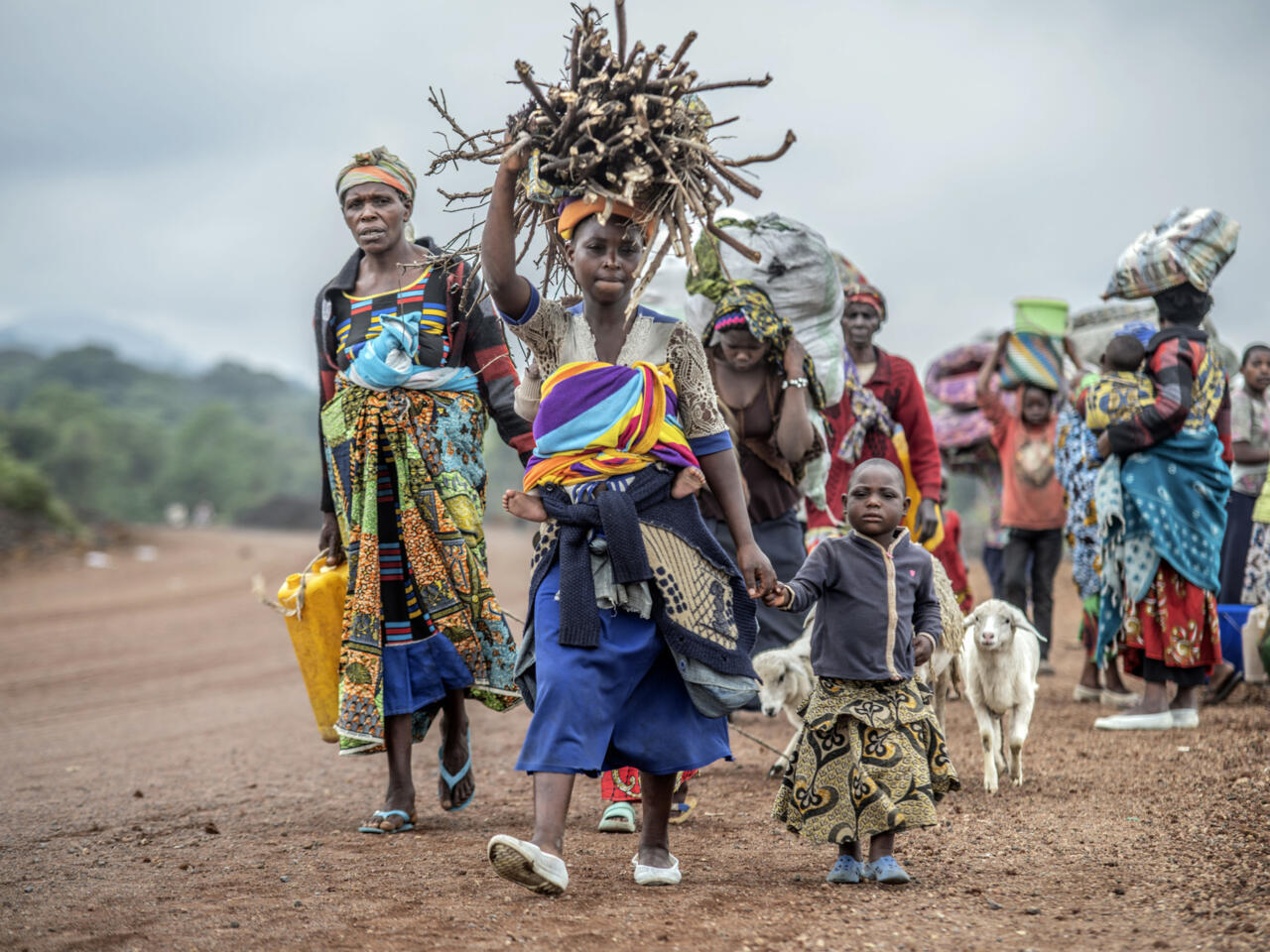
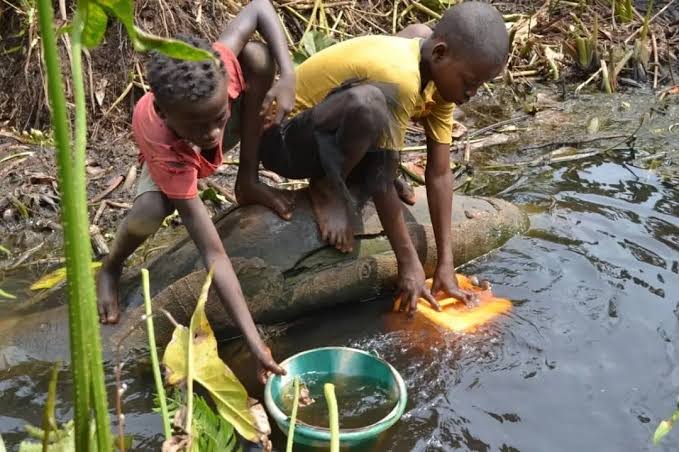
There is another version, drawn from the same year, in which the World Bank puts the share of Congolese living below the three-dollar-a-day poverty line at 81.1 percent, and in which the DRC holds the largest absolute population in extreme poverty of any country on earth — roughly 76 million people. Both versions are accurate. Understanding why they coexist is the most useful thing an observer can do with the DRC's numbers this year.
A macro picture that finally looks conventional
The disinflation is the headline achievement, and it was not primarily engineered by demand compression. The sharp fall in prices followed a significant appreciation of the franc, itself the product of corrective prudential measures applied to reserve requirements on banks' foreign-currency deposits, stronger mineral export receipts and heavier external financing. Foreign reserves reached the equivalent of about three months of imports in 2025, while the current account deficit narrowed from 4.1 percent of GDP in 2024 to 3.3 percent in 2025.
On 30 June 2026 the IMF Executive Board concluded the 2026 Article IV consultation and completed the third review under the Extended Credit Facility and the second review under the Resilience and Sustainability Facility. The ECF review released SDR 190.4 million (about US$258.2 million), taking cumulative ECF disbursements to SDR 761.3 million, or roughly US$1.03 billion; the RSF review released a further SDR 66.6 million (about US$90.3 million). Fund staff described performance as broadly satisfactory, with most quantitative targets met — while noting that the ceiling on the domestic fiscal deficit at end-December 2025 was breached by 0.6 percentage points of GDP despite strong revenue collection, and that structural reform needs to move faster.
The composition of growth is also shifting in a way Kinshasa has wanted for a decade. IMF mission chief Calixte Ahokpossi attributed the 2026 outlook to stronger activity in construction, services and agriculture, offsetting a deceleration in mining. That is a genuine change of texture in an economy where mining still accounts for more than 90 percent of export earnings. It is not yet diversification: exports of goods and services fell from 45.9 percent of GDP in 2024 to 39.8 percent in 2025, which reflects softer commodity values as much as any structural rebalancing.
Stability, meanwhile, has costs of its own. A firmer franc that tamed inflation has simultaneously squeezed exporters whose costs are increasingly local and whose receipts are in dollars, and has complicated the position of borrowers who took on dollar liabilities in a depreciating regime. This is a familiar late-stabilisation problem, and it is arriving in the DRC on schedule.
From price-taker to quota-setter
The most consequential Congolese economic decision of the past two years was not monetary. It was the government's move to convert its dominance of global cobalt supply into an explicit supply-management instrument. After an outright export ban, Kinshasa shifted to a quota regime administered by the regulator ARECOMS. The 2026 annual quota is set at 96,600 tonnes — roughly half of 2024 export volumes — of which 87,000 tonnes are distributed to producers on a pro rata basis and 9,600 tonnes, about 10 percent, are retained under ARECOMS' discretionary control.
ARECOMS has signalled it will maintain the quota architecture through 2026 and 2027 while reserving the right to cut further if the market requires rebalancing, and it has ordered producers to surrender unused allocations. The state has gone further, establishing a strategic reserve for cobalt and other designated minerals that ARECOMS can acquire, hold and market directly, with its discretionary tranche earmarked for projects of national interest promoting local processing and value addition. Whatever one makes of the policy, it is a categorical departure from the resource-state posture the DRC held for most of its independent history: the country is now attempting to act on price, not merely receive it.

Copper tells a parallel story with a different mechanism. Congolese copper output reached 3.5 million tonnes in 2025, consolidating the DRC's position as the world's second-largest producer after Chile. Kinshasa has raised planned copper sales to the United States fivefold, to 500,000 tonnes, through a state-backed marketing venture led by Gécamines in a joint venture with Mercuria Energy Group, with backing from the US International Development Finance Corporation. Cobalt miners squeezed by the quota and by weak prices have pivoted toward copper, which flatters headline volumes while concentrating the export base further.
Financing the state: a debut bond and a shrinking budget
In April 2026 the DRC raised US$1.25 billion in its first eurobond, split between a five-year tranche maturing in 2032 priced at a yield of 8.75 percent and a ten-year tranche maturing in 2037 at 9.5 percent. Order books exceeded US$5.2 billion from more than 110 investors — more than four times covered. For a frontier issuer with the DRC's security profile, the pricing was competitive, and the transaction gave Kinshasa a market benchmark it had never previously possessed.
The fiscal picture beneath that debut is less triumphant. President Félix Tshisekedi promulgated the 2026 finance law at 54,335.8 billion Congolese francs — roughly US$22 billion — after the National Assembly adopted it on 10 December 2025, with priorities running to securing national territory, stabilising and structurally transforming the economy, and continuing flagship social policies. By 22 July 2026 the Senate had adopted a revised budget law cutting the central government envelope to 50,886.3 billion francs, a reduction of 6.4 percent. The government is targeting current revenues of US$15.3 billion in 2026 and US$18 billion by 2027, a trajectory that depends on domestic revenue mobilisation the World Bank has repeatedly identified as one of the country's binding constraints, alongside limited fiscal space and insufficient job creation.
Corridors, not just mines
The DRC's infrastructure agenda in 2026 is organised around getting minerals to salt water and electrons to the grid. The Lobito Corridor — linking southern DRC and north-western Zambia to Angola's Atlantic port of Lobito — has attracted an EU mobilisation of some US$2.3 billion, and the DRC has signed a US$1.26 billion concession with the Portuguese group Mota-Engil to modernise more than 1,000 kilometres of railway through its copper and cobalt heartland. Alongside the Sakania–Lobito corridor, the Grand Inga hydroelectric scheme continues to feature in the structural priorities Kinshasa attaches to its new financing partnerships. These are the projects that determine whether higher extraction volumes translate into fiscal capacity rather than logistics rents captured elsewhere.
Peace treated as economic policy
The most novel feature of the DRC's 2026 is the explicit fusion of security diplomacy with commercial architecture. The Washington process, which began with a presidential meeting in Qatar in March 2025, produced a peace agreement signed by the DRC and Rwandan foreign ministers on 27 June 2025, a Regional Economic Integration Framework on 7 November 2025, and a DRC–M23 framework signed in Doha on 15 November 2025. Taken together with a declaration of principles, a US–DRC strategic minerals partnership and a US–Rwanda economic framework, the accords bind conflict resolution to mechanisms for formalising mineral supply chains, cross-border infrastructure, energy, conservation and public health.
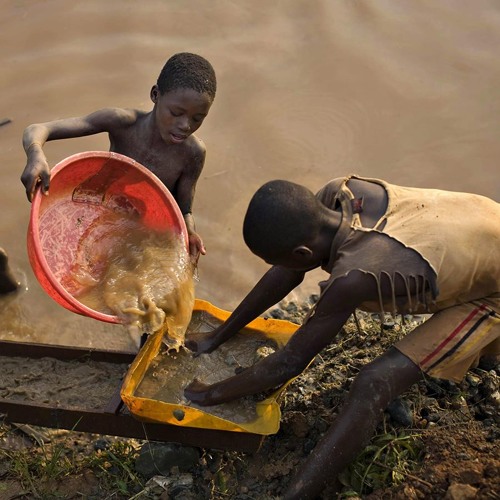
The economic logic is that illicit mineral flows are both a symptom and a financing source of the eastern conflict, and that formalisation therefore does double duty. The early displacement data is cautiously encouraging: internal displacement, which exceeded 7 million people in 2025 as fighting intensified, had fallen to roughly 5.8 million by 2026, with an estimated 1.9 million returnees. Needs remain among the highest in the world; the European Union allocated €79.5 million in humanitarian aid to the DRC in 2026.
The floor that has not moved
Against all of this sits the social ledger, and it is where the year's optimism runs out. Poverty at 81.1 percent on the US$3-a-day line in 2025 is barely distinguishable from where it stood before the current commodity cycle began. Mining contributed the overwhelming share of GDP growth in recent years without denting inequality — a pattern the World Bank has flagged directly, warning in July 2025 that limited fiscal space, weak domestic revenue mobilisation and insufficient job creation would continue to hinder inclusive growth.
The government's principal counter-argument is its social programme. Law No. 23/006 of 3 March 2023 established a total subsidy for the care of pregnant women, mothers and newborns; the free maternity care scheme was piloted in Kinshasa from September 2023, rolled out more broadly from July 2024, and is intended to reach all 26 provinces by 2026, covering delivery and the first 42 days after birth. Free primary education remains the other pillar. Both are real commitments, and both are constrained by the same arithmetic: low domestic health financing, fragile systems, weak data management and an active conflict in the provinces with the greatest need.
What the DRC has demonstrated in 2026 is that a resource state can achieve macroeconomic orthodoxy and market access relatively quickly when commodity revenues, an IMF programme and a favourable diplomatic window align. What it has not yet demonstrated is the harder transmission — from export receipts to domestic revenue, from revenue to functioning services, from services to household outcomes. The quota lever, the eurobond curve and the Lobito rail concession all raise the ceiling. The floor is the test that remains.
Published By | News Editor