Written By | Business Experts
The International Monetary Fund projects real GDP growth of 6.2% for 2026, with GDP per capita rising 10.2% to roughly $3,313 from $3,006 in 2025, according to IMF data mapper figures
Côte d'Ivoire enters the second half of 2026 as one of West Africa's fastest-growing economies, yet its core export crop is in the middle of the most violent price swing in a generation. The juxtaposition captures the paradox now defining the country's development path: macroeconomic figures that read like a success story, layered over a rural population still absorbing the shock of a cocoa market that has cratered twice in two years. The International Monetary Fund projects real GDP growth of 6.2% for 2026, with GDP per capita rising 10.2% to roughly $3,313 from $3,006 in 2025, according to IMF data mapper figures. The African Development Bank's outlook is similarly upbeat, projecting average growth of 6.3% over 2025–26, driven by investment tied to the final year of the National Development Plan 2021–2025 and the ramp-up of phase two production at the offshore Baleine oil and gas field.
That growth trajectory has been remarkably steady. Real GDP expanded 6.1% in 2024 and 6.5% in 2023, according to AfDB figures, placing Côte d'Ivoire well above the regional average and reinforcing its position as the economic engine of the West African Economic and Monetary Union (UEMOA). The World Bank's September 2025 country outlook projected growth of 6.2% in 2025 and 6.4% in both 2026 and 2027, attributing the durability of the expansion to hydrocarbons, mining, and services rather than agriculture alone — a sign that the long-discussed diversification away from cocoa dependency is, gradually, taking hold.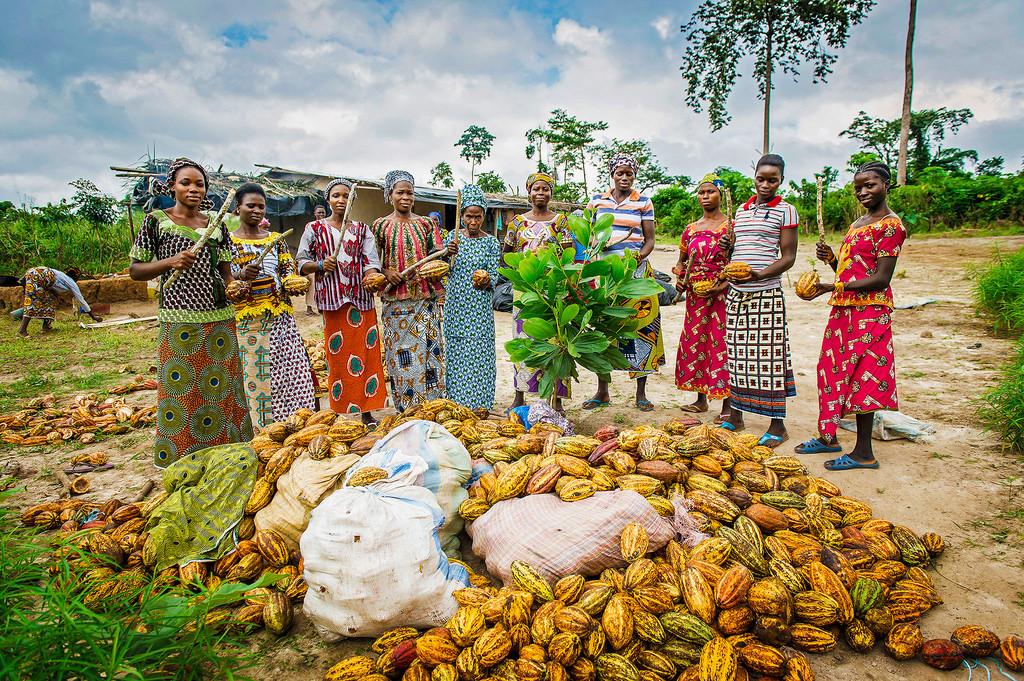
A Eurobond Comeback at the Lowest Cost in Five Years
The clearest signal of restored investor confidence came on February 18, 2026, when Côte d'Ivoire raised $1.3 billion through a new 15-year international bond, marking its return to global capital markets at the lowest financing cost it has secured in five years. The bond, hedged into euros, priced at a yield of 5.39%, a level unthinkable for many African sovereigns still locked out of Eurobond markets or paying double-digit spreads. The successful issuance followed the IMF Executive Board's completion, in December 2025, of the fifth reviews of Côte d'Ivoire's Extended Fund Facility (EFF) and Extended Credit Facility (ECF) arrangements, alongside the fourth review of its Resilience and Sustainability Facility (RSF) arrangement. The EFF/ECF program, approved in May 2023, has — in the IMF's own assessment — largely eliminated the country's macroeconomic imbalances and kept it at a moderate risk of debt distress.
Fiscal discipline has been central to that assessment. The overall budget deficit narrowed from 4% of GDP in 2024 to 3% in 2025, and the 2026 budget is built around what the IMF describes as high-quality, permanent tax policy measures and revenue administration reforms intended to hold the deficit at roughly 3% of GDP. External debt, by IMF projections, sits at around 36% of GDP for 2026 — though broader total public debt measures from 2023 put the figure closer to 58% of GDP, a reminder that debt sustainability in Côte d'Ivoire, as elsewhere in the region, depends heavily on which liabilities are counted and at what exchange rate they are valued.
Cocoa: From Record Highs to a 57% Price Cut
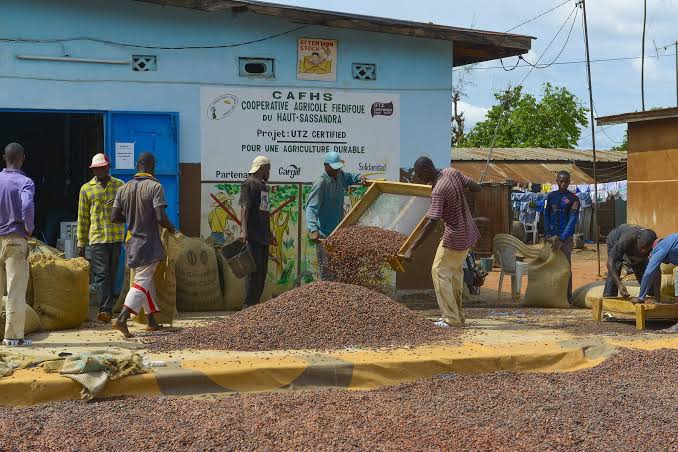
No sector illustrates the volatility underlying Côte d'Ivoire's growth story better than cocoa. As the world's largest producer, accounting for more than a third of global supply, the country's farmgate pricing decisions ripple through chocolate markets worldwide. New York cocoa futures hit a record $12,906 per tonne in December 2024 amid a supply crunch driven by disease, aging trees, and poor weather across West Africa's cocoa belt. By February 24, 2026, contracts had collapsed to $2,952 per tonne — their lowest level in more than two years — as the supply picture eased and speculative positioning unwound.
The Ivorian government responded by slashing the farmgate price paid to farmers by 57%, to CFA1,200 (about $2.13) per kilogram, for the 2025/2026 mid-crop campaign, which it moved up by a month to begin in March rather than April. That is a steep drop from the CFA2,800 per kilogram fixed for the October–February main season. To cushion the blow and stabilize the domestic market, authorities allocated CFA280 billion (roughly $496 million) to buy back 100,000 tonnes of unsold beans from farmers and cooperatives; as of the most recent data from the Interprofessional Agricultural Cocoa Organization (the Conseil Café-Cacao's regulatory counterpart), cited by Reuters, the program had already absorbed 23,000 tonnes.
In a notable coordination move, Côte d'Ivoire and Ghana — together representing more than 60% of global cocoa supply — agreed in June 2026 to harmonize their producer pricing policies beginning with the 2026/2027 season. The two governments have also been working with Fairtrade International on updated Living Income Reference Prices for cocoa, an attempt to anchor farmgate prices closer to what farming households need to escape poverty rather than letting them swing entirely with New York and London futures. Whether the harmonization holds once the next price cycle turns will be an early test of whether West Africa's two cocoa giants can act as price-setters rather than price-takers in a market historically dominated by trading houses and chocolate manufacturers headquartered far from the farms that grow the beans.
Poverty Reduction: Progress in Cities, Stagnation in the Fields
Macroeconomic growth of 6% or more per year has not translated evenly into welfare gains. World Bank data using the $4.20-per-day (2021 PPP) middle-income poverty line show the national poverty rate easing only slightly, from 41.7% in 2021 to 40.8% in the most recent estimate — a reduction the Bank itself characterizes as uneven, with progress concentrated in urban areas while rural poverty persists largely unchanged. Given that cocoa farming remains one of the largest sources of rural income, the cuts to farmgate prices in early 2026 are likely to weigh further on rural household budgets in the near term, even as national accounts post robust growth.
The government's stated ambition — halving poverty by 2030 — is the organizing goal behind the National Development Plan (PND) 2021–2025, which mobilizes roughly CFAF 59 trillion (close to $100 billion) in public and private investment aimed at expanding access to water, electricity, health services, social protection, and employment. The World Bank's assessment is candid about the scale of the remaining task: achieving the 2030 poverty target will require the government to deepen structural reforms and expand fiscal space considerably beyond current levels, particularly given how concentrated growth has been in hydrocarbons, mining, and urban services rather than the labor-intensive rural economy where most poor households are located.
AfCFTA, Diversification, and the Baleine Field
Côte d'Ivoire's longer-term diversification strategy rests on two pillars beyond cocoa: hydrocarbons and regional trade integration. Phase two of the offshore Baleine field — operated with major international partners and seen as one of the more significant oil and gas discoveries in West Africa in recent years — is expected to be a key growth driver through 2026, supporting both fiscal revenue and the broader investment cycle the AfDB cites as underpinning its 6.3% growth forecast. As a founding and active participant in the African Continental Free Trade Area, Côte d'Ivoire is also positioning Abidjan as a logistics and manufacturing hub for goods moving across the West African Economic and Monetary Union and beyond, leveraging its port infrastructure and relatively diversified manufacturing base — encompassing food processing, textiles, and construction materials — to capture a larger share of intra-African trade as tariff barriers fall under AfCFTA's phased implementation.
Taken together, the picture for Côte d'Ivoire in mid-2026 is one of a country that has substantially rebuilt its fiscal credibility and re-entered global capital markets on favorable terms, while still wrestling with the structural reality that its rural majority remains exposed to the volatility of a single export commodity. The cocoa pricing crisis of early 2026, even as it is being managed through buyback programs and bilateral coordination with Ghana, underscores why the government's own development plan treats diversification — into oil and gas, regional trade, and non-cocoa agriculture — not as an aspiration but as a fiscal and social necessity.



