Written By | International News Agencies
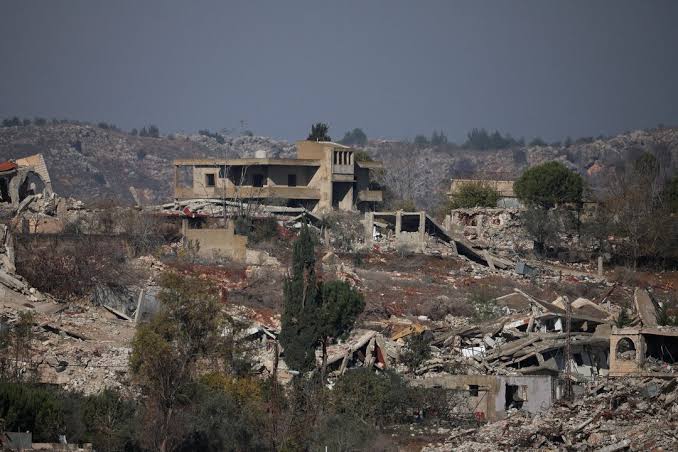
Ten killed in Kfar Reman days after Israel claimed the Ali al-Taher ridge, with US-mediated talks due in Rome and Hezbollah calling the framework null and void
Background
The agreement that was supposed to end the fighting in southern Lebanon was signed in June 2026 by the governments of Lebanon and Israel, mediated by the United States. Its structure was simple and, in retrospect, self-defeating: Israeli forces would withdraw from positions in southern Lebanon in exchange for the disarmament of Hezbollah, with control of designated pilot areas transferring progressively to the Lebanese Army. It was a framework rather than a treaty, and almost everything about sequencing was left to be negotiated later.
Two structural problems have prevented it from working. The first is that the two sides read the sequence in opposite directions. Israeli officials have said they will not withdraw until Hezbollah is disarmed throughout the country, not merely in the border strip. The Lebanese government has argued that Israel must withdraw first, after which the Lebanese Army deploys and disarmament follows. Neither position has moved appreciably in three months.
The second problem is more fundamental: Hezbollah was never a party to the agreement. The group has said it will not surrender its weapons anywhere north of the Litani River, and its secretary-general, Naim Qassem, has publicly described the framework as null and void, demanding that Israel end what he calls its occupation before any discussion of arms. Lebanon's government thus signed a deal committing it to deliver something it does not control, against an actor with the capacity to veto it by simply continuing to exist under arms.
The human cost of the wider conflict, which began in October 2023 and escalated sharply after March 2, 2026, is now substantial. Lebanon's Ministry of Public Health said in a statement on Saturday that Israeli attacks since October 2023 have killed 8,920 people and injured 30,595, with 4,358 of those deaths and 12,359 of the injuries recorded since March 2 alone. A separate ministry report counted 179 Israeli attacks on ambulance crews since March 2, killing 135 healthcare workers. These are Lebanese government figures and have not been independently verified; Israel disputes casualty characterisations and says it targets Hezbollah military infrastructure. 
Key Developments
The immediate escalation began on the night of September 3-4, when the Israeli military announced it had taken operational control of Ali al-Taher — a hill east of Nabatieh, together with a network of tunnels beneath it that Israel says Hezbollah uses to shelter fighters and weapons. The ridge is strategically consequential out of proportion to its size. It overlooks several villages and the main roads into Nabatieh, the largest city in the south, and controlling it opens routes toward the Apple Province and Rihan Mountain, areas where Hezbollah has built up presence since the late 1990s. Lebanese state media reported that Israeli aircraft were still striking the hill at the moment the announcement was made, and it remains unclear how far the claimed control actually extends.
Ali al-Taher sits north of the Litani. That geography is the whole argument in miniature: it is exactly the territory Hezbollah has refused to demilitarise and exactly the territory Israel says it must be cleared of before any withdrawal.
On Sunday, September 6, Israeli aircraft struck several locations in the Nabatieh district. Reports of the toll differ. Al Jazeera reported at least seven killed and twenty wounded in raids on the town of Arab Salim; Lebanon's health ministry, as cited by Haaretz and Middle East Eye, put Sunday's toll at four killed and twenty wounded, with two women killed in Arab Salim and two more people in Nabatieh al-Fawqa. The discrepancy appears to reflect tolls issued at different points during the day and possibly different geographic scopes; it has not been resolved in the reporting available. One strike destroyed part of the Ghandour hospital, a facility that had been out of service for years. Israel said the strikes answered two Hezbollah explosive drones launched toward Israeli troops operating inside southern Lebanon, and called the launches a blatant violation of the ceasefire framework. No Israeli casualties were reported.
The heaviest attack came overnight into Monday. Two Israeli airstrikes hit the village of Kfar Reman — rendered Kfar Rumman in some transliterations — in the Nabatieh district. Lebanon's Health Ministry initially reported at least nine killed, later revised upward to at least ten, with at least two people missing and eleven to thirteen wounded. One strike hit a building, killing eight people including a child and two women; among the dead, according to Al Jazeera's correspondent reporting from the village, was a two-month-old infant. A second strike hit a car and killed a paramedic with the Lebanese Islamic Risala Scout Association, wounding two others. Separately, the Israeli military issued an evacuation warning for a house in the nearby village of Deir al-Zahrani and struck a building there shortly afterward, saying it had targeted a structure near a Hezbollah facility used to launch an explosive drone. No casualties were reported from that strike.
Reactions
In Kfar Reman, the response was a mixture of shock and refusal. A resident, Fouad Chakaron, standing in front of the destroyed building, said people had been living in constant anxiety amid shelling on the outskirts and that the strike had now hit the heart of the town. Another resident, Saleh Medlej, pointed at the wreckage of a building he said had housed families with children and asked whether there were missiles there, before saying he would not leave his hometown.
The village mayor, Abdullah Farhat, called what happened a massacre in every sense of the word, and directed his anger not only at Israel but at Lebanon's own leadership, saying they had signed deals and that it was his village paying the price. That is a politically significant complaint. It expresses, from inside the affected communities, the argument Hezbollah has been making nationally — that the June framework bought Lebanon nothing and cost it the ability to respond.
At the level of the state, President Joseph Aoun's office described earlier strikes in this sequence as a dangerous escalation and Aoun has urged Washington and the international community to help stop the attacks, framing them as a message aimed at the negotiating table rather than solely at military targets. Prime Minister Nawaf Salam, responding to an earlier round of strikes, said the victims were not military targets and demanded that Israel halt an escalation he called extremely dangerous and destabilising for the south. Parliament Speaker Nabih Berri, Hezbollah's principal political interlocutor and the man who has historically brokered Lebanon's arrangements with international mediators, has said Israel has honoured none of the terms it agreed to.
Israel's position, stated by its military through each round, is consistent: the strikes are retaliation for Hezbollah drone launches against Israeli forces, they target Hezbollah infrastructure, and they are permitted by a framework Hezbollah is violating. Hezbollah, for its part, does not claim to be bound by that framework at all. Qassem's formulation — that Lebanon can only face Israel through resistance, and that without it Lebanon would disappear — is a rejection not just of disarmament but of the premise that disarmament is the price of withdrawal.
What's Next
The next scheduled event is a further round of US-sponsored talks between Lebanese and Israeli representatives in Rome, reported in Lebanese and regional media as set for around September 15-16, though US statements have described the timing only as early September and dates have slipped before. Previous Rome rounds, including sessions in July and August, moved from broad political questions to implementation mechanics — pilot-zone handovers, verification of Hezbollah's disarmament, Israeli redeployment — without closing the sequencing gap. Nothing in the past week suggests that gap has narrowed; the violence has arguably widened it by strengthening the hand of those in Beirut arguing that negotiation has produced only casualties.
Three questions will determine what happens next. The first is whether Israel treats Ali al-Taher as a defensive endpoint or a jumping-off point. If Israeli forces push from the ridge toward Nabatieh or the Rihan Mountain area, the operation stops being an enforcement action against ceasefire violations and becomes a ground campaign north of the Litani, which is a different war with different diplomatic consequences.
The second is whether Hezbollah's drone attacks — which have so far been small in scale, inflicted no reported Israeli casualties, and appear calibrated to demonstrate capability rather than to inflict damage — remain calibrated. The group has absorbed heavy losses and has strong reasons to avoid a full confrontation, but each strike on a village in its heartland raises the political cost of restraint.
The third is what Washington does. Both Aoun and, in effect, the Lebanese state's whole strategy rest on the assumption that the United States can restrain Israel if it chooses to. That assumption has not been tested in public since the framework was signed, and the administration's attention is currently divided across the Iran war and the Ukraine negotiations. If Rome convenes on schedule and produces nothing, the June framework will have survived three months without a single verified withdrawal or a single weapon surrendered, while the death toll in the villages it was meant to protect continues to climb.



