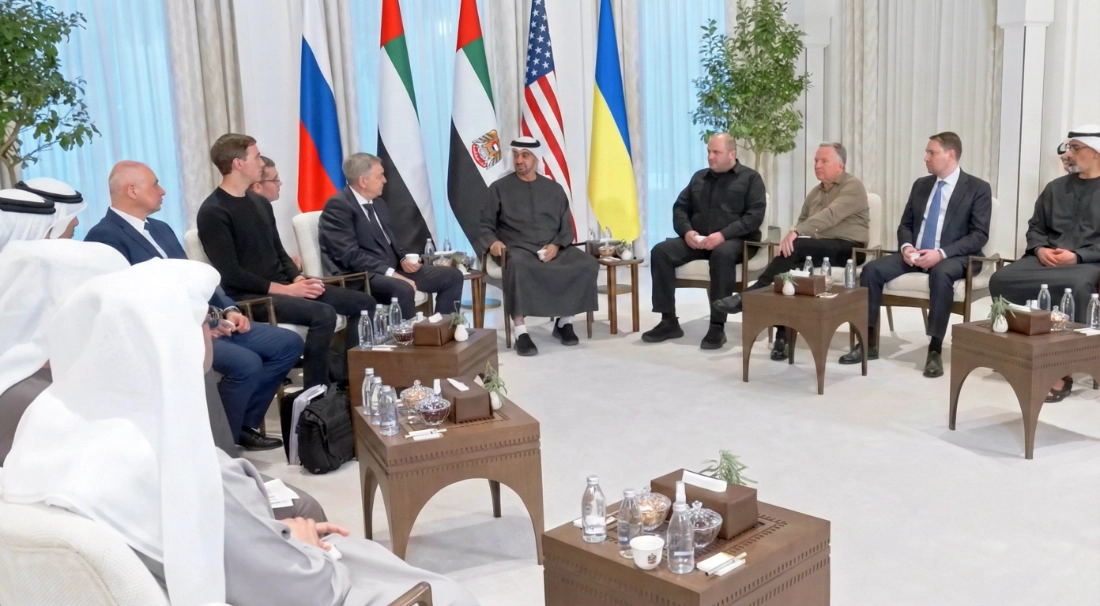
With adviser-level negotiations set for November 10-11, Kyiv hopes for a path to a leaders' meeting, Moscow is sending Vladimir Medinsky, and Europe is being briefed in Brussels rather than seated at the table.
World Politics
Overview
On Monday, November 2, the American special envoy Steve Witkoff announced that the United States would host delegations from Russia and Ukraine in Abu Dhabi on November 10 and 11. The announcement revives a negotiating track that has been dormant for most of the year. The last U.S.-mediated round took place in February, before the United States and Israel launched their war against Iran, an event that pulled Washington's attention, military resources and diplomatic bandwidth toward the Gulf and left the Ukraine file largely untended. Now, with the American midterm elections behind him and a hard winter approaching on the Ukrainian front, President Donald Trump's team is trying to restart the process.
The meeting is modest in formal terms. It is an adviser-level session, not a summit, and nobody on either side is predicting a breakthrough. But it matters because of what it could unlock. Ukrainian President Volodymyr Zelenskyy has said openly that he hopes the Abu Dhabi round will open the way to "a trilateral format at the level of leaders," meaning a face-to-face meeting that would include Vladimir Putin. Putin and Zelenskyy have had no direct contact since Russia's full-scale invasion in February 2022, and their representatives have sat down together only a handful of times since.
Background: How the Talks Came Back
The path to Abu Dhabi runs through St. Petersburg. According to reporting by Al-Monitor and others, Putin agreed to a new round after meeting Witkoff in the Russian city roughly two weeks before the announcement. That October 21 meeting also produced the release of an American citizen, Stephen Hubbard, by Russia. It ignited a political argument in Washington after Witkoff described Putin in conciliatory terms, drawing criticism from Republican senators including Thom Tillis and John Cornyn, while Vice President JD Vance and Trump defended the envoy.
The diplomatic calendar around the talks has been crowded. Earlier in October, the Wall Street Journal reported that Putin had floated a three-way summit with Trump and Chinese leader Xi Jinping on the margins of the APEC gathering in Shenzhen on November 18 and 19, a format that would have left Kyiv and the Europeans out of the room. The Kremlin acknowledged that such discussions had taken place, and a U.S. official said Trump could be receptive. Meanwhile, in the field of humanitarian diplomacy, a localized ceasefire around the Russian-held city of Oleshky in the Kherson region was arranged last week for aid deliveries and evacuations, brokered with the involvement of First Lady Melania Trump and overseen by the human rights ombudsmen of both countries. It was a small but concrete sign that the two sides can still agree on narrow matters even as the war continues.
Key Developments: Who Is Coming and What Is on the Table
Witkoff said the Abu Dhabi talks would address what he called post-war security arrangements, de-escalation, humanitarian measures and ending the war. A senior U.S. official told reporters that Witkoff and Jared Kushner, the two lead American negotiators, are expected to attend. The Kremlin confirmed through spokesman Dmitry Peskov that a Russian delegation will take part, and Russian reporting indicates it will be led by Vladimir Medinsky, a former culture minister and Putin aide who headed Moscow's delegation in the early negotiations in Istanbul in 2022 and again in 2025. The choice is a familiar one and is generally read in Kyiv as a signal of a rigid Russian approach, since Medinsky has historically delivered Moscow's maximalist positions rather than compromise.
Zelenskyy has described his own priorities as diplomatic coordination, stronger air defenses and support for Ukraine's battered energy sector. Earlier statements by the Ukrainian leader, reported by the Kyiv Independent, outlined the technical agenda he expects: talks on a possible energy ceasefire and a maritime ceasefire, exchanges of military and civilian prisoners, and the return of Ukrainian children taken to Russia. On territory, he has said that questions such as the future of the Donbas can be decided only at the level of leaders, not by delegations. That framing is deliberate. It keeps the most difficult issue off the Abu Dhabi table while preserving the argument for a leaders' meeting.
The Russian position on territory has not softened. The Kremlin continues to demand that Ukraine cede the whole of the Donbas region, and Moscow has repeatedly rejected Western-backed proposals for a full and unconditional ceasefire. Kremlin aide Yuri Ushakov has said Europe will not be invited to the Abu Dhabi talks. Reports on the exact U.S. delegation, the date of any follow-up round and whether the venue could change if Middle East conditions deteriorate should be treated as provisional, since the Kyiv Independent reported earlier in the autumn that no firm date had been set and that the location might shift with events in the region.
Reactions: Kyiv, Berlin and Brussels
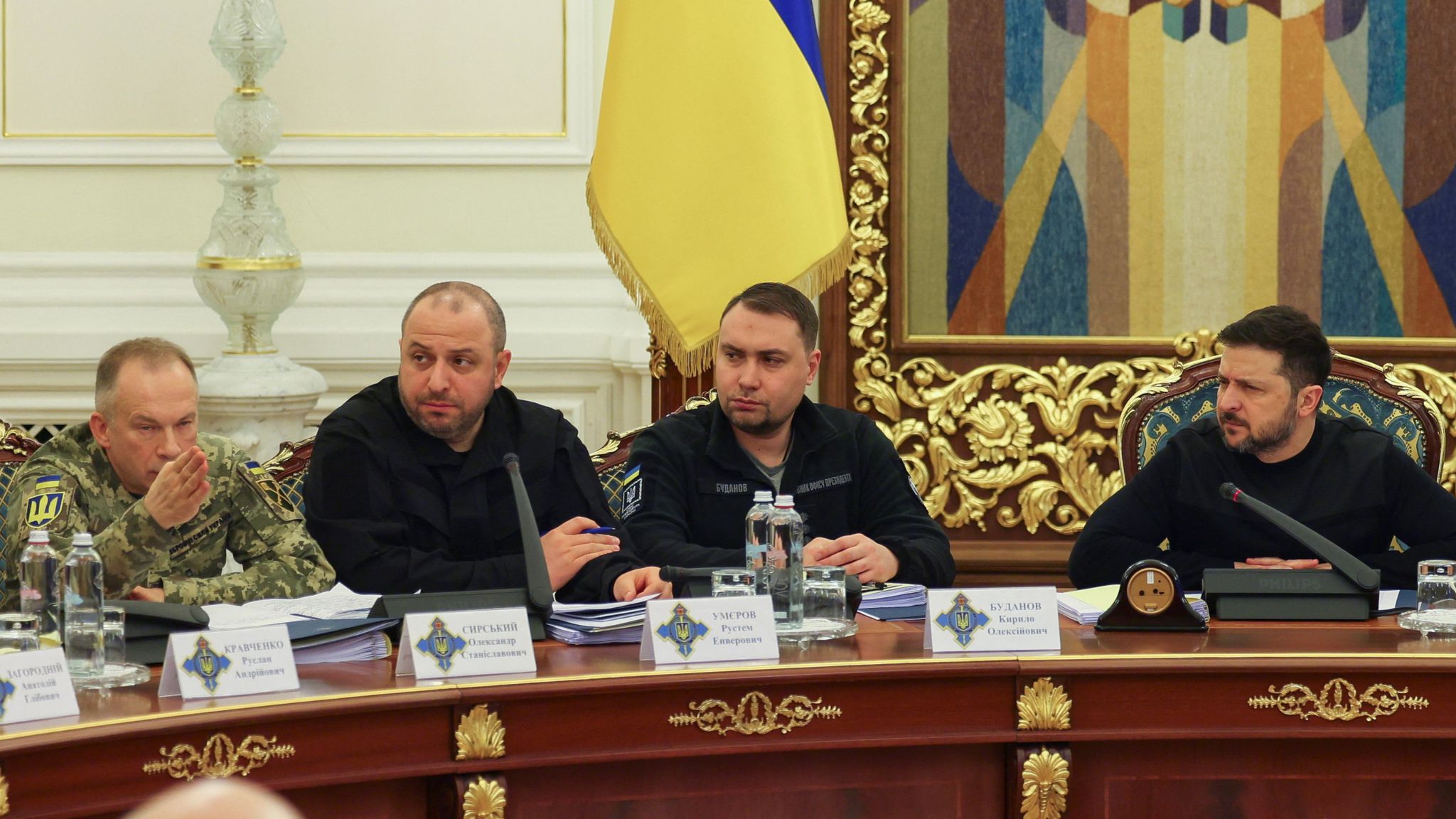
Zelenskyy made an unannounced visit to Berlin on November 3, where he met German Chancellor Friedrich Merz. Merz said it was important for Russia to engage seriously on a ceasefire and a peace agreement, but added, "I do not see that happening so far." Zelenskyy also spoke by video link on November 4 with Witkoff and Kushner ahead of the talks, according to his Telegram channel as reported by Liga.net, and Ukraine's security chief Rustem Umerov has been involved in preparatory meetings in Brussels. Ukrainian officials have been candid that they do not expect a major breakthrough and instead hope the round will restart regular negotiations. Zelenskyy has said that one or two rounds of technical talks could lead to a leaders' summit involving himself, Trump and Putin.
European governments want a seat at the table and are unlikely to get one. To compensate, U.S. negotiators are meeting this week in Brussels with officials from France, Germany, Britain, NATO and the European Union. The agenda there is Ukraine's security guarantees, the future European security framework and economic support for reconstruction. Zelenskyy has argued that security guarantees cannot be discussed meaningfully without Europe, a point he is pressing as the Coalition of the Willing, a group of about 35 countries backing Ukraine, prepares to meet in Berlin around the same time as the APEC summit.
Money is the subtext of the European conversation. Zelenskyy has said Ukraine needs an additional 70 billion euros from European countries next year. The mid-October European Council ended without a deal on that request, frozen Russian assets of roughly 200 billion euros remain blocked by Belgian objections, and a special budget summit is scheduled for November 26. Al Jazeera notes that cost-of-living pressures are making Ukraine funding politically harder in Germany, a reminder that the diplomatic and financial tracks are tied together.
The Pressure Behind the Talks
Reporting indicates the two sides remain far apart on the terms of any deal and that Trump has recently increased pressure on Ukraine to reach an agreement. A U.S. official told the press that American negotiators want a breakthrough before winter. That timeline has consequences. Ukraine has endured repeated Russian strikes on its cities and energy grid, and the approach of cold weather raises the stakes for any energy ceasefire. At the same time, there are questions about Western support itself: reporting by the Wall Street Journal in October said Elon Musk ordered a speed cap on military Starlink service used by Ukraine, which grounded some long-range drones, though Trump and Defense Secretary Pete Hegseth denied directing it.
For Moscow, the calculation is different. Russia gains from being seen as engaged with Washington, which lowers the odds of new sanctions and strengthens the argument that Europe is peripheral. It also benefits if talks remain at a technical level where it can trade humanitarian gestures for diplomatic legitimacy, without conceding on the territorial and political demands that define its war aims.
What's Next
The immediate question is whether the November 10-11 round happens as scheduled and produces anything concrete. The most plausible deliverables are modest: prisoner exchanges, an agreed process for children's return, and perhaps a limited agreement on energy infrastructure or Black Sea shipping. A fuller energy or maritime ceasefire would be a more significant result, and Ukrainian officials have signaled that is the type of outcome worth watching.
The larger question is whether Abu Dhabi leads to a leaders' meeting. The calendar offers several possible stages: the APEC summit in Shenzhen on November 18-19, where a Trump-Putin-Xi encounter has been discussed; the Berlin meeting of the Coalition of the Willing; the European budget summit on November 26; and the G20 summit in Florida on December 13-15, where it is unclear whether Putin will attend. Each of those events either strengthens or weakens the hand of the negotiators in Abu Dhabi.
Finally, the Iran war hangs over everything. The talks were moved in part because Washington's attention was elsewhere, and the venue itself could change if the Gulf situation worsens. A Ukraine peace process that depends on U.S. mediators who are simultaneously managing a confrontation in the Strait of Hormuz is fragile by design. Observers should expect slow, incremental news from Abu Dhabi, and should treat any claim of an imminent settlement with caution until both delegations say so in their own words.
Published By | News Editor