Written By | Sports Desk
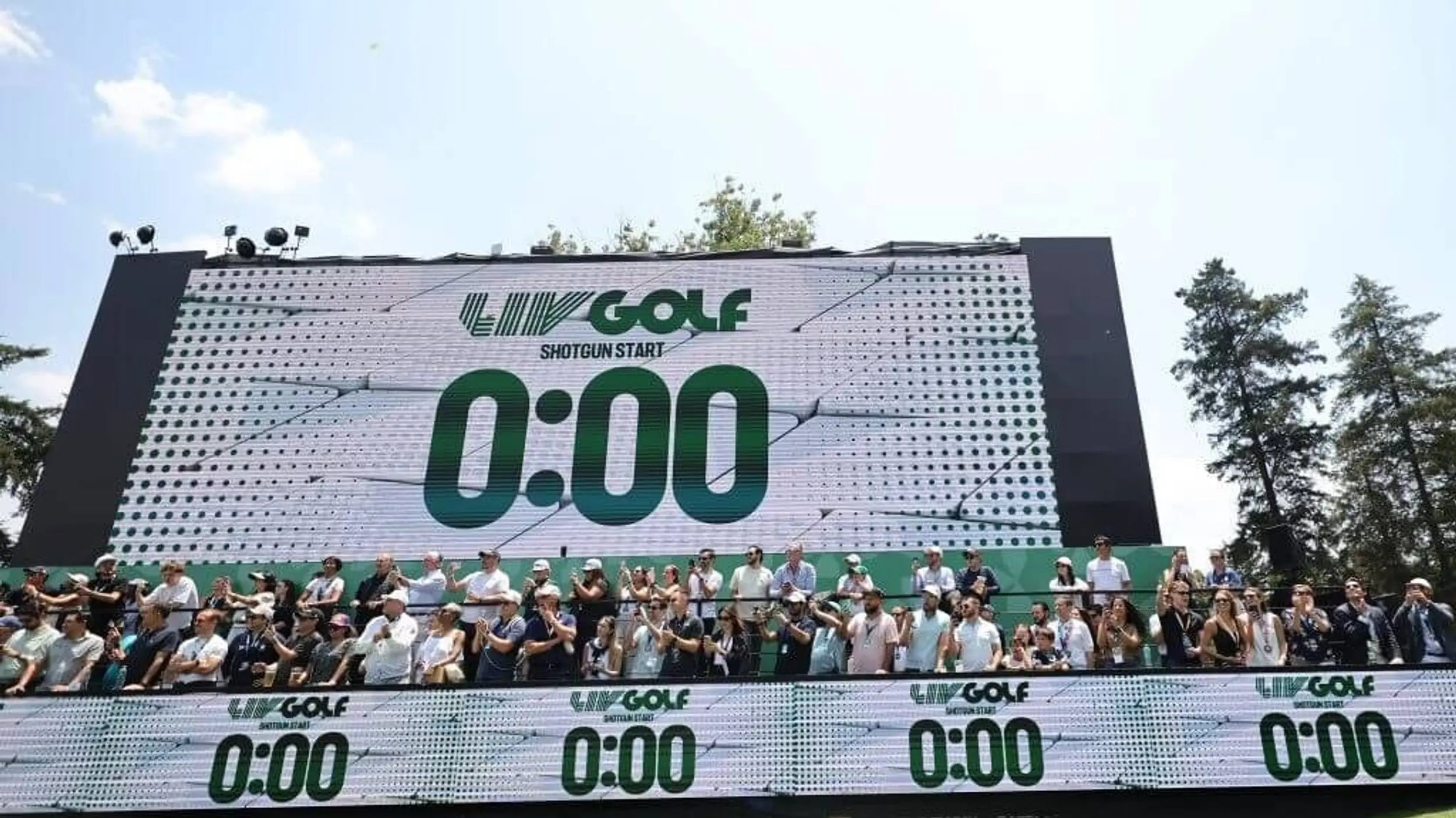
A bankruptcy-court announcement ends the Saudi-backed league that split professional golf, leaving players, executives and fans to sort through the wreckage
NEW YORK
Professional golf's most disruptive experiment ended not with a final putt but with a lawyer's sentence in a New Jersey courtroom. On Thursday, November 5, an attorney for LIV Golf told a bankruptcy hearing in Trenton that the company would not move forward with a rebooted version of the league. "The debtors are not currently proceeding with the LIV 2.0 plan," said Matthew Williams of Gibson Dunn, adding that the company was "toggling to a value-maximizing wind-down in their business."
The league announced it would begin an "orderly liquidation process" after failing to secure financing for tournaments beyond the 2026 season. For a circuit that arrived in June 2022 with nine-figure signing bonuses and a promise to remake the sport, it is a stunning final scorecard.
How the money ran out
LIV reportedly spent more than $5 billion over its lifetime, almost all of it from Saudi Arabia's Public Investment Fund. That support ended in April, when the PIF said it was changing strategy and would stop paying after the league's fifth season. LIV filed for Chapter 11 protection on September 8.
The last hope was a $300 million commitment from BC Partners Credit to fund a leaner "LIV 2.0." But the plan depended on stars staying put, and several declined. Jon Rahm, Sergio Garcia, Tyrrell Hatton and Louis Oosthuizen were among the players who were not interested, according to the Associated Press. BC Partners extended an October 25 deadline, yet the league still could not assemble what Williams called "critical mass." In a statement, BC Partners said it was "disappointed that mutually acceptable terms could not be reached among the various stakeholders."
Two members of LIV's special committee, Gene Davis and Jon Zinman, described the wind-down as "the most responsible path forward." The company says it will remain open to third-party offers during the process in order to extract more value from its assets.
A league built on guarantees
LIV's pitch was simple and, to some players, irresistible: guaranteed money, no cuts, and a lighter schedule. Major champions including Bryson DeChambeau, Dustin Johnson, Brooks Koepka and Phil Mickelson signed on. The PGA Tour answered with suspensions, which led to a legal fight. In June 2023 the Tour and the PIF announced a framework agreement to merge their commercial interests, but negotiations stalled. The Tour later rejected a $1.5 billion PIF investment proposal that was conditional on LIV remaining intact and on PIF governor Yasir Al Rumayyan becoming co-chair of the PGA Tour Enterprises board.
Over its run LIV held 62 tournaments with $25 million in prize money per event. It reached television through The CW in 2023 and Fox Sports in 2025. Greg Norman ran the league originally; Scott O'Neil replaced him at the start of 2025. Reflecting on the end, O'Neil said: "LIV Golf was fun, demanding, inspiring, at times challenging – but always rewarding."
Players start the long walk back
For the players, the question is no longer whether to leave but how. Rahm has already gone, giving up claims against LIV reportedly worth about $100 million to exit his contract. He is playing in Europe and plans to return to the DP World Tour in 2027, and he hopes eventually to return to the PGA Tour as well. Koepka was the first to come back, leaving with a year left on his deal and accepting financial penalties under a path the PGA Tour created. Patrick Reed did not extend his LIV contract in January and is expected to return to the PGA Tour next year based on his results in Europe.
The PGA Tour has said players who competed in LIV events will face a one-year ban measured from their last LIV appearance. DP World Tour CEO Guy Kinnings said earlier this year that those who signed up for LIV 2.0 would not be eligible for European Tour membership, a stance that threatened European players' Ryder Cup chances. Peter Malnati, a former PGA Tour player director, said LIV's financial model had proved unsustainable.
The uncomfortable questions
Not everything is resolved. LIV paid $15.6 million to retain seven executives, including $6.375 million to O'Neil, and whether those payments can be voided is an open question for the court. The AP report does not say what happens to the league's broadcast agreements, and no PGA Tour statement was included in the coverage reviewed for this article.
What this means for you
If you follow golf, the 2027 calendar just got simpler and the sport's biggest names are about to be back on the same tours more often, though the timing will depend on suspension periods. If you simply enjoy sports as a spectator, the collapse is a case study in how even $5 billion cannot buy a durable audience without a sustainable business model. And if you play weekend golf, expect the debate over formats such as shorter events and team play, which LIV popularized, to outlive the league itself.
There is also a human footnote. Dozens of caddies, staff, and production workers whose jobs depended on LIV's events now face an uncertain winter, a reminder that behind every spectacle is a payroll.
The bottom line
LIV Golf began as a disruption and ends as a lesson. It forced the PGA Tour to confront player pay, global scheduling and its own governance, and it changed the careers of some of the sport's biggest figures. But it never found the revenue to stand on its own once its patron stepped away. The sport it tried to remake is still there, with a lot of reconciling to do.