A new pay-as-you-vaccinate policy aims to end decades of recurring outbreaks that have bled the cattle corridor dry — but its success now hinges on farmers already reeling from disease and drought reaching deep into their pockets
For the cattle keepers of Lyengoma village in Sembabule District's Lwemiyaga County, the pattern is grimly familiar. A batch of cattle arrives from a neighbouring district, the animals are turned out onto contested grazing land, and within days blisters appear on hooves and mouths. Some animals recover. Others die. This time, according to farmer John Badiidi, several animals in his community developed symptoms of Foot-and-Mouth Disease (FMD) before the disease claimed some of them outright. "We are worried because livestock is our only source of income," he said.
The Sembabule flare-up, which emerged in mid-June and has since been traced by district veterinary officers to cases already circulating in neighbouring Mubende and Lyantonde districts, is only the latest chapter in a disease crisis that has stalked Uganda's cattle corridor for years. What makes 2026 different is the government's response: rather than another emergency, government-funded campaign, Uganda has for the first time made FMD vaccination compulsory nationwide, with farmers required to shoulder part of the cost every six months indefinitely.
A costly, recurring problem
Foot-and-Mouth Disease is a highly contagious viral infection affecting cattle, goats, sheep, pigs and other cloven-hoofed animals. It rarely kills mature animals outright, but it depresses milk yields, saps productivity, and — most damagingly for a country trying to grow its livestock economy — triggers quarantines that shut down markets and freeze trade in affected zones. Research on Uganda's cattle marketing chain has found that outbreaks can cut beef exports by as much as 32 percent, largely because disease-free trading partners refuse to import animals or products from infected zones. Household-level studies from eastern Uganda estimate that a single outbreak can cost a smallholder family upwards of Shs435,000 in mortality losses alone, before accounting for movement restrictions, collapsed sale prices and quarantine-related income loss.
Uganda has tried mass vaccination before. Previous campaigns were funded entirely by government, but officials say they consistently failed to reach the vaccination threshold needed for herd immunity, in part because free campaigns struggled to mobilise farmers to actually bring animals forward, and because funding for vaccine procurement was unpredictable year to year. The result was a familiar cycle: an outbreak would prompt a scramble to vaccinate, coverage would fall short, and a new outbreak would follow within a year or two — precisely the pattern now playing out again in Sembabule, whose worst outbreaks in memory struck between 2023 and mid-2024.
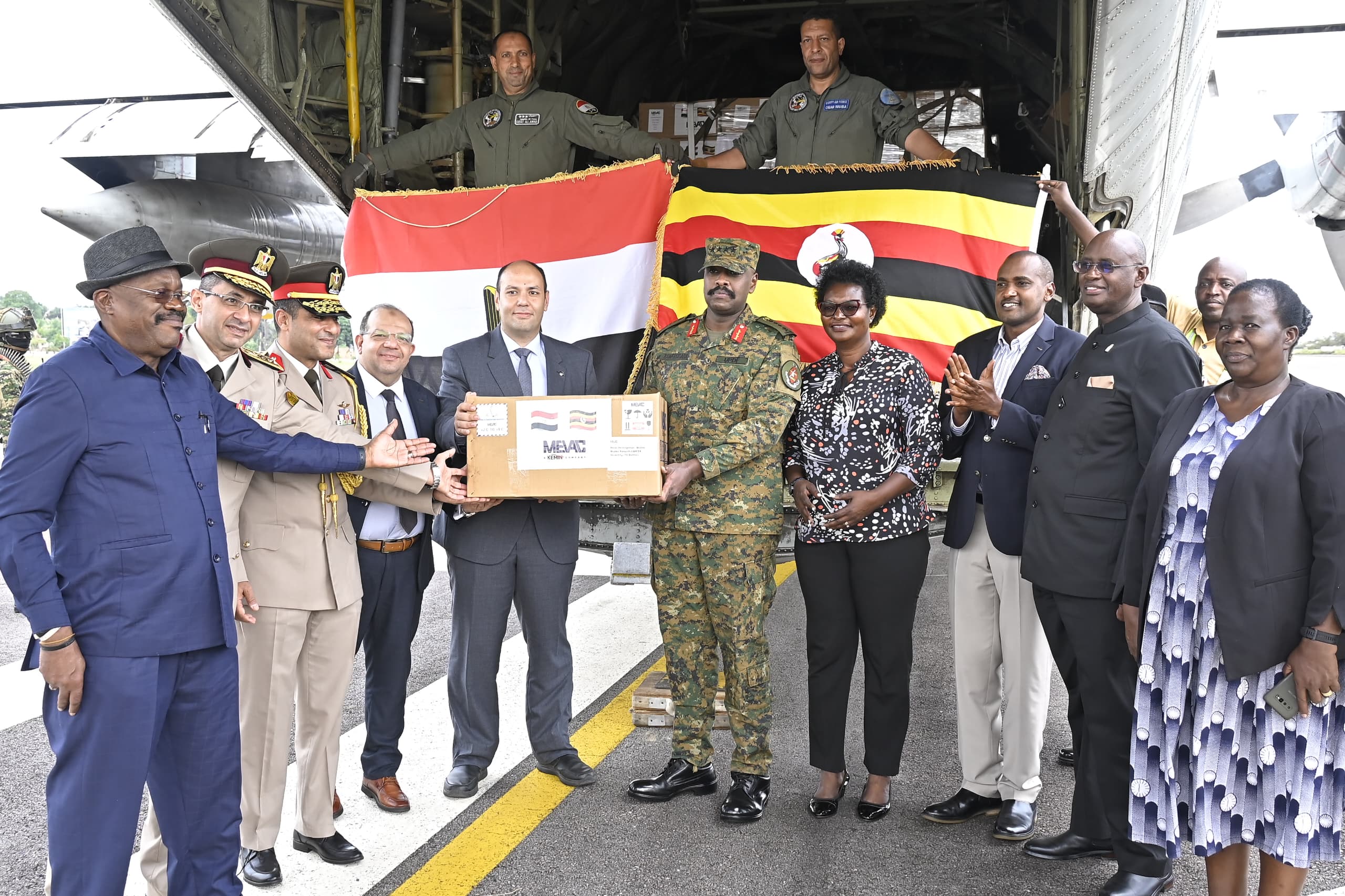
Uganda Receives Second Batch Of Foot And Mouth Disease Vaccines From Egypt - UPDF
What is different this time
Speaking at the Uganda Media Centre in Kampala when the policy was unveiled, State Minister for Agriculture, Animal Industry and Fisheries, Bright Rwamirama Kanyontore, framed the shift as a recognition that government alone cannot sustain the fight. "The fight against Foot and Mouth Disease cannot be won by Government alone; it requires collective effort from all stakeholders," he said. Under the new cost-sharing model, all susceptible animals must now be vaccinated every six months. Farmers pay Shs8,000 per dose for cattle and pigs and Shs4,000 for goats and sheep, while government continues to fund vaccine procurement, cold-chain storage, distribution and disease surveillance. "The Government carefully reviewed available options and concluded that sustainable control requires predictable financing and full participation of farmers," Rwamirama said.
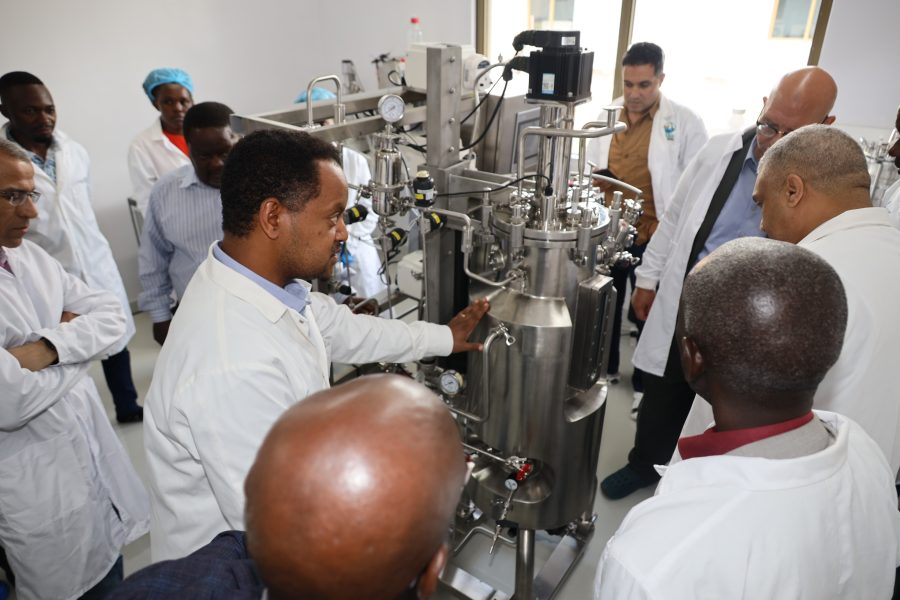
The first nationwide round of the twice-yearly campaign is running from July through August, with a second round planned for January and February. It targets Uganda's roughly 45.5 million susceptible animals — an estimated 16.5 million cattle, 17.4 million goats, 4.5 million sheep and about eight million pigs — making it by far the largest coordinated animal health campaign the country has attempted. Government has procured 53.6 million doses of quadrivalent vaccine covering the four dominant FMD strains circulating in the region, and has built out 53 solar-powered district vaccine storage centres to keep doses viable in areas with unreliable power.
Implementation had already begun weeks before the formal campaign launch: by June 12, more than 20,000 farmers had been registered and roughly 3.5 million animals enrolled in a new national vaccination database, concentrated in the cattle corridor districts that have historically borne the brunt of outbreaks. A new digital platform will handle farmer registration, payment and vaccination records, issuing each livestock keeper a Unique Farmer Identifier. Crucially, only vaccinated animals will qualify for official movement permits and access to formal livestock markets — a lever officials hope will give farmers a concrete incentive to comply rather than treating vaccination as optional.
The view from the ground
That incentive structure is being tested in real time in Sembabule, where the current outbreak has become entangled with long-running disputes over grazing land. Residents accused a herd owner of introducing infected cattle onto contested land; the herd owner rejected the claim, saying his animals had been examined by veterinary officers before being moved. The local veterinary officer for Ntuusi sub-county, Dr James Ssengendo Muwanga, said inspectors found no visible FMD symptoms in the disputed herd but confirmed the disease had already been circulating in livestock markets in Mubende and Lyantonde. District authorities have since set up animal health checkpoints on routes into Sembabule, and Resident District Commissioner Faizal Sseruwagi warned that anyone caught smuggling sick animals into the district would be arrested and prosecuted.
That tension between disease control and the everyday realities of pastoralist life — contested land, cross-border animal movement, and farmers who cannot always afford veterinary fees on short notice — is precisely what the mandatory, fee-based model will have to overcome nationwide. Sembabule's farmers are appealing for government to "urgently intervene with vaccination and treatment programmes," in the words of resident Umar Kalanzi, even as the new national policy asks them to pay into the very system they are calling on government to deliver.
Why it matters beyond the herd
The stakes extend well past animal welfare. Livestock and dairy already contribute meaningfully to Uganda's export economy — dairy exports alone were valued at roughly US$285 million in 2024 — and the sector's growth ambitions are far larger: government and industry figures have floated raising dairy output from around 3.85 billion litres to 6.4 billion litres annually, with an eye on capturing a market some officials value at over a billion dollars. None of that is achievable if recurring FMD outbreaks keep triggering quarantines that cut off access to formal markets and regional and international trade.
For ordinary farmers, though, the immediate question is simpler: whether a Shs8,000-per-dose fee, twice a year, on top of losses many have already absorbed from disease and drought, is a price worth paying for a system that finally works. Government is gambling that predictable, shared financing will succeed where free, sporadic campaigns failed. Whether farmers in places like Lyengoma see enough benefit — in the form of functioning markets, fewer outbreaks and fair treatment of disputes over land and livestock movement — will determine whether Uganda's cattle corridor finally breaks its cycle of outbreak and loss, or simply adds a new cost to an old problem.
Published By | News Editor