Written By | Health News Agencies
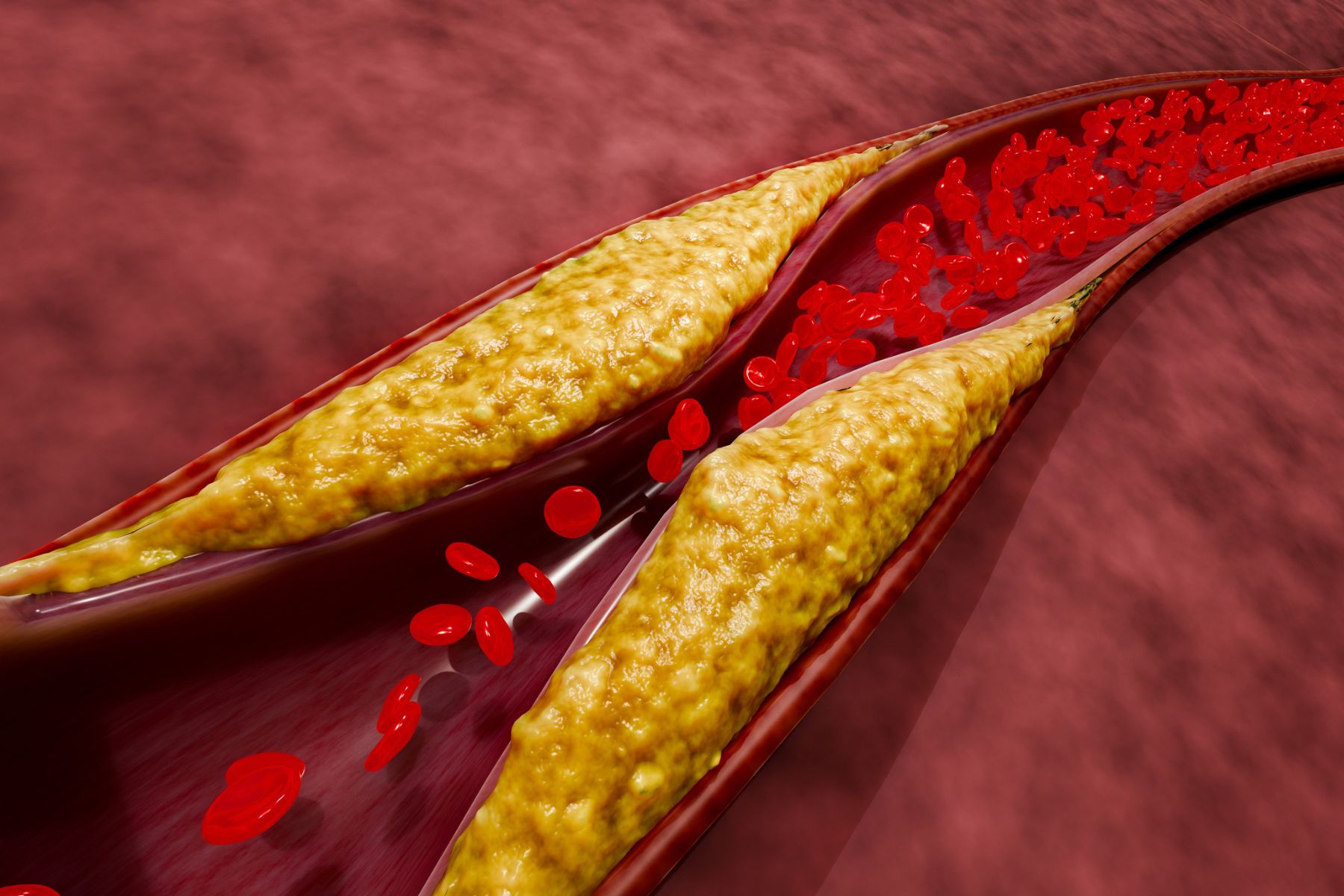
Cutting inflammation by 64 per cent did nothing. Slashing a killer cholesterol particle by 78 per cent did nothing either.
CHICAGO
Imagine a drug that drives a dangerous blood marker down by more than three quarters, backed by years of research and billions of dollars, and then fails to save a single extra life. Now imagine it happening twice in one weekend.
That is exactly what unfolded at the American Heart Association's Scientific Sessions in Chicago, where two of the most closely watched heart-drug trials of the decade were presented in full on Saturday 7 November, and simultaneously published in the New England Journal of Medicine. Both missed their goals. Both were big, long and expensive. And both leave cardiologists asking an uncomfortable question: if we can fix the numbers on the lab report, why aren't hearts getting better?
The first, Novo Nordisk's ZEUS trial, tested a drug called ziltivekimab that blocks interleukin-6, a key driver of inflammation. The second, Novartis's Lp(a)HORIZON trial, tested pelacarsen, a drug that slashes levels of an inherited cholesterol particle called lipoprotein(a), or Lp(a). On paper, each was a slam dunk. In practice, each came back neutral.
Trial One: ZEUS and the Inflammation Gamble
For years, cardiologists have wondered whether inflammation, not just cholesterol, is a root cause of heart attacks and strokes. Earlier studies had hinted that calming the immune system could protect the heart. ZEUS was meant to prove it in some of the sickest patients around.
The trial enrolled 6,376 adults at 757 sites in 38 countries between September 2021 and December 2024. All had atherosclerotic cardiovascular disease, meaning clogged arteries, along with clinically significant chronic kidney disease and high levels of the inflammation marker hs-CRP, at 2 milligrams per litre or more. They were an older and unwell group: the average age was 69.4, 92 per cent had high blood pressure, nearly two thirds had type 2 diabetes and 42 per cent had heart failure. Nearly all, 92.6 per cent, were already taking cholesterol-lowering medication.
Half received a monthly 15 milligram injection of ziltivekimab on top of their usual care; the others got a dummy injection. The median treatment time was 29.1 months.
The drug did exactly what the chemists designed it to do. Compared with placebo, it cut hs-CRP by 64 per cent and IL-6 by 76 per cent. But when researchers counted the events that really matter, the picture was flat. The primary endpoint, a combination of heart attack, stroke or cardiovascular death, occurred 561 times in the ziltivekimab group and 565 times in the placebo group. Deaths from any cause were 538 versus 542. That is a difference of a handful of patients out of thousands, well within the range of chance.
The safety picture was broadly similar between the groups, though serious infections were slightly more common with the drug, at 20 per cent versus 18 per cent, which is what you might expect from a medicine that dials down the immune system.
There was another sobering detail. More than six per cent of participants died during the trial, roughly double the rate seen in comparable heart studies that did not involve severe kidney disease. These were extremely vulnerable patients.
"Too Little, Too Late"
The lead author, Dr Paul Ridker of Harvard Medical School and Mass General Brigham, a pioneer of the inflammation theory of heart disease, did not hide his disappointment, but he refused to abandon the idea. "We already know from prior research that targeting inflammation can significantly reduce cardiovascular risk," he said.
His leading explanation is timing. The people in ZEUS may simply have had disease too advanced to benefit, with kidney damage and years of artery disease already baked in. Targeting inflammation in them, he suggested, was "too little, too late." Another frank remark from Ridker: "we can't treat what we don't know about."
The researchers say future work will test IL-6 blockade in people with earlier-stage disease, and will explore blocking inflammation further upstream, at a molecular switch called the NLRP3 inflammasome.
For Novo Nordisk, best known for its diabetes and weight-loss drugs, the news has been brewing for months. The company reported top-line results at the end of July. In September, after a data monitoring committee concluded they were unlikely to succeed, it halted two further trials of the same drug, named HERMES and ATHENA. Saturday's presentation turned that corporate bad news into a full scientific record.
Trial Two: Lp(a)HORIZON and the Mystery of the Missing Benefit
If ZEUS was a gamble on a new theory, Lp(a)HORIZON was supposed to be the sure thing. Lipoprotein(a) is a sticky, cholesterol-carrying particle whose level is largely set by your genes and barely budges with diet or exercise. Commonly cited estimates suggest roughly one in five people carry elevated levels. High Lp(a) is a well-established risk factor for heart attack, stroke and aortic valve disease. Yet there is still no approved drug to lower it.
Novartis's pelacarsen, a genetic medicine given as a monthly injection, was designed to change that. The seven-year Phase 3 trial ran across 797 sites in 42 countries. Of 14,249 adults screened, 8,323 were enrolled. All had established cardiovascular disease and Lp(a) levels of at least 70 milligrams per decilitre. The average age was about 60, 27 per cent were women, 26 per cent had diabetes, and 82 per cent had previously suffered a heart attack.
Participants received either 80 milligrams of pelacarsen every month or a placebo. And again, the biomarker moved exactly as hoped: pelacarsen lowered Lp(a) by an average of 78 per cent.
But there was no difference in the time to the primary outcome, a combination of non-fatal heart attack, stroke, urgent procedures to restore blood flow, or death from cardiovascular causes. The result held even in the subgroup with the very highest Lp(a), 90 milligrams per decilitre or more. There was no difference in death from any cause, cardiovascular death or death from coronary heart disease either.
On safety, serious adverse events occurred in 37.3 per cent of pelacarsen patients and 41.1 per cent of those on placebo. But nineteen patients on the drug suffered anaphylaxis, a severe allergic reaction, versus none on placebo, though no deaths from allergic reactions were reported. About 21 per cent of the pelacarsen group stopped taking the study drug because of side effects, against more than 7 per cent on placebo.
Novartis first revealed the failure on 4 September, with its chief medical officer Shreeram Aradhye saying: "These are not the results we hoped for." The full data have now confirmed it.
"It Didn't Work"
The trial's senior author, Dr Steven Nissen of the Cleveland Clinic, was blunt. "I cannot avoid the disappointing conclusion – it didn't work," he said. "The results were completely neutral across multiple analyses."
But Nissen also stressed what the result does not mean. "This does not mean Lp(a) is irrelevant," he said. He still recommends that people have their Lp(a) measured, and advises current trial participants not to withdraw.
The authors acknowledge limitations. Some events may have been related to Covid, which cannot be separated out. And 78 per cent of participants identified as white, with fewer than four per cent of African ancestry, even though Lp(a) levels tend to be higher in people of African descent.
Why did a drug that cuts Lp(a) by nearly four fifths do nothing? Scientists have several theories and no firm answer. The drug may not have lowered Lp(a) enough, or for long enough, to undo decades of damage. The part of Lp(a) responsible for harm may not be the part that was reduced. Or perhaps the long-held belief that Lp(a) directly causes events, based on genetics studies, does not translate into a benefit when the level is lowered in middle age.
What Happens to the Rest of the Pipeline?
The double blow raises serious questions for an entire class of drugs. Three other cardiovascular outcome trials of Lp(a)-targeting compounds are still running, and their sponsors will be anxiously studying the Lp(a)HORIZON data.
Other Lp(a) drugs have posted impressive lab numbers. At this year's European Society of Cardiology Congress, the Phase 2 ALPACA study of lepodisiran, a gene-silencing drug, showed up to a 94 per cent reduction in Lp(a)-bound oxidised phospholipids at the highest dose, though the investigators cautioned that a biomarker effect does not by itself establish clinical benefit. Another candidate, zerlasiran, showed substantial and sustained Lp(a) reductions through 48 weeks.
After this weekend, those caveats feel more important than ever. Both ZEUS and Lp(a)HORIZON are textbook warnings about surrogate markers: a number on a blood test that improves is not the same as a patient who lives longer or avoids a stroke.
The wider AHA meeting, running from 6 to 9 November, is packed with other trials that could shape practice, from blood-pressure control after stroke and statin strategies in older adults to AI-powered ECG analysis on consumer smartwatches. But for now, the dominant mood in the Chicago corridors is sobriety.
What This Means for You
If you are taking medicines for your heart, nothing about this news is a reason to stop. Neither drug was approved or available to the public, so no one is losing a treatment they currently use.
If you have high cholesterol, high blood pressure, diabetes or a family history of early heart disease, the proven basics still matter most: not smoking, regular exercise, a healthy diet, controlling blood pressure and taking cholesterol-lowering statins if prescribed.
Lp(a) is a good example of a risk factor that is hidden from most people. It is usually checked only once in a lifetime, if at all. Nissen's advice is that measuring it still makes sense, because it can reveal inherited risk and prompt tighter control of everything else, even though there is no drug yet to lower it directly. Ask your doctor whether a test is appropriate for you, particularly if heart disease runs in your family.
And if you are in a clinical trial of any kind, speak to your study team before making any change. This article is general information, not medical advice.
The Bottom Line
Medicine advances through failures as often as successes, and big negative trials are not wasted. They save patients from drugs that would have been expensive, burdensome and useless, and they redirect billions of dollars toward better ideas.
Still, it is hard to overstate how painful this weekend was for the field. For two decades, researchers have argued that inflammation and Lp(a) were the next big frontiers after cholesterol. Both have been tested at enormous scale, with drugs that did precisely what they were designed to do on the lab report, and both have come up empty on the outcomes that count.
The next chapter will be written by earlier-stage patients, upstream targets and the remaining Lp(a) trials still ticking away. Until then, cardiology has learned an old lesson the hard way: it is not enough to move the number. You have to move the patient.