Written By | Staff Writer
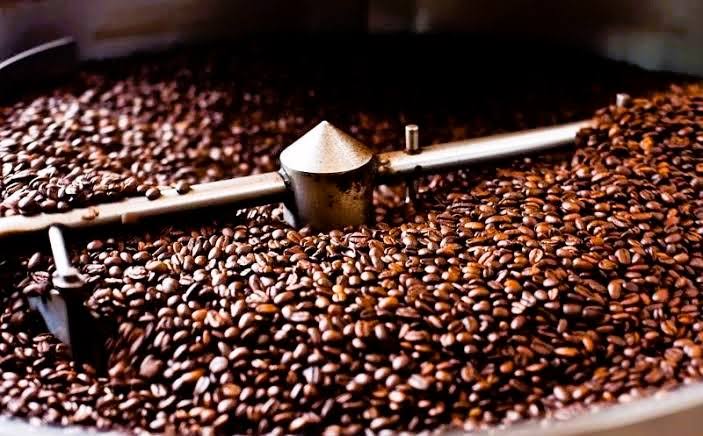
Coffee remains Uganda's single most important agricultural export earner, and the sector has been under real strain.
A single kilogram of coffee grown on the slopes of the Rwenzori Mountains has just fetched more money at international auction than most Ugandan smallholder farmers earn from an entire acre in a season — a signal, industry watchers say, of how far the country's coffee could travel if it can bridge the gap between a handful of elite farms and the roughly two million households that grow the crop.
The sale took place in London between July 6 and July 8, when specialty coffee producer Mountain Harvest, working with auction house M-Cultivo, ran an event called "The Paradigm Shift." It drew more than 1,000 bids from buyers around the world. When the gavel fell on the final lot, a Natural Geisha coffee from Rwenzori Estate Farm in western Uganda had sold for $350.02 per kilogram to CHG, a Chinese buyer — the highest price ever paid for a Ugandan coffee at auction. Across all lots sold at the event, the weighted average price came to $24.32 per kilogram, or roughly 90,000 Ugandan shillings, itself a first for the country's coffee at this kind of specialty sale.
To put that in perspective: Uganda's Ministry of Agriculture, Animal Industry and Fisheries has been quoting 2026 farmgate prices of between UGX 12,000 and UGX 16,500 per kilogram for the Drugar, FAQ and Arabica Parchment grades that make up the overwhelming bulk of what Ugandan farmers sell. The Rwenzori Geisha lot fetched roughly 20 times the top end of that range. Even the average price across the whole London sale worked out to several times the going rate for ordinary export-grade beans.
A tale of two coffee sectors
The gap between those numbers captures something important about where Uganda's coffee industry stands today. On one side is the commodity market that most of the country's coffee farmers actually sell into — a market of cooperatives, middlemen, drying mats and unionized crop bulking, where prices move with global robusta and arabica futures on the ICE and LIFFE exchanges and where a bad season, a currency swing or a shipping delay can wipe out a farmer's margin. On the other is a small but growing specialty segment, built around traceable, single-farm, meticulously processed lots that can command prices bearing almost no resemblance to the bulk market at all.
Uganda has historically been known internationally as a robusta powerhouse — one of Africa's largest producers of the hardier, higher-caffeine bean that dominates instant coffee and blends. Arabica, grown at higher altitudes including around the Rwenzori range and Mount Elgon, has always been the smaller, higher-value counterpart. What the London sale demonstrated is that when Ugandan arabica is grown, processed and marketed with the same rigor as prizewinning lots from Ethiopia, Colombia or Panama — the traditional homes of the Geisha varietal that fetched the record price — international buyers will pay Panama-style money for it.
Coffee industry publications covering the specialty trade noted that this was being treated as a milestone moment for the country's reputation among high-end buyers, distinct from the volume-driven bulk trade that has defined Uganda's coffee exports for decades. The sale is part of a broader pattern industry observers have been tracking: a wave of small, ambitious Ugandan farms investing in meticulous processing — natural, honey and washed methods, careful fermentation control, rigorous sorting — to chase the kind of premiums that specialty roasters in Japan, the Gulf, Europe and increasingly China are willing to pay for a genuinely distinctive cup.
Why this matters for the wider economy
Coffee remains Uganda's single most important agricultural export earner, and the sector has been under real strain. Export earnings have fluctuated with global price cycles, and exporters are simultaneously racing to meet the European Union's deforestation regulation, which from next year will require documented proof that coffee entering the EU was not grown on land deforested after 2020 — a compliance burden that falls hardest on smallholders who lack land titles or GPS-mapped farm boundaries. Against that backdrop, a record specialty sale offers a rare piece of unambiguously good news, and a hint at an alternative growth path: instead of competing purely on volume against larger producers like Brazil and Vietnam, Uganda could carve out a premium niche the way Rwanda and Ethiopia have done with their own single-origin marketing pushes.
Uganda's agriculture sector overall grew 6.7 percent in the last financial year, with cash crops — coffee chief among them — expanding by 12.1 percent, according to Uganda Bureau of Statistics data cited by government officials this month. Specialty coffee's growth, while starting from a tiny base, adds a qualitative dimension to that growth story: it is not just that Uganda is growing more coffee, but that some of it is now commanding prices that reframe what the crop is worth.
The hard part: getting from one farm to a million
The challenge, and it is a significant one, is that Rwenzori Estate Farm is not representative of how most Ugandan coffee is grown. The country's coffee sector is overwhelmingly smallholder-based, with production scattered across small plots often intercropped with bananas or other food crops, processed at shared washing stations or simply sun-dried on tarpaulins by the roadside, and sold through a chain of middlemen before it ever reaches an exporter, let alone an international specialty buyer. Reaching Geisha-lot prices requires consistent quality control, careful post-harvest handling, direct relationships with buyers willing to pay a premium for traceability, and often certification costs that an individual smallholder cannot absorb alone.
That is precisely why cooperative organization matters so much in specialty coffee elsewhere in East Africa: in Rwanda and Ethiopia, farmer cooperatives that pool volume while maintaining lot-level traceability have been the vehicle that let ordinary smallholders — not just large private estates — capture specialty premiums. Uganda's coffee cooperative movement, still recovering in places from years of governance troubles, has further to go in building that kind of infrastructure at scale. The Uganda Coffee Development Authority has for several years pushed a roadmap aimed at doubling national production and pushing more of the crop up the value chain into specialty and value-added categories, but auction records like this one work as proof of concept more than as a description of the sector's current reality.
There is also a currency and logistics dimension worth flagging. A $350-per-kilogram sale generates outsized headlines, but the dollars involved are concentrated in a single farm's hands; the broader multiplier effect on rural incomes depends on how much of that premium eventually flows back through the supply chain to the pickers and smallholders who actually grow the cherries, and whether other farms can replicate the model rather than treating it as a one-off curiosity.
What comes next
For now, the London auction gives Uganda's coffee sector a genuine marketing asset — a number that specialty roasters, government trade promotion officials and coffee tourism campaigns can point to for years. Whether it becomes the first data point in a durable specialty premium for a meaningful slice of Ugandan coffee, or remains an isolated high-water mark for one exceptional farm, will depend on investment choices being made now: in cupping labs, in farmer training on processing methods, in traceability systems that satisfy both EU deforestation rules and demanding specialty buyers, and in the cooperative structures that let smallholders pool quality rather than just quantity. The bean that fetched $350 a kilogram proved the ceiling exists. Raising the floor for the country's coffee farmers generally is the much harder, slower work still ahead.



