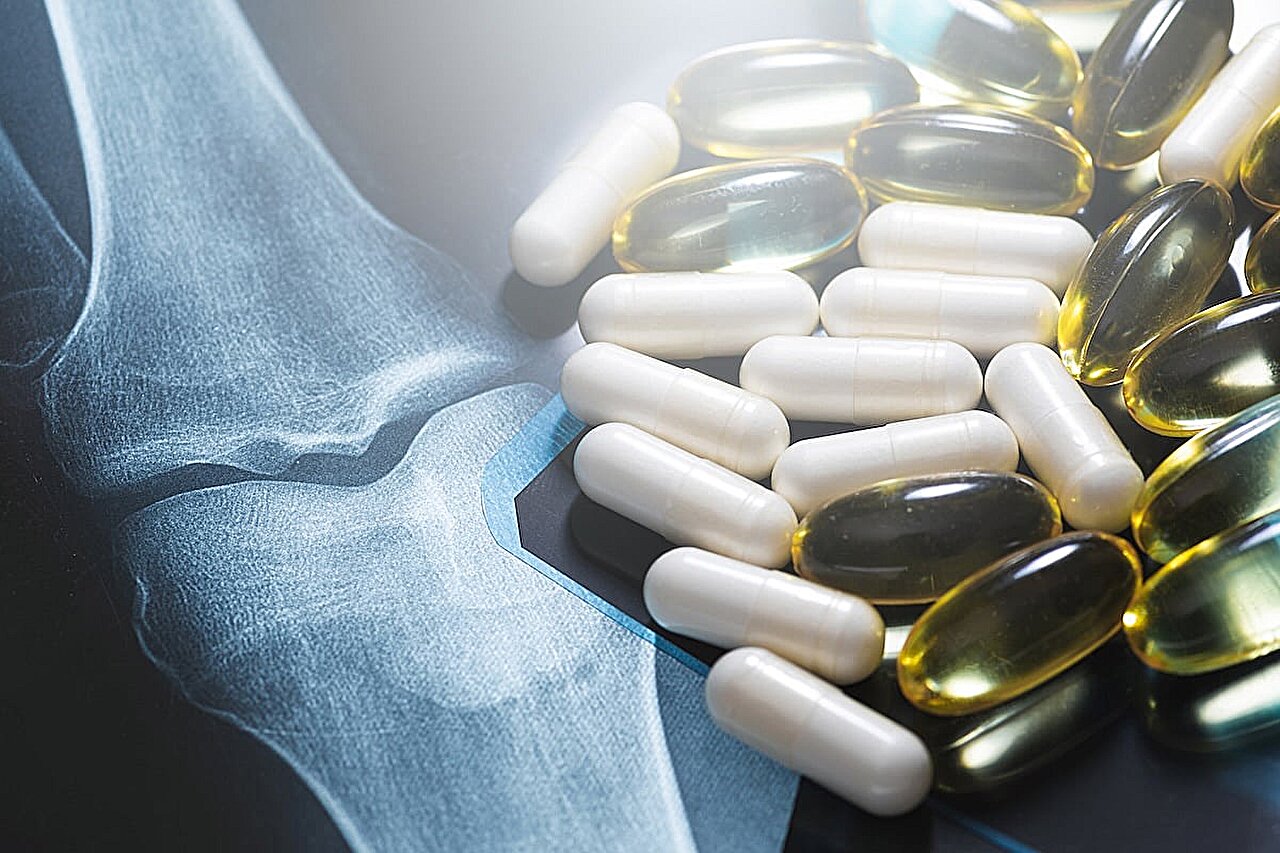
A massive University of Florida study combining 12 years of health records, human brain tissue, and animal experiments found that glucosamine — the supplement millions take for creaky knees — is linked to a 25% faster slide from mild memory problems into full-blown Alzheimer's disease.
It sits in the same aisle as the multivitamins. It's recommended by orthopedists, sold without a prescription, and used by an enormous swath of older Americans simply trying to keep their knees and hips moving without surgery. Now, a sweeping new study out of the University of Florida is raising an alarm that could upend how millions of people think about one of the most popular supplements on the planet: glucosamine, researchers say, may be quietly accelerating the very disease so many of its users are most afraid of.
The study, published June 9, 2026, in the prestigious journal Nature Metabolism, found that people already experiencing mild cognitive impairment — the hazy, often-overlooked stage that frequently precedes Alzheimer's — were 25 percent more likely to progress to full Alzheimer's disease if they were taking glucosamine compared to those who weren't. For people already diagnosed with Alzheimer's disease or a related dementia, glucosamine use was tied to a 25 percent higher risk of death within the study's follow-up window.
For a supplement long assumed to be, at worst, simply ineffective, the findings have landed like a thunderclap across both the supplement industry and the Alzheimer's research community.
A Study Built Different
What separates this research from the steady drip of "supplement linked to risk" headlines that circulate every year is the sheer scale and methodological depth behind it. The University of Florida team, led by Ramon Sun, an associate professor of biochemistry and molecular biology, didn't rely on a single data source or a small clinical sample. Instead, they combined three distinct lines of evidence into one unusually comprehensive picture.
First, the researchers used artificial intelligence to audit twelve years of anonymized electronic health records from the University of Florida Health system, ultimately analyzing data from roughly 41,000 patients with mild cognitive impairment and 24,000 patients already living with dementia. That AI-driven audit allowed them to compare disease trajectories between supplement users and non-users at a scale no traditional clinical trial could match.
Second, they didn't stop at population data. The team examined post-mortem human brain tissue using spatial assays — a technique that allows scientists to map biochemical activity across different regions of brain tissue with precision — to look for direct biological evidence of what glucosamine might be doing inside an Alzheimer's-affected brain.
Third, they turned to animal models to test cause and effect directly, rather than relying solely on correlations pulled from medical records. That three-pronged approach — big data, human tissue, and live biology — is part of why the findings are being taken seriously rather than dismissed as just another statistical fluke from an observational study.
The Sugar Tag That Turned Traitor
The mechanism the researchers landed on is as unexpected as the headline finding itself. Glucosamine is a naturally occurring amino sugar, and the body already uses molecules like it to perform a basic cellular housekeeping task called glycosylation — essentially, attaching small sugar "tags" onto proteins so they fold correctly, travel to the right destination inside the cell, and function the way they're supposed to.
"Proteins are the cell's molecular machines, and many of them need sugar tags added in just the right way to fold correctly, travel to the right place and do their jobs," explained Sun, the study's lead author. "What we found in Alzheimer's is that this sugar-tagging system appears to be overactive. The Alzheimer's brain is adding too many of these sugar structures, and this seems to contribute to the disease rather than protect against it."
In other words, a process that's normally protective and essential for healthy cell function appears to go into overdrive in a brain already affected by Alzheimer's pathology — and because glucosamine is known to cross the blood-brain barrier, supplementing with extra glucosamine may be pouring fuel directly onto a fire that a vulnerable brain cannot put out. The researchers describe this phenomenon as hyperglycosylation, and their broader analysis identifies it as a metabolic driver of Alzheimer's disease progression, not merely a downstream symptom of it.
Crucially, the team's findings suggest this isn't a universal danger. In a healthy brain, the glycosylation system appears to function normally, and glucosamine taken by someone with no cognitive impairment does not appear to carry the same risk profile. The danger, according to the research, is concentrated specifically in brains that are already on the path toward — or already living with — Alzheimer's disease and related dementias. As the researchers put it, glucosamine appears safe, and possibly even protective, for a healthy brain, but potentially harmful for a brain already experiencing cognitive decline.
A Supplement Taken by Millions, Largely Unquestioned
Glucosamine has occupied a strange place in the supplement world for decades: enormously popular, recommended casually by doctors and pharmacists for joint pain and osteoarthritis, and yet the subject of a long, unresolved scientific debate about whether it actually works any better than a placebo for joint pain in the first place. Multiple large clinical trials over the years have produced mixed results on its effectiveness for cartilage and joint health, with some studies showing modest benefit and others showing essentially none.
What virtually no one was looking for, until now, was a downstream neurological cost. Most people who pick up a bottle of glucosamine sulfate or glucosamine chondroitin at the pharmacy are doing so because a knee or a hip aches — a category that disproportionately includes older adults, the same population at elevated risk for mild cognitive impairment and Alzheimer's disease. That overlap is precisely what makes the new findings so consequential: the people most likely to be taking glucosamine for their joints may, by sheer demographic overlap, also be the people most vulnerable to the cognitive risk the study describes.
It's worth being precise about what the study does and doesn't show. This is, at its core, an observational association drawn primarily from electronic health records, paired with supporting mechanistic evidence from brain tissue and animal studies. It is not, the researchers themselves caution, the result of a randomized, placebo-controlled human clinical trial — the gold standard that would be needed to definitively prove that glucosamine causes faster Alzheimer's progression, rather than simply correlating with it. People who are already further along in cognitive decline might, for instance, be more likely to be managing other health conditions in ways that happen to correlate with glucosamine use for reasons unrelated to the supplement itself.
Even so, the convergence of population data, brain tissue evidence, and animal experiments all pointing in the same biological direction is precisely the kind of pattern that moves a finding from "interesting hypothesis" to "research that demands a clinical trial," and Alzheimer's researchers are already framing it that way.
Expert Perspective
Researchers involved in the study have been careful to frame the findings as preliminary but significant — important enough to change clinical conversations now, even while a definitive human trial is still pending. The University of Florida team has emphasized that their results add a new and previously unrecognized piece to a much larger emerging picture in Alzheimer's research: that metabolic dysregulation, not just the amyloid plaques and tau tangles that have dominated Alzheimer's research for decades, may play a far bigger role in how the disease actually progresses inside the brain.
That reframing matters. For years, Alzheimer's drug development focused overwhelmingly on clearing amyloid plaques, with decidedly mixed real-world results. A growing body of research, of which this glucosamine study is now a part, points instead toward metabolic processes — how brain cells produce energy, manage sugar, and tag their own proteins — as an underappreciated but potentially more tractable target for both risk reduction and future treatment.
Geriatricians and neurologists outside the study, reacting to the publication, have generally struck a measured tone: not panic, but a clear signal that patients with diagnosed MCI or Alzheimer's, and their caregivers, should bring up glucosamine use directly with their physician at their next appointment, rather than waiting to be asked.
What This Means for You
If you are a healthy adult without any diagnosed cognitive impairment and you currently take glucosamine for joint pain, this study does not suggest you need to panic or stop immediately — the researchers' own framing indicates the risk they identified is specific to brains already affected by mild cognitive impairment or Alzheimer's disease, not the general population.
If you, or someone you are caring for, has been diagnosed with mild cognitive impairment, Alzheimer's disease, or another related dementia, and is currently taking glucosamine for joint pain, this is worth a real conversation with a doctor before your next refill. That doesn't necessarily mean immediately discontinuing the supplement on your own — abruptly stopping any supplement or medication without medical guidance carries its own risks, and your doctor may want to weigh your joint pain needs against this new data, consider alternative pain management strategies, or simply monitor your cognitive status more closely going forward.
It's also worth remembering that this single study, however well-constructed, is not the final word. Definitive answers will require a prospective clinical trial specifically designed to test cause and effect in humans — something the University of Florida team and others in the field are now expected to pursue. Until then, the responsible takeaway is informed caution, not alarm: know what you're taking, know who's most at risk, and loop your doctor in if you fall into the higher-risk group this research has identified.
The Bottom Line
A supplement found in millions of medicine cabinets, taken largely on autopilot for joint pain, has just been linked by one of the most comprehensive studies of its kind to a measurably faster path from mild memory trouble to Alzheimer's disease — and a higher risk of death once that diagnosis is in hand. The mechanism researchers propose, an overactive cellular sugar-tagging system that glucosamine appears to inflame rather than soothe, gives the finding a plausible biological story to match its statistical punch. It is not yet proof. But for the millions of older adults straddling both worlds — aching joints and aging minds — it is, at minimum, a conversation worth having with a doctor sooner rather than later.
Sources: Nature Metabolism (nature.com); ScienceDaily (sciencedaily.com); UF Health (ufhealth.org); Neuroscience News; Medical Daily; Newsweek; The Conversation; Medical News Today.
Published By | Features Editor