Written By | Torch Media Africa
Everywhere else, nuclear energy was a line in a long-range plan or a memorandum signed during a state visit. In 2026 that picture is changing in measurable ways
Technological Transformation
For half a century, nuclear power in Africa meant one place: Koeberg, the two-unit station north of Cape Town that has supplied South Africa's Western Cape since the 1980s. Everywhere else, nuclear energy was a line in a long-range plan or a memorandum signed during a state visit. In 2026 that picture is changing in measurable ways. A reactor pressure vessel has been installed on Egypt's Mediterranean coast, South Africa has named a preferred site for up to 5.2 GW of new capacity, Kenya has fixed a groundbreaking date, and the World Bank — absent from nuclear lending since 2013 — is back at the table. Whether this becomes a genuine technological transformation or another cycle of announcements will depend less on reactor engineering than on regulation, grids and, above all, finance.
A continent with one operator and one builder
An open, source-cited dataset (AfrPowerOS) published in September 2026 tracks civilian nuclear programmes in 20 African countries: one operating (South Africa), one under construction (Egypt), seven preparing in earnest under the International Atomic Energy Agency's (IAEA) three-phase Milestones Approach, and ten exploring. Together, the programmes under consideration add up to roughly 15 GW of potential new capacity. The Energy for Growth Hub and Third Way, in their 2026 readiness update, are more conservative: they class only Egypt and South Africa as "ready by 2030", place Ghana, Uganda, Morocco, Kenya, Algeria and Tunisia as "potentially ready by 2030", and code Rwanda and Tanzania as potentially ready by 2050 because agreements have not yet translated into clear progress. Their central warning is blunt: announcements are not bankable projects.
Egypt: the construction template
El Dabaa is the largest civil nuclear construction project in Africa: four Russian VVER-1200 units totalling 4.8 GW, built by Rosatom under a 2015 intergovernmental agreement. A Russian state loan of about US$25 billion covers roughly 85% of an estimated US$30 billion cost. First concrete was poured in July 2022. The reactor pressure vessel for Unit 2 was installed in July 2026, about seven months after Unit 1 reached the same milestone. Unit 1 is expected to begin supplying electricity in 2028, with the remaining units following through about 2030, at which point Egypt expects around 9% of its electricity to come from nuclear power.
El Dabaa matters beyond Egypt because it is a demonstration of the full vendor-financed model — Russia is financing, building, fuelling and helping train operators for the first ten years. It shows that a large plant can be built on the continent, but it also illustrates the dependency trade-off: a single foreign state supplies the capital, the technology and the fuel. Rosatom has signed nuclear cooperation agreements with at least 20 African countries, most of them preliminary.
South Africa: from life extension to new build
South Africa's regulator extended Koeberg Unit 2's operating licence to 2045 in November 2025. The Integrated Resource Plan 2025, approved in October 2025, calls for 5.2 GW of new nuclear capacity by 2039, with the first 1.2 GW targeted for 2036, as part of a broader R2.2 trillion energy investment strategy. In April 2026 Eskom published a draft environmental scoping report naming Thyspunt in the Eastern Cape as its preferred site for a plant of up to 5.2 GW. In May 2026 Eskom confirmed exploratory talks with the World Bank and other funders over financing a programme that could be launched within a year.
Separately, the South African Nuclear Energy Corporation (Necsa) issued an expression of interest in March 2026 for small modular reactor (SMR) technology partners; it drew 54 potential partners from 12 countries. South Africa has also signed agreements with local and Chinese partners to revive its historic Pebble Bed Modular Reactor programme. With an operating fleet, a regulator, a skills base and a domestic nuclear industry, South Africa is the continent's most credible candidate to host Africa's first SMR — and its procurement choice is the contest to watch.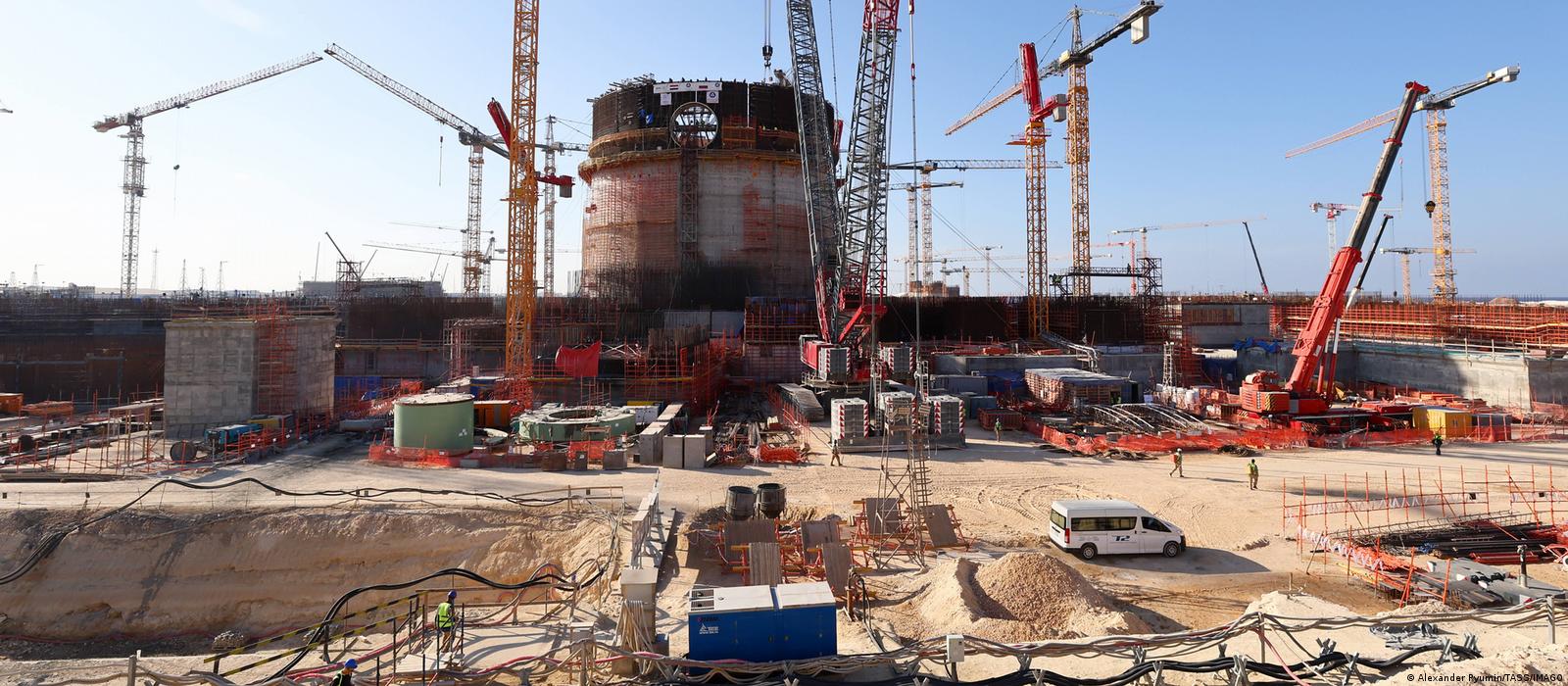
East Africa: Kenya's dated plan and Rwanda's small-reactor bet
Kenya has moved from aspiration to schedule. The Nuclear Power and Energy Agency (NuPEA) has chosen Siaya County, on the shores of Lake Victoria, as the preferred site, citing cooling-water availability; an earlier coastal option in Kilifi stalled amid local opposition and is now framed as a future site alongside Kwale. A December 2025 framework named KenGen as owner, developer and operator. Officials have set March 2027 as the target for breaking ground and 2034 for commissioning, with roughly 2,000 MW planned (reports vary on capacity) at an estimated cost of around KSh500 billion. Kenya signed a work plan with the IAEA in July 2026 and is assessing funding models for 100–300 MW SMRs. Local media have raised land-rights and safety questions in Siaya — an early signal that social licence will be as important as technical licensing.
Rwanda is pursuing the most aggressive small-reactor strategy on the continent. At the second Nuclear Energy Innovation Summit for Africa (NEISA) in Kigali on 18–21 May 2026, IAEA Director General Rafael Grossi presented an Integrated Nuclear Infrastructure Review report to President Paul Kagame, and Rwanda signed an agreement with the IAEA on integrating nuclear power, including SMRs. Reports from the summit also describe a civil nuclear cooperation memorandum with the United States and agreements with several other partners, alongside an existing roadmap with Russia; Rwanda's Atomic Energy Board held its first Joint Coordinating Committee meeting with Rosatom in July 2026. President Kagame has said Rwanda expects nuclear power in the early 2030s. Grossi used the Kigali platform to call financing the single biggest obstacle to nuclear development in Africa.
Uganda's Vision 2040 targets 24 GW of nuclear capacity by 2040 and a first plant at Buyende by 2031; a Korean nuclear agency began a 26-month site evaluation in May 2025. Tanzania has identified Namtumbo as a candidate site and, in June 2026, expressed interest in SMRs — including floating units — with Rosatom.
West and North Africa: Ghana's vendor race and a widening field
Ghana, the continent's first research-reactor operator (GHARR-1), named finalist vendors in 2025 for a first plant of about 1 GW, with American and Chinese suppliers competing head-to-head. Nuclear Power Ghana has a non-binding agreement with NuScale and Regnum Technology Group for a VOYGR-12 SMR, and a separate cooperation agreement with China National Nuclear Corporation on a large reactor. Ghana reported progress on Phase 2 of the IAEA milestones in February 2026 and is negotiating a "123 Agreement" on peaceful nuclear cooperation with the United States. Targets range from the early to mid-2030s, with one estimate of about 1 GW by 2038.
Nigeria operates a research reactor and participates in IAEA Phase 2, but its latest energy plan excludes nuclear power — despite modelling by the Energy for Growth Hub suggesting nuclear could cut long-run system costs by 22%. Morocco's prime minister signalled interest in civil nuclear power in March 2026, and the IAEA signed a joint statement with Algeria in December 2025 on exploring SMRs. Togo, which will host the next NEISA, used the World Nuclear Symposium in London in September 2026 to argue that Africa "is not asking for a handout of nuclear technology" but offering a market and a partnership.
Why SMRs change the calculation — and what they do not change
The technological case for SMRs in Africa is straightforward. Most African grids are small: a single 1,200 MW unit can exceed a country's entire peak demand, making it impossible to operate safely when the unit trips. Modules of 50–300 MW fit smaller grids, can be added incrementally, and require less upfront capital per unit. Some designs need less cooling water, widening the range of possible sites; microreactors could serve mines, industrial zones or data centres directly.
But SMRs do not remove the hardest parts of a nuclear programme. A country still needs an independent regulator, a nuclear liability and safeguards regime, emergency planning, spent-fuel arrangements, a trained workforce and a grid capable of absorbing baseload power. And the commercial track record of most Western SMR designs remains thin, so first-of-a-kind cost and schedule risk is real. A country that signs for an untested design is effectively co-funding its commercialisation.
Finance: the decisive variable
The World Bank lifted its nuclear-lending ban in June 2025 and signed a partnership with the IAEA; the IAEA concluded similar agreements with the Asian Development Bank and the OPEC Fund. That widens the financial architecture, but analysts expect early World Bank engagement to focus on capacity building and project preparation rather than large loans, and the African Development Bank still maintains its legacy prohibition on nuclear financing. Without concessional multilateral capital, the default remains vendor-state financing — Russian, Chinese or, through export-credit agencies, American and Korean — with all the geopolitical leverage that implies.
What to watch
Over the next 18 months, five milestones will separate real programmes from paper ones: whether El Dabaa Unit 1 holds its 2028 grid date; South Africa's procurement route and technology choice for Thyspunt and the Necsa SMR demonstration; whether Kenya breaks ground in Siaya in March 2027 with a named vendor and financing; Ghana's final vendor selection and the US 123 Agreement; and the first nuclear-related operation approved by the World Bank anywhere in Africa. With nearly 600 million Africans still lacking electricity and demand expected to triple by 2050, nuclear will not be the continent's main electrification tool — solar, hydro, geothermal and storage will carry most of that load. But for industrial baseload, nuclear's role in Africa's energy-technology mix will be decided in the next few years, and on financial terms rather than engineering ones.



