Written By | Torch Media Africa
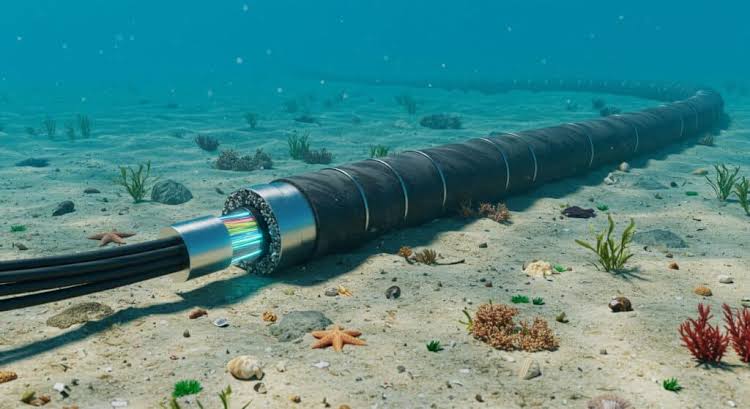
A submarine cable, a Tier-III data centre, and a fresh telecom licence stack are pulling one of Africa's smallest island economies into the digital era
The Union of the Comoros — three volcanic islands in the Mozambique Channel with a population of under a million — rarely features in continental conversations about Africa's digital transformation. That is starting to change. Over the past two years, the archipelago has activated its first Tier-III national data centre, laid a dedicated inter-island submarine cable, secured fresh multimillion-euro financing for its dominant telecom operator, and issued its first digital lending licence — a cluster of milestones that, taken together, mark the most concrete progress yet on the country's decade-long "Comores Numérique" digital strategy. The story is less about scale — Comoros' entire telecom market is a fraction the size of a single mid-tier African city's — and more about a small state methodically building the infrastructure layers, connectivity, identity systems, and payment rails, that larger neighbors assembled years earlier.
A National Strategy a Decade in the Making
Comoros' current digital push traces back to "Comores Numérique 2028," a national digital development strategy first drafted in 2018 and formally adopted by the Council of Ministers in 2019. The plan, overseen by the National Digital Development Agency (ANADEN), set ambitious targets: raising the ICT sector's contribution to GDP to 5 percent, lifting internet penetration from roughly 8 percent in 2017 toward a 54 percent goal, launching 14 e-government platforms, and building out cybersecurity and regulatory frameworks — all under a budget of roughly 8 billion Comorian francs, or about $17.5 million. Nearly seven years on, the country has visibly closed part of that gap: DataReportal's Digital 2026 report put internet penetration at 35.7 percent as of October 2025, with roughly 316,000 internet users, while GSMA Intelligence data shows 760,000 active cellular mobile connections — equivalent to 85.7 percent of the population — of which 79.7 percent are on 3G, 4G, or 5G-capable broadband networks. That leaves Comoros still short of the 2028 targets, but on a clear upward trajectory from its 2017 starting point.
Undersea Cables and a New National Data Centre
Physical infrastructure has been the strategy's most tangible achievement. The Avassa Submarine Cable Project, delivered by Hengtong Marine Cable Systems and Huawei Marine Networks, laid roughly 260 kilometers of undersea fiber connecting Grande Comore to Anjouan and onward to Mayotte, giving the archipelago dedicated inter-island capacity rather than relying solely on a single international gateway. That cable investment has been paired with a new Tier-III national data centre, operational since May 2025 and financed through a roughly €9.5 million African Development Bank-backed project. The facility is designed to host government and public-service workloads inside Comoros itself rather than in servers abroad, and is intended to underpin digital identity systems, cross-agency interoperability, and electronic payments — the kind of sovereign digital infrastructure that many larger African economies built a cable-generation earlier.
Digital Government: A One-Stop Portal, Built With World Bank Support
On the government-services side, Comoros has been building the "Portal of Comoros," envisioned as a one-stop platform for citizens to request birth certificates, residence certificates, visas, passports, and national identity card issuance or renewal without visiting multiple ministries in person. The project is led by the National Agency for the Promotion of Investments (ANPI) under the Ministry of Economy, Industry and Investments, with support from the World Bank channeled through the fourth phase of the Regional Communication Infrastructure Program (RCIP-4). The African Development Bank separately extended a $10 million grant to support Comoros' broader digital government program, funding that dovetails with the new national data centre's role as the technical backbone for these e-services. Taken together, the data centre and the e-government portal represent the clearest attempt yet to give Comoros a functioning digital public administration rather than the largely paper-based system that has historically prevailed.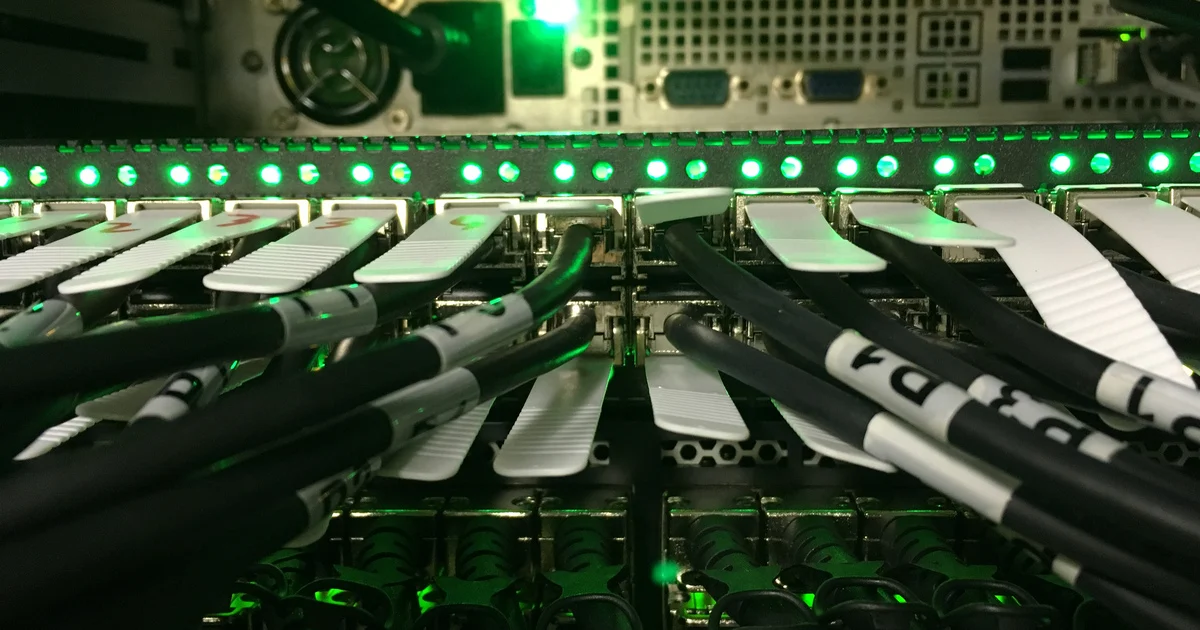
Telecom Expansion: Yas Comoros and the IFC
Much of the connectivity buildout has been driven by a single operator: Yas Comoros, a subsidiary of the pan-African AXIAN Telecom group, which was awarded the country's second telecom licence and introduced the archipelago's first 4G coverage. The International Finance Corporation backed Yas Comoros' initial rollout with a €13 million loan in 2019 — fully repaid by June 2025 — and followed in June 2025 with a new €25 million loan explicitly earmarked for 5G, fibre-to-the-home, and fibre-to-the-office deployment, alongside improved inter-island connectivity, with rollout beginning that year. AXIAN Telecom has publicly flagged Yas Comoros as the group's fastest-growing operating entity, a notable claim given that AXIAN also operates in far larger markets including Madagascar and Tanzania, where it separately secured a $100 million EIB Global investment for mobile broadband expansion in 2025.
Fintech: A National Payment Switch and a New Digital Lender
Financial-sector digitization is advancing on a parallel track. The Central Bank of Comoros is partnering with payments technology firm PayLogic to build a national payment switch intended to enable interoperability between mobile money providers and banks — a foundational piece of financial infrastructure many larger African markets built years ago. Mobile money itself is growing quickly off a small base: industry estimates put digital payment volume growth in Comoros at 15 to 20 percent annually, with mobile wallets increasingly used by diaspora communities to send remittances directly into local accounts rather than through traditional money-transfer agents. In 2026, AXIAN secured a digital financial institution licence from the Central Bank of Comoros, permitting the launch of a fully digital lending arm that can issue nano- and micro-loans directly through mobile devices — extending credit to Comorians who have never held a formal bank account. The mobile money platform Mvola, part of the AXIAN ecosystem, underpins much of this activity. Even so, the fintech sector remains nascent by regional standards: Comoros currently hosts fewer than ten fintech and digital financial service providers, a fraction of the hundreds operating in markets such as Nigeria or Kenya.
A Small State's Long Game
None of these individual milestones — a 260-kilometer cable, a single Tier-III data centre, one operator's licence upgrade — would register as major news in a market the size of Nigeria or Egypt. In Comoros, they collectively represent the most substantial digital infrastructure progress the country has made since adopting its national digital strategy in 2019. The gap between ambition and achievement remains real: internet penetration at 35.7 percent is still well short of the 54 percent target set for 2028, and the fintech ecosystem is a fraction of the size seen in West or East Africa's leading hubs. But the sequencing — undersea connectivity, then a national data centre, then e-government platforms, then payment interoperability and digital lending — mirrors the path larger African digital economies followed a decade earlier, suggesting Comoros may be compressing into a few years an infrastructure build-out that took other markets considerably longer. For a nation of scattered islands with limited fiscal firepower, the AfDB, World Bank, and IFC financing underpinning nearly every project in this pipeline may prove as important to the outcome as the technology itself.



