Written By | Torch Media Africa
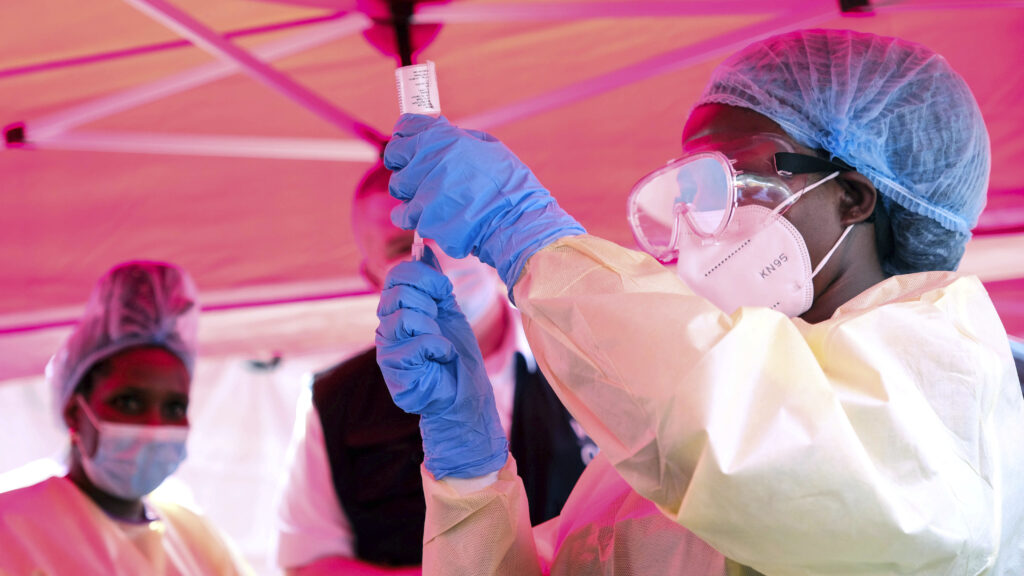
Bundibugyo virus was first identified during a 2007 outbreak in Uganda's Bundibugyo district, and no vaccine or specific treatment is approved for it
KAMPALA
Trials begin as the DRC outbreak escalates
Ugandan scientists have begun early-stage human trials of an experimental vaccine against the Bundibugyo strain of Ebola, placing the country at the centre of the global effort to answer a fast-growing outbreak in neighbouring Democratic Republic of Congo. The Africa Centres for Disease Control and Prevention (Africa CDC) said on 8 October that Phase Ib trials of an Oxford University vaccine candidate, ChAdOx1 BDBV, began in Uganda on 6 October, and that a second candidate, from Moderna, had received ethical approval for Phase Ib trials in the country on 7 October.
Bundibugyo virus was first identified during a 2007 outbreak in Uganda's Bundibugyo district, and no vaccine or specific treatment is approved for it. Vaccines licensed against one Ebola species do not necessarily protect against another, which is why strain-specific candidates are being developed.
The Oxford candidate
The Oxford vaccine is being tested in Uganda by the MRC/UVRI and LSHTM Uganda Research Unit, working with the Oxford Vaccine Group and the university's Pandemic Science Institute. The Daily Monitor reported that the study launched in Masaka City, with researchers confirming receipt of part of about 3,000 investigational doses. Reports differ slightly on timing: Africa CDC and The Star give 6 October for the first doses, while the Monitor, published on 13 October, described a launch the previous Monday. The trial participants are healthy adults, and the goal of this early study is to assess safety and whether the vaccine triggers an immune response. It does not yet show that the vaccine prevents infection.
A parallel Phase Ia study began in the United Kingdom in July. The Serum Institute of India manufactured and stockpiled about 620,000 doses of the candidate in two weeks, supplying 300 vials to the UK and about 3,000 doses for Uganda. The Coalition for Epidemic Preparedness Innovations (CEPI) funds both studies. Production and quality testing of the viral seed stock took place at the Clinical Biomanufacturing Facility.
The Moderna candidate
Moderna's candidate began Phase Ia trials in Canada in early August and cleared ethics review for Phase Ib in Uganda on 7 October, according to Africa CDC. In August, CEPI also announced a $16.5 million partnership with African biopharmaceutical company Minapharm Group to develop a further Bundibugyo vaccine candidate, as reported by Xinhua-based coverage.
The outbreak behind the urgency
According to DRC health authorities, as of 6 October the outbreak, declared in May, had produced 8,728 confirmed cases and 4,205 deaths, a fatality rate of about 48 per cent, with 2,269 recoveries. Seven provinces are affected, mostly in the north and east, several bordering Uganda. The Monitor describes it as the fastest-growing Ebola epidemic in history and the deadliest the DRC has experienced.
The disease has also crossed borders. Kenya confirmed its first imported case on 6 October, a man who died after living in the DRC and travelling through Uganda to Nairobi, according to The Star. The Monitor's page also noted that the United States extended a travel ban on Uganda over Ebola on 12 October. Uganda itself has officially defeated the virus within its borders, the Monitor reported, but faces threats from four neighbouring countries.
Vaccines already in use, and their limits
In August, the global Ebola vaccine stockpile allocated 70,000 doses of Ervebo to the DRC. Ervebo is licensed only for the Zaire species, and the WHO has allowed its use against Bundibugyo only within research protocols, because evidence of protection is insufficient. Africa CDC's Wessam Mankoula said more than 7,700 health and frontline workers have been vaccinated so far. Under the compassionate-use programme 7,775 workers had been vaccinated by 7 October, while a separate research protocol, known as BRAVO, which had vaccinated 848 workers, has been suspended because of supply shortages.
What the researchers say
Prof Eugene Ruzagira, the principal investigator in Uganda, noted that Bundibugyo disease has no approved vaccine or specific treatment and said the study would generate evidence on whether the candidate is safe and can stimulate immune responses that might protect at-risk communities in future outbreaks. Prof Moffat Nyirenda, director of the Uganda research unit, said the trial shows that sustained investment in scientific excellence, research infrastructure and long-term partnerships has positioned Uganda as a leading centre for vaccine research in Africa. CEPI's Dr Nicole Lurie said the world urgently needs a safe and effective vaccine to help end the crisis. Dr Umesh Shaligram of the Serum Institute of India called the rapid manufacture and supply of doses an example of what global partners can achieve with urgency. LSHTM's Prof Martin Antonio cautioned that 'this is not a time for complacency'.
Why it matters
Uganda's selection as a trial site reflects decades of accumulated expertise, from the 2007 Bundibugyo outbreak to subsequent Ebola responses and vaccine trials, along with research infrastructure at the Uganda Virus Research Institute and partner institutions. For Ugandans, the work offers both prestige and practical benefits: capacity to run advanced trials and, potentially, early access to protection for health workers if a candidate proves effective. For the region, it is the first step toward the kind of evidence that could support emergency use.
There are caveats. Phase I trials involve small numbers of healthy volunteers and cannot establish efficacy. Moving to later-stage trials, needed for emergency-use authorisation or licensing, will depend on early results. Equity is a concern as well: Antonio said all partners must follow through on commitments to ensure affordable supply, and the partners say they intend to make the vaccine available rapidly and affordably to affected countries and high-risk groups such as health workers, household caregivers and relatives of infected people.
What to watch next
The coming weeks should show early safety data from the Ugandan and UK cohorts, the start of Moderna's Phase Ib trial, and any decision by CEPI, Oxford and the Serum Institute on later-stage studies in the DRC or other affected areas. Case counts in the DRC, any spread to Uganda or other neighbours, and travel restrictions affecting Uganda will determine how quickly the pressure builds. The central question remains whether a Bundibugyo-specific vaccine can be shown safe and effective quickly enough to matter in the current outbreak.



