Written By | Torch Media Africa
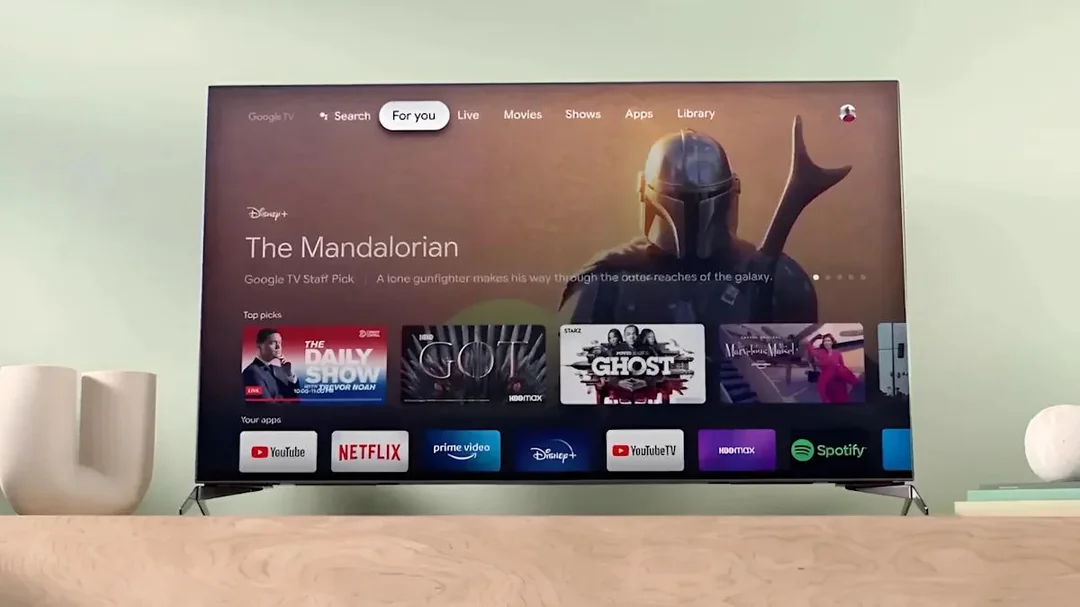
Armed with a Wi-Fi connection and a coding assistant, ordinary households are stripping their televisions back to the basics. It takes about fifteen minutes.
SCIENCE & TECH
Your television has been watching you. Now, in living rooms around the world, people are fighting back by asking an artificial intelligence to take their TVs apart, digitally speaking, and throw out everything they never asked for.
In the space of a few days, a grassroots movement of tinkerers, parents and bargain-hunters has discovered that AI coding agents, chiefly Anthropic's Claude Code, can plug into a smart TV over the home Wi-Fi network, list every app and background service on it, and switch off the ads, the sponsored rows, the telemetry and the pre-installed junk. The result, fans say, is a faster, quieter screen that does what it was bought to do: show your apps and your HDMI inputs, and nothing else.
The craze was chronicled by TechCrunch on 19 October, and it is spreading quickly. One developer says a few thousand people used his prompt in just two days. Another project promises a TV that is 'dumb' on purpose. And while the enthusiasts are thrilled, there are warnings in the small print: at least one user says he bricked his set.
It started with a parents' TV
The spark, by most accounts, was a developer who goes by Gathin T. He noticed his parents' television was drowning in advertising. Instead of fiddling through menus, he pointed Claude Code at the set. According to his own account, the agent found the TV on the family Wi-Fi, identified 25 pre-installed Xiaomi packages that were doing nothing for his parents, removed them, and then wrote a replacement home-screen launcher with a look inspired by Apple TV.
He packaged the whole thing as an open-source project. A version of it, called tv-vibehack, carries an MIT licence and bundles a ready-made prompt, a custom launcher and a list of gotchas learned the hard way. At the time of one recent write-up, the repository had more than 1,300 stars and 146 forks on GitHub. Gathin told TechCrunch that a few thousand people had tried the prompt within two days, on sets from Xiaomi, TCL, Sony, Fire TV, LG and even projectors.
He is not alone. A developer named Muzzammil Yasin Sabuwala built a sister project called dumbtv, aimed at Amazon Fire TV, which Gathin's tool does not support. Its mission statement on GitHub is blunt: 'Your TV should do what you paid for: your apps, your HDMI inputs, and nothing else.' Sabuwala says it was built using DeepSeek V4.1 Flash alongside Claude Opus 5.5 and Claude Sonnet 5.5, and has been tested on Fire TV Edition and on Android and Google TV sets from Sony, TCL, Philips, Hisense, Xiaomi and Nvidia's Shield.
How the trick actually works
There is no hacker wizardry required, and nothing here involves breaking into anyone else's property. The method relies on a standard Android feature called ADB, short for Android Debug Bridge, which developers use to talk to devices. The owner switches on Developer Options (on many sets, by pressing the OK button seven times on the 'Build' entry in the About screen), turns on USB or wireless debugging, and gives an AI agent running on a laptop on the same network the TV's address.
From there, the agent does the legwork. It lists every installed package and works out which are non-essential: advertising services, sponsored content rows, analytics, and the pre-loaded apps that manufacturers include. It then disables them using a command designed for exactly that. Some users go further, installing a minimal launcher and trimming animations to make cheap hardware feel snappier.
The dumbtv project is the most thorough example. According to a write-up from It's FOSS, on a Fire TV running Fire OS 7.7.1.7 it disables roughly 65 packages, including Amazon's content-recognition service, its advertising ID and its analytics. It also uses a DNS filter to block telemetry and update servers, and ships a launcher of just 41 kilobytes that asks for no permissions at all. The repository even includes files written specifically for AI agents to read, so the bot knows what to do.
Speed is part of the pitch. Mihir Gupta, one user quoted by TechCrunch, disabled 25 bloat apps and swapped a 192-megabyte stock launcher for a custom 83-megabyte one, adding rotating wallpapers for good measure. Ryan Doyle says he simply sent Claude Code his TV's model number and asked if it could be hacked; he says it removed the ads and bloatware, sped up the interface and customised his screensaver.
Why people are this angry
To understand the passion, you have to understand what modern smart TVs do behind the scenes. Many include a technology called automatic content recognition, or ACR. It samples tiny slices of whatever is on the screen, or the sound coming from it, turns them into a digital fingerprint and matches that against a database of shows, films, channels and adverts. The upshot is a detailed log of what a particular household watches, which feeds viewer profiles used to sell advertising.
Regulators have noticed. In December 2025, Texas Attorney General Ken Paxton sued five TV makers, Sony, Samsung, LG, Hisense and TCL, under the state's Deceptive Trade Practices Act. The suits allege that ACR collects data without people's knowledge or consent, that companies steer users into switching it on, and that explanations are buried in dense legal language the suits call 'hidden, vague, and misleading.' They also allege ACR can capture content from sources including YouTube, AirPlay and Google Cast, and even a laptop connected by HDMI. The suits say nearly three-quarters of US households have a smart TV using ACR. Hisense and LG said they do not comment on pending legal matters.
'When families buy a television, they don't expect it to spy on them,' the filings declare. 'They don't expect their viewing habits [to be] packaged and auctioned to advertisers.'
There is precedent. In 2017 the Federal Trade Commission and New Jersey's attorney general fined Vizio $2.2 million for capturing viewing data on 11 million consumers without their knowledge or consent. The Texas suits say that by 2021 Vizio was earning more profit from selling data derived from ACR than from selling televisions. Samsung has since settled with Texas, agreeing to stop collecting ACR data from Texans without explicit, informed consent and to rewrite its on-screen privacy prompts. A separate New York class action alleges Samsung's ACR captures image and audio every 500 milliseconds; that is an allegation, not a finding.
Against that backdrop, it is easy to see why the idea of an AI that can simply turn the spying off has gone viral.
The catch: AI can brick your TV
Before you rush to hand your remote to a chatbot, the pioneers themselves are keen to stress that this is a work in progress. TechCrunch notes that the projects are still being tested and refined across different brands, and that AI agents can and do make mistakes, such as disabling something important. One user reported bricking an Android TV while using Claude; another got stuck halfway through a Fire TV job.
Experienced hands offer a set of rules that read like a bomb-disposal checklist. Disable apps; do not uninstall them. Removing system packages outright can break the Home button or the ability to switch HDMI inputs. Mind the order: if you disable the stock launcher before the replacement is installed, the Home button can dump you into a factory test app. Turn debugging off afterwards, so an open ADB port is not left sitting on your home network. And accept that there are trade-offs. Disabling voice input or screen casting removes features you might like, and disabling update services can stop security fixes and bug fixes arriving.
Another quirk: some AI assistants balk at requests phrased as 'hack my TV'. Users report better results by sharing the TV's model number and package list and asking for ads to be removed and performance improved. It's FOSS adds a note of realism on speed: many cheap Android TVs have only one or two gigabytes of memory, so gains vary. On a 1GB Xiaomi set, the first run took an afternoon. With the repository as a guide, people now report about fifteen minutes.
There are also hard limits on who can join in. The method works on Android TV and Google TV devices, but Samsung's Tizen, LG's webOS and Roku run different systems, so it does not apply. Fire TV needs extra care, which is why dumbtv exists.
What the experts and the writers are saying
Formal expert comment on this very new phenomenon is thin on the ground, and TechCrunch's report carried no response from TV makers or advertising companies, so how the industry will react remains unknown. What the community is saying, however, is consistent. The author of the It's FOSS piece recommends removing ads and telemetry while keeping the services your household actually uses, and deciding what you need before you let an AI choose what to cut.
That is sensible advice. The strength of an AI agent, its willingness to act on a sweeping instruction, is also its weakness. Tell it to remove everything unnecessary and it may take 'necessary' to mean something different from what you do. The people reporting success tend to be those who stayed in the loop, reviewing the list of packages before approving it.
For anyone wary of letting a bot loose on their set, TechCrunch points to long-established alternatives: replacement home-screen apps for Android TV such as ATV Launcher, Projectivy Launcher and FLauncher. These deliver some of the benefits, a cleaner home screen with fewer promotions, without touching the underlying system. The hacks, notably, do not require root access, and the TV can be returned to factory defaults if the experiment goes wrong or you change your mind.
What this means for you
If you own a TV that runs Android TV or Google TV, you now have a choice you did not have a month ago: spend an afternoon with the settings menus, or spend fifteen minutes supervising an AI. If you own a Samsung, LG or Roku, the same trick will not work, but you can still dial back the tracking by hand. Menu names vary by model and year, but on Samsung sets the setting to hunt for is 'Viewing Information Services' under Privacy Choices; on LG, switch off 'Live Plus' and enable 'Limit Ad Tracking'; on Vizio, turn 'Viewing Data' off under Reset & Admin; and on Roku, turn off 'Personalize ads' and 'Use info from TV inputs'.
If you do try the AI route, treat it like any other surgery on a device you depend on. Note your model number. Keep your remote handy. Ask the agent to show you what it plans to disable before it does so. Prefer disabling to deleting. Turn off debugging when you are finished. And think hard before cutting update services, because a TV that never receives a security patch is a different kind of risk.
There is also a bigger picture. Consumers have long grumbled that devices they own are quietly working for someone else, with the manufacturer earning money from ads and data long after the sale. Until now, fighting that took technical skill most people lacked. AI agents have lowered the bar to the point where a worried son can fix his parents' TV in an afternoon, and where thousands of strangers can copy him in a weekend.
The bottom line
The dumb-TV movement is, for the moment, a scrappy collection of GitHub repositories, social media posts and trial and error. It may fizzle, or it may force manufacturers to rethink how many promotions and trackers they build into hardware people have already paid for. Regulators in Texas are already pressing the issue from one direction; enthusiasts with chatbots are pressing it from another.
What it shows, above all, is how fast the balance of power in everyday technology can shift when a capable AI agent becomes available to anyone with a laptop. A task that once demanded a specialist is now a conversation. As the dumbtv slogan puts it, your TV should do what you paid for. Whether the TV industry agrees may depend on how many more living rooms join the revolt.



