Written By | Torch Media Africa
Siri
CUPERTINO, California
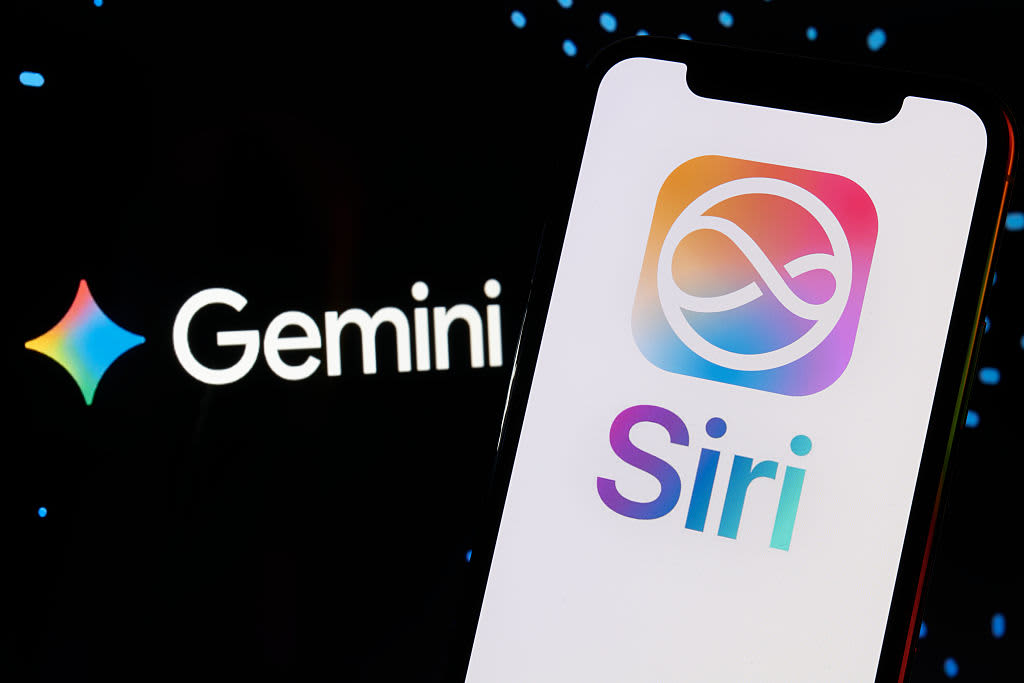
Tim Cook walked onto the stage at Apple Park's Steve Jobs Theater on Monday morning, and within ninety minutes he had fundamentally rewritten the rules of the AI assistant wars. At WWDC 2026, Apple announced that Siri — the voice assistant on more than two billion active devices — would be powered not by Apple's own models alone, but by a custom version of Google's most powerful Gemini AI, in a deal reportedly worth roughly $1 billion per year.
It was a stunning admission of defeat for the old Siri, and a colossal win for Google. But the bombshells didn't stop there. Apple also unveiled iOS 27 with "Extensions" — a framework that, for the first time, allows users to pick a rival AI as their default assistant. That means Anthropic's Claude can now sit at the heart of an iPhone. The implications are staggering.
The $1 Billion Deal That Changed Everything
Apple, stung by years of criticism that Siri had fallen embarrassingly behind ChatGPT, Gemini, and Claude, made a fateful call: instead of continuing to pour billions into catching up, it would buy its way to the front.
The result is one of the most consequential AI partnerships in history. Apple will pay Google approximately $1 billion per year for access to a custom, 1.2-trillion-parameter version of Gemini, tuned for Apple's needs. Crucially, Gemini queries will run through Apple's Private Cloud Compute infrastructure — meaning Google will not gain access to user data.
For Google, the financial terms are secondary to the strategic prize: its AI is now the engine inside the most popular consumer device on Earth. For Apple, the deal acknowledges that building a frontier AI model is no longer guaranteed to be a core competency.
Meet The New Siri: A Dedicated App, Deep Context, And A Chatbot Interface
The new Siri barely resembles its predecessor. Gone is the pulsating orb. In its place is a standalone app — dark-themed, with an iMessage-style chat interface, text input, voice toggle, and attachment support.
The rebuilt Siri comes with three headline capabilities:
Feature What It Does
Personal Context Draws on emails, calendar, contacts, notes, and photos for personalized answers
On-Screen Awareness Understands what's on your screen in real time and acts on it
Deep Cross-App Actions Executes complex chains of actions across multiple apps in a single command
A new "Search or Ask" gesture replaces Spotlight search, and Siri integrates with the Dynamic Island on iPhone 16 and later. It is, by any measure, the most significant Siri overhaul since 2011.
The Claude Factor: How Anthropic Just Landed On Every iPhone
If the Gemini deal was the headline, the Extensions framework may prove more historically significant. iOS 27 allows users to designate an AI assistant other than Siri as their default — and Anthropic's Claude is a named option from day one.
Think of Extensions as an AI app store layer beneath the operating system. Just as you can set a different browser as your default, you can now set Claude or Google's Gemini as the assistant that answers when you long-press the side button.
For Anthropic, this is an extraordinary distribution gift. Claude has been beloved by developers and power users but absent from daily mobile workflows. With iOS 27, that changes. When the consumer rollout ships in fall 2026, Claude could find itself on hundreds of millions of devices overnight.
iOS 27, macOS 27, And The New Operating System Universe
The AI overhaul was only one chapter of a sprawling keynote. Apple announced new operating systems across its entire lineup, but iOS 27 was the star.
The Photos app receives three major on-device generative AI tools:
iOS 27 also introduces "Liquid Glass+" — building on last year's aesthetic with deeper translucency and a system-wide transparency slider. iOS 27 Beta 1 was released to developers immediately, with public beta expected later this summer.
The Competitive Fallout: What This Means For Microsoft, Amazon, And The AI Wars
Microsoft, which has spent two years embedding OpenAI's models into its lineup, now faces a more fragmented mobile landscape. Amazon's Alexa, already struggling for relevance, is conspicuously absent from Apple's Extensions announcement.
Market analysts reacted swiftly. Alphabet's shares rose on the long-term value of the Siri deal — not just in fees but in brand legitimacy. Apple's shares moved modestly, with some investors cheered by Siri's improvement and others worried about outsourcing the AI brain of its most important product.
Expert Perspective: "The Most Important Partnership In AI History"
Industry observers see the Apple-Google deal as a watershed moment — both for its scale and for what it signals about the difficulty of building frontier AI models.
Training a 1.2-trillion-parameter model like Gemini requires compute costs in the hundreds of millions, infrastructure spanning entire chip campuses, and teams of thousands. Even Apple, with its nearly $3 trillion market cap, concluded the ROI of building a comparable model didn't justify the expense when Google was willing to license its crown jewels.
The Extensions framework is being hailed as a smart strategic hedge. By allowing multiple AIs to compete on the iPhone, Apple positions iOS as an AI-agnostic platform — giving it ongoing leverage over every AI company that wants access to its hardware base.
What This Means For You
If you own an iPhone, this autumn will feel like a genuine leap forward. The new Siri, backed by Gemini, will summarize emails, prep meetings, reimagine photos, and handle complex multi-step tasks with a single voice command. The Extensions framework means that if you're a heavy Claude user, you can integrate your preferred AI into the core of your iPhone rather than switching between apps.
Privacy-conscious users will note Apple's emphasis on Private Cloud Compute and on-device processing. Whether those assurances prove sufficient — and how EU regulators will scrutinize the arrangement — remains to be seen.
The Bottom Line
June 8, 2026 will be remembered as the day Apple fundamentally changed its relationship with AI — and, in doing so, changed the AI industry itself. By putting Gemini at the center of Siri and opening the iPhone to Claude, Apple has both supercharged its product and reshaped the competitive dynamics of the entire sector.
The old Siri — slow, limited, occasionally baffling — is dead. What replaces it may transform how billions of people interact with their most personal device. The AI wars are no longer just a fight between companies in server farms. As of today, they are playing out on the device in your pocket.



