Written By |
Straddling the equator in Uganda's far west, Queen Elizabeth is the country's most visited savanna park and one of its most varied.
TOURISM
A Savanna Between Two Lakes
Before the sun clears the Rwenzori foothills, the Kasenyi plains are a pewter-coloured hush. Then a Uganda kob lifts its head, the grass shivers, and somewhere beyond the acacia a lioness stops mid-stride, her gaze fixed on a herd that does not yet know it is being measured. This is the opening scene of a day in Queen Elizabeth National Park, and it plays out, with variations, every morning of the year.
Straddling the equator in Uganda's far west, Queen Elizabeth is the country's most visited savanna park and one of its most varied. In a single journey a traveller can cross open grassland, crater lakes, papyrus swamp, a tidal-looking channel crowded with hippos, and a forested gorge where chimpanzees live. Few protected areas in East Africa pack so many habitats into a drive measured in hours rather than days.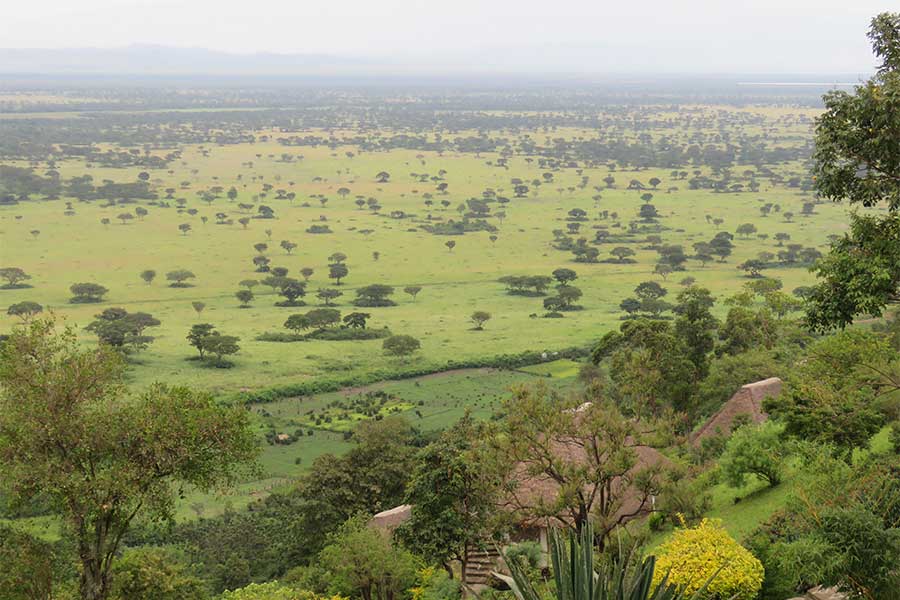
The Park and Its Four Faces
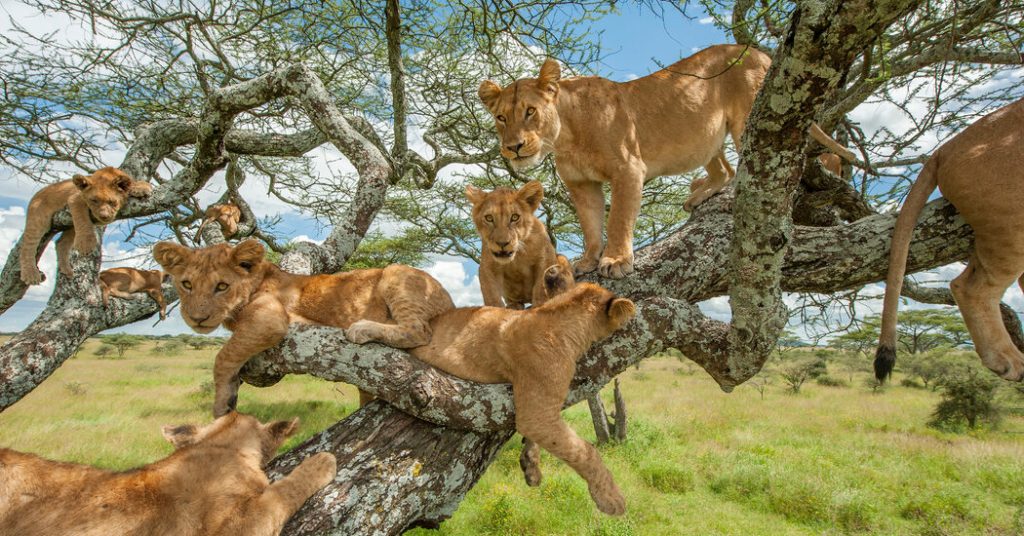
The park is best understood as four sectors, each with its own character, and the distances between them are long enough that serious visitors plan to sleep in more than one. The Mweya Peninsula, jutting into the Kazinga Channel, is the hub: lodges, a visitor centre and the departure point for the park's signature boat cruise. To the north-east lie the Kasenyi plains, where early-morning game drives, usually setting out around 6:30 am, offer the best odds of finding lions on the hunt. Kyambura Gorge, in the east, is a sunken rainforest where a small community of chimpanzees can be tracked on foot. And in the far south, the Ishasha sector is famous for something that sounds like a tall tale until you see it: lions that spend the heat of the day draped along the limbs of fig trees.
Why the Ishasha lions climb is still debated. Shade, a cooler breeze, relief from biting flies and a better view of grazing kob are all offered as explanations. Whatever the reason, the sight of a tawny cat stretched across a branch, tail dangling, is among the most memorable in East African wildlife watching, though sightings are never guaranteed and the Ishasha roads can be punishing in the rains.
Elsewhere the park delivers in numbers. Hippos, buffalo, elephants, crocodiles and leopards share the landscape with more than 600 bird species, a tally that draws serious birders in the wetter months. The Kazinga Channel cruise, about two hours from Mweya, is the easiest way to see it all at once: hippo pods wallowing shoulder to shoulder, elephants coming down to drink, and fish eagles working the margins. Afternoon departures are usually recommended, and operators advise arriving around thirty minutes early.
Planning the Journey
Dry seasons, roughly June to September and December to February, concentrate animals near water and make roads easier. The wet months of March to May and October to November are greener and better for birds, though some tracks, Ishasha's in particular, can turn difficult. For Kasenyi, go at dawn; for the channel, go in the afternoon; for the tree-climbing lions, allow a full day and a patient driver.
Fees depend on residency and change with each tariff period. Published guides for the most recent Uganda Wildlife Authority schedule put foreign non-resident entry at about US$40 per adult and US$20 per child per day, with chimpanzee tracking in Kyambura Gorge at roughly US$100. That tariff window ran to June 2026, so travellers should confirm current prices and permit availability with UWA or a licensed operator before booking. Lion tracking with collared prides requires advance arrangement, and the gorge trek, a descent into dense forest, is physically demanding, with chimpanzee sightings never assured.
A Park Under Pressure
Beauty here comes with a conservation bill. Poaching, wire snares and encroachment remain real problems in the Queen Elizabeth Conservation Area. In February 2026 the International Fund for Animal Welfare handed the Uganda Wildlife Authority a motorcycle, mobile field tents and surveillance cameras and recorders in Kasese District, equipment aimed at faster response to intelligence and stronger evidence for prosecutions. The park's Chief Warden said poaching is still a serious challenge. The memory of three lions found dead in late 2025, which UWA investigated, lingers over a park whose big cats are its biggest draw. Every park fee, every lodge night and every boat ticket helps pay for the people who keep the savanna intact.
This Week in Ugandan Tourism
Nov 4, 2026 – AFCON as a tourism funnel. The Observer reports that the Uganda Tourism Board signed a marketing partnership with the Confederation of African Football on October 30 in Kampala. The "Explore Uganda" brand will appear across CAF platforms ahead of the 2027 Africa Cup of Nations, co-hosted with Kenya and Tanzania from June 19 to July 17, 2027. Officials name Bwindi, the Nile and Queen Elizabeth as places to convert fans into visitors, and tenders are under way to bring local businesses into the tournament supply chain.
Nov 2, 2026 – Spending outpaces arrivals. Travel And Tour World reports international visitor spending rose 25.6 percent in January to June 2026 against the same period in 2025, to about UGX 2.30 trillion (roughly US$631 million), while arrivals grew 3.7 percent and the average stay lengthened from 7.4 to 8.3 nights.
Oct 30, 2026 – Tourism Satellite Account released. The report puts tourism's direct contribution in 2024 at UGX 6.99 trillion, 3.3 percent of GDP, supporting 876,512 jobs.
Oct 6, 2026 – A US$5 billion goal. Government set a target of US$5 billion in annual tourism receipts by 2030, according to the same coverage.
Jul 10, 2026 – Equator monument upgrade. The Ministry of Tourism announced a UGX 9.2 billion project at the Kikorongo Equator Monument, near Queen Elizabeth, with construction expected to take 18 months.
Figures are drawn from press reports; official tariffs and permit rules should be confirmed with UWA and UTB.



