Written By | Torch Media Africa
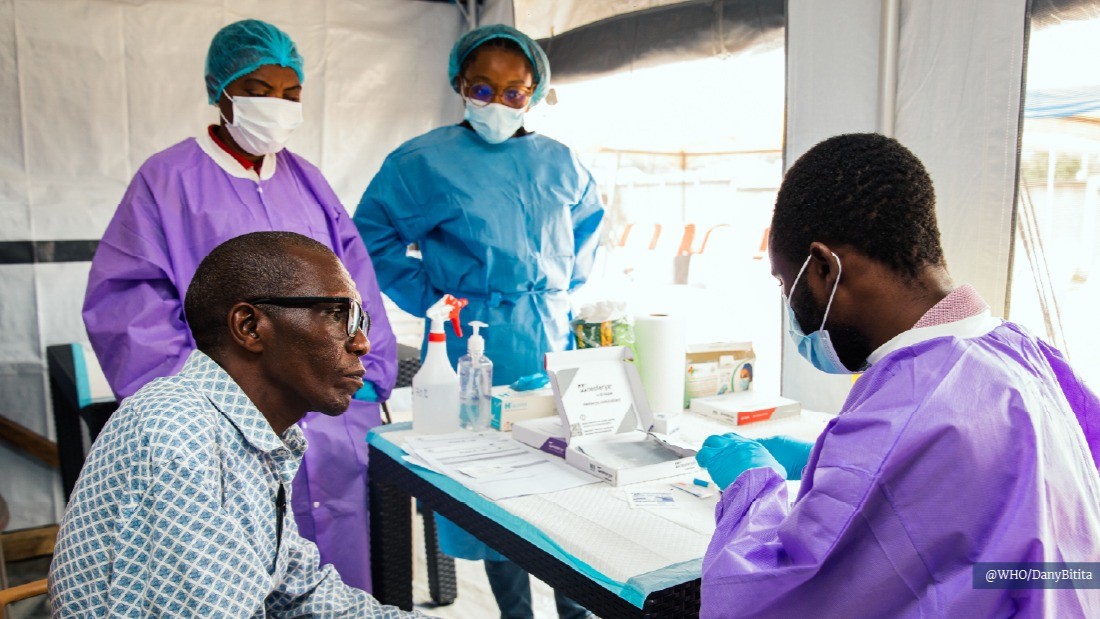
Volunteers in southern Uganda are receiving an experimental vaccine against Bundibugyo virus, a strain for which there is no licensed vaccine, as the outbreak in neighbouring DR Congo grows.
In Masaka, southern Uganda, a phase I clinical trial is testing a candidate vaccine against Bundibugyo virus disease, a severe form of Ebola for which no licensed vaccine or effective treatment exists. The first participants were vaccinated on 6 October 2026, according to the NIHR Oxford Biomedical Research Centre. The trial, reported widely in mid-October, places a Ugandan research unit at the centre of the global response to what Africanews, citing AFP, calls the worst Ebola outbreak on record.
It is an early-stage study. Its aim is to find out whether the vaccine is safe and whether it produces an immune response, not whether it prevents disease. Even so, the pace at which it has moved and the way it is being run show how outbreak research is now organised.
The trial
The study was launched by the MRC/UVRI and LSHTM Uganda Research Unit, working with the Oxford Vaccine Group and Oxford’s Pandemic Sciences Institute, which is the sponsor. It is funded by the Coalition for Epidemic Preparedness Innovations (CEPI), which also funds a separate first-in-human phase I trial of the same candidate in the United Kingdom. The chief investigator is Professor Simon Drysdale of the Oxford Vaccine Group.
Africanews reported that the Masaka trial aims to recruit 110 healthy adult volunteers, with enrolment expected to be complete by November 2026 and each participant followed for 12 months. Eugene Rizagira, an associate professor of epidemiology at the London School of Hygiene and Tropical Medicine, said that in a phase one vaccine trial “what we are looking out for is whether the vaccine is safe”. The Oxford centre’s account does not give dose levels, comparator arms or endpoints beyond safety and immunogenicity.
Professor Drysdale said: “This is an important moment in a truly global effort to strengthen preparedness against Bundibugyo ebolavirus.” He added that the volunteers’ contribution is critical to generating the evidence needed.
The vaccine
The candidate, called ChAdOx BDBV, is built on the ChAdOx1 viral-vector platform, the same technology used in the Oxford/AstraZeneca COVID-19 vaccine. It was designed by scientists at the Oxford Vaccine Group and the Pandemic Sciences Institute, and the viral seed stock was produced and quality-tested at Oxford’s Clinical Biomanufacturing Facility at the Churchill Hospital.
Manufacturing speed is a notable feature. According to the Oxford centre, the Serum Institute of India produced and stockpiled about 620,000 doses in roughly two weeks. It supplied 300 vials to the United Kingdom and about 3,000 investigational doses for the Ugandan trial. If early trials succeed, CEPI expects to support late-stage trials with Oxford and the Serum Institute to seek authorisation or licensing for emergency use.
A separate effort is under way elsewhere: Africanews noted that the US-based Moderna group is working on its own mRNA vaccine.
Why Bundibugyo, and why now
Bundibugyo virus is one of several Ebola-causing viruses. It is named after the western Ugandan district where it was first identified, in 2007. Existing licensed vaccines target the Zaire strain, which is why this outbreak has no ready-made vaccine answer.
According to the Oxford centre, an outbreak in the Democratic Republic of Congo was declared in May 2026. Uganda reported 20 cases in May and June, and the World Health Organization declared the Ugandan outbreak over on 25 August. Latest DRC figures cited by Oxford are more than 8,600 confirmed cases and 4,148 related deaths. Africanews cites a headline of more than 9,000 cases and more than 4,000 deaths as of 14 October, with another showing more than 10,000 cases across Africa, mostly in DR Congo. The figures differ by source and date and are changing quickly.
The outbreak is also spreading. On 6 October, the day of the first vaccinations in Masaka, Kenya announced its first confirmed imported case, a Kenyan citizen who had been living in the DRC. The economic damage has reached Uganda too: Reuters reported that tourist receipts fell after Ebola cases were reported in May and June, one of the factors weighing on the shilling.
A parallel track in DR Congo
In the DRC, Africanews reported, a full-scale human trial is due to start this month to test whether Ervebo, an existing vaccine effective against the Zaire strain, protects against Bundibugyo. Bundibugyo-specific vaccines will be added later. That approach runs alongside the Ugandan phase I study and hedges the risk that a purpose-built candidate takes too long.
The two approaches answer different questions. The existing vaccine may offer partial cross-protection and can be deployed quickly. The new candidate, if it proves safe and immunogenic, could offer protection designed for the strain driving the epidemic.
Why it matters for Uganda
Uganda has run Ebola response and research for years, and the Masaka trial adds to that record. Hosting a phase I study in the country gives local scientists a role in generating the safety data on which later decisions will rest. The involvement of the MRC/UVRI and LSHTM Uganda Research Unit also draws on existing clinical-trial capacity.
The trial also bears on Uganda’s own risk. The country borders the DRC, and it saw tourism receipts fall after its own cases earlier this year. A vaccine that works would give health workers and contacts a protective option in a future outbreak.
Some caution is warranted. Phase I results do not show effectiveness, and the reported enrolment target is small. Safety findings and immune-response data will take months, and the follow-up period is 12 months. Late-stage trials would need large numbers of participants in places where the virus is circulating, which is a logistical and ethical challenge in its own right.
What to watch next
Watch first for the completion of enrolment, expected in November, and for any early safety signal from either the Ugandan or UK trial. Next is whether CEPI, Oxford and the Serum Institute announce late-stage plans, and where such trials would be run. The start and early findings of the Ervebo trial in the DRC will also shape which tools are used first. Finally, the pace of the outbreak itself, including further imported cases in countries such as Kenya, will determine how much pressure there is to move from phase I data to emergency use.



